
About This Book
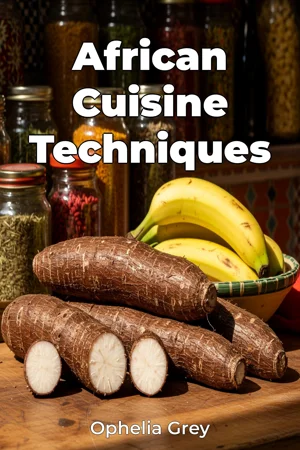
Have you ever considered the profound culinary heritage hidden within the seemingly simple ingredients of African cuisine? "African Cuisine Techniques" delves into the heart of this rich food culture, moving beyond basic recipes to explore the fundamental cooking methods and ingredient preparations that define its diverse flavors. This book is important because it highlights the techniques that are not often documented, preserving and promoting the nuanced approaches to cooking across the African continent. We embark on a journey that begins with the earth’s bounty, specifically staple foods like cassava, yams, plantains and maize. We then examine the core cooking techniques that unlock their potential: pan-frying, steaming, grilling, roasting, boiling, and the art of crafting flavorful sauces and stews. Understanding African cuisine requires appreciating its historical context. Centuries of agricultural practices, trade routes, and cultural exchanges have shaped the methods used today. The book explores how regional variations arise from access to specific ingredients and the influence of neighboring culinary traditions. No prior expertise is needed; a passion for food and an open mind are the only prerequisites. The central argument of "African Cuisine Techniques" is that a genuine understanding of African food lies in mastering the foundational techniques rather than merely following standardized recipes. By deconstructing these methods, appreciating their origins, and applying them creatively, anyone can unlock the potential to authentically recreate and innovate within African culinary traditions. The book's structure is designed to systematically build knowledge. Firstly, the introduction explores the key ingredients and their regional significance. Secondly, the book dedicates chapters to specific cooking methods, providing detailed explanations, step-by-step instructions, and illustrative examples from across the continent, drawing from North, East, Central, Southern and West Africa. Thirdly, it examines the role of spices, herbs, and flavor combinations, showing how these elements contribute to the unique character of African dishes. The conclusion emphasizes the creative possibilities that arise from mastering these techniques, encouraging readers to adapt and innovate while staying true to the spirit of African cuisine. We draw upon a range of sources, including historical cookbooks, anthropological studies of food culture, and interviews with chefs and home cooks across Africa. The book also analyses cooking data gleaned from recipe repositories, blogs, and vlogs. This multi-faceted approach ensures accuracy and provides a rich understanding of the subject. "African Cuisine Techniques" connects to various disciplines. It touches on anthropology by exploring the cultural significance of food. It connects with history by examining the evolution of cooking methods. And it relates to nutrition by analyzing the health benefits of traditional African diets. This book stands out by focusing on the "how" rather than just the "what" of African cooking. The goal is to empower readers to understand, appreciate, and authentically recreate the flavors of Africa. The style is informative yet accessible, aiming to educate and inspire both amateur cooks and culinary professionals. The target audience includes home cooks seeking to expand their culinary horizons, culinary students eager to learn authentic techniques, and anyone passionate about exploring the diverse flavors of African cuisine. This book offers practical knowledge that can be applied to everyday cooking. As a book on cooking and food writing, it provides clear instructions, vivid descriptions of flavors and textures, and engaging stories that bring the subject to life. The scope encompasses a wide array of techniques and ingredients found throughout Africa, though it acknowledges that it cannot be entirely exhaustive due to the continent's vast culinary diversity. The techniques described can be applied to create authentic dishes, adapt recipes to individual preferences, and develop new culinary creations inspired by African flavors. While African cuisine is generally celebrated for its diverse flavors and nutritious ingredients, there are ongoing discussions about the impact of globalization and the preservation of traditional methods. This book aims to contribute to that discussion by promoting a deeper understanding and appreciation of African culinary heritage.
Have you ever considered the profound culinary heritage hidden within the seemingly simple ingredients of African cuisine? "African Cuisine Techniques" delves into the heart of this rich food culture, moving beyond basic recipes to explore the fundamental cooking methods and ingredient preparations that define its diverse flavors. This book is important because it highlights the techniques that are not often documented, preserving and promoting the nuanced approaches to cooking across the African continent. We embark on a journey that begins with the earth’s bounty, specifically staple foods like cassava, yams, plantains and maize. We then examine the core cooking techniques that unlock their potential: pan-frying, steaming, grilling, roasting, boiling, and the art of crafting flavorful sauces and stews. Understanding African cuisine requires appreciating its historical context. Centuries of agricultural practices, trade routes, and cultural exchanges have shaped the methods used today. The book explores how regional variations arise from access to specific ingredients and the influence of neighboring culinary traditions. No prior expertise is needed; a passion for food and an open mind are the only prerequisites. The central argument of "African Cuisine Techniques" is that a genuine understanding of African food lies in mastering the foundational techniques rather than merely following standardized recipes. By deconstructing these methods, appreciating their origins, and applying them creatively, anyone can unlock the potential to authentically recreate and innovate within African culinary traditions. The book's structure is designed to systematically build knowledge. Firstly, the introduction explores the key ingredients and their regional significance. Secondly, the book dedicates chapters to specific cooking methods, providing detailed explanations, step-by-step instructions, and illustrative examples from across the continent, drawing from North, East, Central, Southern and West Africa. Thirdly, it examines the role of spices, herbs, and flavor combinations, showing how these elements contribute to the unique character of African dishes. The conclusion emphasizes the creative possibilities that arise from mastering these techniques, encouraging readers to adapt and innovate while staying true to the spirit of African cuisine. We draw upon a range of sources, including historical cookbooks, anthropological studies of food culture, and interviews with chefs and home cooks across Africa. The book also analyses cooking data gleaned from recipe repositories, blogs, and vlogs. This multi-faceted approach ensures accuracy and provides a rich understanding of the subject. "African Cuisine Techniques" connects to various disciplines. It touches on anthropology by exploring the cultural significance of food. It connects with history by examining the evolution of cooking methods. And it relates to nutrition by analyzing the health benefits of traditional African diets. This book stands out by focusing on the "how" rather than just the "what" of African cooking. The goal is to empower readers to understand, appreciate, and authentically recreate the flavors of Africa. The style is informative yet accessible, aiming to educate and inspire both amateur cooks and culinary professionals. The target audience includes home cooks seeking to expand their culinary horizons, culinary students eager to learn authentic techniques, and anyone passionate about exploring the diverse flavors of African cuisine. This book offers practical knowledge that can be applied to everyday cooking. As a book on cooking and food writing, it provides clear instructions, vivid descriptions of flavors and textures, and engaging stories that bring the subject to life. The scope encompasses a wide array of techniques and ingredients found throughout Africa, though it acknowledges that it cannot be entirely exhaustive due to the continent's vast culinary diversity. The techniques described can be applied to create authentic dishes, adapt recipes to individual preferences, and develop new culinary creations inspired by African flavors. While African cuisine is generally celebrated for its diverse flavors and nutritious ingredients, there are ongoing discussions about the impact of globalization and the preservation of traditional methods. This book aims to contribute to that discussion by promoting a deeper understanding and appreciation of African culinary heritage.
"African Cuisine Techniques" explores the core cooking methods and ingredient preparations that define the diverse flavors of African cuisine. It moves beyond simply providing recipes, instead focusing on techniques like pan-frying, steaming, grilling, and the creation of flavorful sauces using staple foods such as cassava, yams, and plantains. The book argues that mastering these foundational techniques is key to truly understanding and recreating authentic African dishes, highlighting how centuries of agricultural practices and cultural exchanges have shaped these culinary traditions. The book systematically builds knowledge by first exploring key ingredients and their regional significance. It then dedicates chapters to specific cooking methods, offering detailed explanations and examples from across North, East, Central, Southern, and West Africa. Finally, it examines the crucial role of spices, herbs, and flavor combinations. This approach empowers readers to adapt recipes, innovate within African culinary traditions, and appreciate the rich cultural heritage embedded in African flavors.
Book Details
ISBN
9788233972554
Publisher
Publifye AS
Your Licenses
You don't own any licenses for this book
Purchase a license below to unlock this book and download the EPUB.
Purchase License
Select a tier to unlock this book
Need bulk licensing?
Contact us for enterprise agreements.