
About This Book
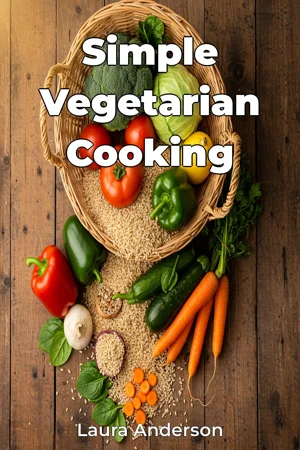
Are you seeking to embrace the vibrant world of plant-based cuisine but feel overwhelmed by complex recipes and unfamiliar ingredients? "Simple Vegetarian Cooking" offers a clear and accessible pathway to mastering vegetarian meal preparation, emphasizing both nutritional completeness and culinary versatility. This book addresses the core challenges many face when transitioning to or expanding their vegetarian diets: ensuring adequate nutrient intake and discovering a wide range of flavorful and satisfying dishes. The book's central argument is that delicious and nutritious vegetarian cooking doesn't require advanced culinary skills or exotic ingredients. By focusing on fundamental cooking techniques and readily available plant-based foods, anyone can create balanced and appealing vegetarian meals that support optimal health. This is crucial in a world increasingly aware of the health and environmental benefits of plant-based diets, yet often deterred by perceived complexity or limitations. "Simple Vegetarian Cooking" navigates the essential components of a balanced vegetarian diet, starting with a thorough exploration of macronutrients and micronutrients. It details the roles of protein, carbohydrates, and fats in plant-based diets, while also providing guidance on obtaining vital vitamins and minerals such as iron, calcium, and vitamin B12. Contextually, it addresses common misconceptions about vegetarian nutrition and draws upon nutritional science to debunk myths and offer evidence-based recommendations. The book then transitions into practical culinary applications, organized around key food groups and cooking methods. Chapters are dedicated to grains, legumes, vegetables, fruits, nuts, and seeds, with each section offering insights into preparation techniques that maximize flavor and nutritional value. For example, it covers steaming, roasting, sautéing, and grilling vegetables to enhance their natural sweetness and texture, as well as proper soaking and cooking methods for legumes to improve digestibility and nutrient absorption. Recipes are strategically interwoven to illustrate these techniques and demonstrate how to combine ingredients into cohesive and balanced meals. The final section focuses on meal planning and recipe adaptation, providing strategies for creating weekly menus, adjusting recipes to suit individual preferences, and utilizing leftovers creatively. Real-world applications are emphasized through tips on stocking a vegetarian pantry, navigating grocery stores, and dining out as a vegetarian. This empowers readers to integrate vegetarian cooking seamlessly into their lifestyles. The information presented is supported by references to nutritional guidelines from reputable health organizations like the Academy of Nutrition and Dietetics and the World Health Organization. While not a scientific treatise, the book incorporates findings from relevant studies on vegetarian health outcomes and nutrient absorption. "Simple Vegetarian Cooking" connects to broader fields such as environmental science, exploring the ecological impact of dietary choices, and to economics, discussing the affordability of plant-based eating. It also relates to public health, highlighting the potential of vegetarian diets to prevent and manage chronic diseases. What sets this book apart is its emphasis on simplicity and accessibility. It avoids complex terminology and intricate techniques, instead prioritizing clear explanations and straightforward recipes that anyone can follow. The writing style is conversational and encouraging, designed to build confidence and inspire experimentation in the kitchen. The intended audience is broad, encompassing both novice cooks and those with some cooking experience who are interested in incorporating more plant-based meals into their diets. This includes health-conscious individuals, environmentally aware consumers, and anyone seeking to improve their overall well-being through food. As a cookbook with health and fitness elements, "Simple Vegetarian Cooking" delivers on the promise of practical guidance and delicious recipes, while also providing the knowledge to make informed nutritional choices. Its scope is intentionally limited to the fundamentals of vegetarian cooking, excluding more specialized diets such as veganism or raw foodism, to maintain its focus on simplicity and accessibility. While controversies exist surrounding some aspects of vegetarian nutrition (e.g., optimal protein intake), the book presents a balanced perspective based on current scientific consensus. By providing the tools and knowledge to create satisfying and healthful vegetarian meals, "Simple Vegetarian Cooking" empowers readers to embrace the benefits of plant-based eating with confidence and ease.
Are you seeking to embrace the vibrant world of plant-based cuisine but feel overwhelmed by complex recipes and unfamiliar ingredients? "Simple Vegetarian Cooking" offers a clear and accessible pathway to mastering vegetarian meal preparation, emphasizing both nutritional completeness and culinary versatility. This book addresses the core challenges many face when transitioning to or expanding their vegetarian diets: ensuring adequate nutrient intake and discovering a wide range of flavorful and satisfying dishes. The book's central argument is that delicious and nutritious vegetarian cooking doesn't require advanced culinary skills or exotic ingredients. By focusing on fundamental cooking techniques and readily available plant-based foods, anyone can create balanced and appealing vegetarian meals that support optimal health. This is crucial in a world increasingly aware of the health and environmental benefits of plant-based diets, yet often deterred by perceived complexity or limitations. "Simple Vegetarian Cooking" navigates the essential components of a balanced vegetarian diet, starting with a thorough exploration of macronutrients and micronutrients. It details the roles of protein, carbohydrates, and fats in plant-based diets, while also providing guidance on obtaining vital vitamins and minerals such as iron, calcium, and vitamin B12. Contextually, it addresses common misconceptions about vegetarian nutrition and draws upon nutritional science to debunk myths and offer evidence-based recommendations. The book then transitions into practical culinary applications, organized around key food groups and cooking methods. Chapters are dedicated to grains, legumes, vegetables, fruits, nuts, and seeds, with each section offering insights into preparation techniques that maximize flavor and nutritional value. For example, it covers steaming, roasting, sautéing, and grilling vegetables to enhance their natural sweetness and texture, as well as proper soaking and cooking methods for legumes to improve digestibility and nutrient absorption. Recipes are strategically interwoven to illustrate these techniques and demonstrate how to combine ingredients into cohesive and balanced meals. The final section focuses on meal planning and recipe adaptation, providing strategies for creating weekly menus, adjusting recipes to suit individual preferences, and utilizing leftovers creatively. Real-world applications are emphasized through tips on stocking a vegetarian pantry, navigating grocery stores, and dining out as a vegetarian. This empowers readers to integrate vegetarian cooking seamlessly into their lifestyles. The information presented is supported by references to nutritional guidelines from reputable health organizations like the Academy of Nutrition and Dietetics and the World Health Organization. While not a scientific treatise, the book incorporates findings from relevant studies on vegetarian health outcomes and nutrient absorption. "Simple Vegetarian Cooking" connects to broader fields such as environmental science, exploring the ecological impact of dietary choices, and to economics, discussing the affordability of plant-based eating. It also relates to public health, highlighting the potential of vegetarian diets to prevent and manage chronic diseases. What sets this book apart is its emphasis on simplicity and accessibility. It avoids complex terminology and intricate techniques, instead prioritizing clear explanations and straightforward recipes that anyone can follow. The writing style is conversational and encouraging, designed to build confidence and inspire experimentation in the kitchen. The intended audience is broad, encompassing both novice cooks and those with some cooking experience who are interested in incorporating more plant-based meals into their diets. This includes health-conscious individuals, environmentally aware consumers, and anyone seeking to improve their overall well-being through food. As a cookbook with health and fitness elements, "Simple Vegetarian Cooking" delivers on the promise of practical guidance and delicious recipes, while also providing the knowledge to make informed nutritional choices. Its scope is intentionally limited to the fundamentals of vegetarian cooking, excluding more specialized diets such as veganism or raw foodism, to maintain its focus on simplicity and accessibility. While controversies exist surrounding some aspects of vegetarian nutrition (e.g., optimal protein intake), the book presents a balanced perspective based on current scientific consensus. By providing the tools and knowledge to create satisfying and healthful vegetarian meals, "Simple Vegetarian Cooking" empowers readers to embrace the benefits of plant-based eating with confidence and ease.
"Simple Vegetarian Cooking" guides readers through the fundamentals of plant-based cuisine, proving that delicious and nutritious vegetarian meals don't require advanced skills. It emphasizes readily available ingredients and simple cooking techniques to create balanced meals. The book highlights the importance of understanding macronutrients and micronutrients in a vegetarian diet, offering practical advice on obtaining key vitamins and minerals like iron and vitamin B12. The book then transitions into practical culinary applications, organized around key food groups and cooking methods. Later chapters focus on meal planning and recipe adaptation, providing strategies for creating weekly menus and adapting recipes to individual preferences. What sets this book apart is its emphasis on simplicity and accessibility, avoiding complex terminology and intricate techniques, instead prioritizing clear explanations and straightforward recipes that anyone can follow.
Book Details
ISBN
9788233972530
Publisher
Publifye AS
Your Licenses
You don't own any licenses for this book
Purchase a license below to unlock this book and download the EPUB.
Purchase License
Select a tier to unlock this book
Need bulk licensing?
Contact us for enterprise agreements.