
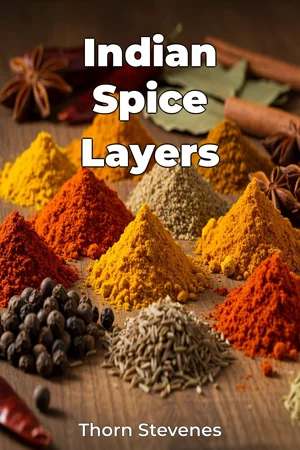
About This Book
Have you ever wondered how a seemingly simple blend of spices can transport you to the heart of India, evoking complex flavors and aromas? "Indian Spice Layers" delves into the art and science of Indian cooking, revealing how the strategic layering of spices creates the distinctive and nuanced flavor profiles that define the cuisine. This book explores the fundamental spices of the Indian kitchen, illustrating how their interactions and preparation methods shape the final dish. The key topics covered are the identification and application of essential Indian spices, the techniques for layering flavors to build depth and complexity, and the exploration of regional variations in spice usage across India. Understanding these topics is crucial for anyone seeking to master Indian cooking, appreciate its cultural significance, or simply enhance their culinary skills. The history of spice trade routes and the influence of various empires on Indian cuisine provide critical context. Readers will benefit from a basic understanding of cooking terminology and flavor profiles, though the book is designed to be accessible to both novice and experienced cooks. Our central argument is that Indian cuisine is not merely about using a collection of spices, but about understanding how to strategically layer them to create a harmonious and balanced flavor profile. This understanding elevates cooking from a simple act of following recipes to a creative and intuitive art form. "Indian Spice Layers" is structured to guide the reader through a comprehensive exploration of Indian spices. First, we introduce the primary spices, detailing their origins, flavor characteristics, and traditional uses. Next, we investigate layering techniques, explaining how to bloom spices in oil, dry-roast them for intensity, or add them at different stages of cooking to achieve specific effects. Subsequent sections explore how these techniques are applied in different regional cuisines, highlighting variations in spice blends and cooking methods from North to South and East to West. Finally, we provide practical recipes and guidance on how to experiment with spice layering to develop your own signature dishes. The book draws on culinary research, historical texts, and interviews with chefs and home cooks across India to provide a well-rounded perspective. Spice analysis and flavor science supplement traditional knowledge, offering a deeper understanding of the chemical reactions that contribute to unique flavor profiles. "Indian Spice Layers" connects to several other fields. Food anthropology is relevant as we examine the cultural and historical significance of spices in Indian society. Botany and agriculture provide insights into the cultivation and harvesting of spices. Chemistry adds another layer, explaining the reactions that occur during the cooking process. The book takes a unique approach by deconstructing complex Indian dishes into their component spice layers. This method empowers readers to understand the underlying principles of flavor creation and apply them creatively. The tone is informative and engaging, blending practical advice with historical and cultural insights. The writing style is clear and accessible, avoiding overly technical jargon while maintaining accuracy. The intended audience includes home cooks, culinary students, food enthusiasts, and anyone interested in learning about Indian cuisine and the art of spice blending. This book is valuable because it provides a comprehensive and practical guide to mastering the nuances of Indian flavors. As a food writing genre piece, the book incorporates sensory descriptions and evocative language to capture the essence of Indian spices. Expect detailed explanations, step-by-step instructions, and cultural anecdotes. The scope is limited to the core principles of spice layering in Indian cuisine, focusing on readily available spices and cooking methods. It does not cover every regional dish or obscure spice, but rather aims to provide a solid foundation for further exploration. The information presented can be applied to everyday cooking, allowing readers to create authentic and flavorful Indian dishes at home. It also encourages experimentation and creativity, empowering readers to develop their own unique spice blends and recipes. One debate involves the authenticity of certain recipes and the changing nature of Indian cuisine in the modern world. We acknowledge these debates and offer a balanced perspective that respects both traditional practices and contemporary innovations.
Have you ever wondered how a seemingly simple blend of spices can transport you to the heart of India, evoking complex flavors and aromas? "Indian Spice Layers" delves into the art and science of Indian cooking, revealing how the strategic layering of spices creates the distinctive and nuanced flavor profiles that define the cuisine. This book explores the fundamental spices of the Indian kitchen, illustrating how their interactions and preparation methods shape the final dish. The key topics covered are the identification and application of essential Indian spices, the techniques for layering flavors to build depth and complexity, and the exploration of regional variations in spice usage across India. Understanding these topics is crucial for anyone seeking to master Indian cooking, appreciate its cultural significance, or simply enhance their culinary skills. The history of spice trade routes and the influence of various empires on Indian cuisine provide critical context. Readers will benefit from a basic understanding of cooking terminology and flavor profiles, though the book is designed to be accessible to both novice and experienced cooks. Our central argument is that Indian cuisine is not merely about using a collection of spices, but about understanding how to strategically layer them to create a harmonious and balanced flavor profile. This understanding elevates cooking from a simple act of following recipes to a creative and intuitive art form. "Indian Spice Layers" is structured to guide the reader through a comprehensive exploration of Indian spices. First, we introduce the primary spices, detailing their origins, flavor characteristics, and traditional uses. Next, we investigate layering techniques, explaining how to bloom spices in oil, dry-roast them for intensity, or add them at different stages of cooking to achieve specific effects. Subsequent sections explore how these techniques are applied in different regional cuisines, highlighting variations in spice blends and cooking methods from North to South and East to West. Finally, we provide practical recipes and guidance on how to experiment with spice layering to develop your own signature dishes. The book draws on culinary research, historical texts, and interviews with chefs and home cooks across India to provide a well-rounded perspective. Spice analysis and flavor science supplement traditional knowledge, offering a deeper understanding of the chemical reactions that contribute to unique flavor profiles. "Indian Spice Layers" connects to several other fields. Food anthropology is relevant as we examine the cultural and historical significance of spices in Indian society. Botany and agriculture provide insights into the cultivation and harvesting of spices. Chemistry adds another layer, explaining the reactions that occur during the cooking process. The book takes a unique approach by deconstructing complex Indian dishes into their component spice layers. This method empowers readers to understand the underlying principles of flavor creation and apply them creatively. The tone is informative and engaging, blending practical advice with historical and cultural insights. The writing style is clear and accessible, avoiding overly technical jargon while maintaining accuracy. The intended audience includes home cooks, culinary students, food enthusiasts, and anyone interested in learning about Indian cuisine and the art of spice blending. This book is valuable because it provides a comprehensive and practical guide to mastering the nuances of Indian flavors. As a food writing genre piece, the book incorporates sensory descriptions and evocative language to capture the essence of Indian spices. Expect detailed explanations, step-by-step instructions, and cultural anecdotes. The scope is limited to the core principles of spice layering in Indian cuisine, focusing on readily available spices and cooking methods. It does not cover every regional dish or obscure spice, but rather aims to provide a solid foundation for further exploration. The information presented can be applied to everyday cooking, allowing readers to create authentic and flavorful Indian dishes at home. It also encourages experimentation and creativity, empowering readers to develop their own unique spice blends and recipes. One debate involves the authenticity of certain recipes and the changing nature of Indian cuisine in the modern world. We acknowledge these debates and offer a balanced perspective that respects both traditional practices and contemporary innovations.
"Indian Spice Layers" explores the intricate art of Indian cooking, focusing on the strategic layering of spices to create authentic and nuanced flavor profiles. It reveals how understanding the fundamental spices, their interactions, and preparation methods elevates home cooking. The book highlights that Indian cuisine is not just about using spices but mastering their harmonious blend, transforming cooking into a creative art form. The book uniquely deconstructs complex Indian dishes into their component spice layers, empowering readers to understand flavor creation principles. It delves into techniques like blooming spices in oil and dry-roasting for intensity, demonstrating how these methods affect the final dish. Regional variations in spice usage are explored, highlighting differences from North to South and East to West. The book offers practical recipes and encourages experimentation with spice blends. Beginning with an introduction to basic spices, detailing their origins and flavor characteristics, the book progresses to layering techniques and regional variations. Culinary research, historical texts, and insights from chefs and home cooks enrich the narrative, supplemented by flavor science. This approach equips both novice and experienced cooks with the skills to create their own signature dishes, making "Indian Spice Layers" a valuable guide to mastering Indian flavors.
Book Details
ISBN
9788233972448
Publisher
Publifye AS
Your Licenses
You don't own any licenses for this book
Purchase a license below to unlock this book and download the EPUB.
Purchase License
Select a tier to unlock this book
Need bulk licensing?
Contact us for enterprise agreements.