
About This Book
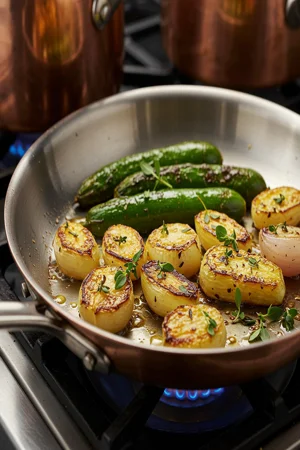
Have you ever wondered why certain cooking methods are used across vastly different cultures? "Global Cooking Basics" explores this question by delving into the fundamental techniques that underpin diverse culinary traditions worldwide. This book examines the core processes of cooking, transcending specific recipes to reveal the underlying principles that influence how food is prepared and enjoyed globally. The significance of understanding these basics lies in empowering cooks of all levels. By grasping the science and art behind techniques like sautéing, boiling, roasting, and frying, readers can gain a deeper appreciation for the cuisine they create and expand their culinary horizons. Furthermore, this knowledge fosters adaptability in the kitchen, enabling cooks to modify recipes and experiment with flavors confidently. This book argues that despite the apparent diversity in global cuisines, a limited set of fundamental cooking techniques are universally applied, adapted, and integrated into a multitude of recipes. These techniques are linked to the availability of resources, climate, and cultural preferences. The book presents an overview of core cooking methods and then divides them into chapters organized around practical applications. The opening chapters introduce the basic principles of heat transfer, the Maillard reaction, and the role of fats and liquids in cooking. Subsequent chapters focus on specific techniques, tracing their origins and evolution across different continents. For example, the chapter on sautéing examines its use in French cuisine, stir-frying in Asian cultures, and similar methods used in Latin America. Similarly, the chapter on boiling explores its role in making pasta in Italy, soups in Eastern Europe, and stews in Africa. Each chapter provides historical context, exploring how environmental conditions, ingredients, and cultural values have shaped the application of these cooking methods. The book draws upon a wide range of sources, including culinary history texts, food science journals, and anthropological studies of food culture. It uses comparative analysis of recipes and cooking practices to demonstrate the universality of the core techniques. "Global Cooking Basics" connects to the fields of anthropology, sociology, and food science. Its exploration of cultural influences on cooking practices relates to anthropological studies of foodways. The analysis of the chemical reactions involved in cooking connects to food science, while the study of how food traditions shape social identities intersects with sociology. This book adopts a fact-based, analytical approach, providing clear explanations of both the science and the cultural context behind each cooking technique. The writing style is accessible to both amateur cooks and culinary professionals, avoiding jargon while maintaining accuracy. The target audience includes cooking enthusiasts, culinary students, food bloggers, and anyone interested in the cultural and scientific aspects of food preparation. It offers valuable insights for those looking to expand their culinary knowledge and develop a deeper understanding of global cuisines. Adhering to the conventions of food writing and culinary history, this book balances factual information with engaging storytelling. It aims to provide a comprehensive and informative overview of global cooking techniques, while also offering practical tips and inspiration for readers to apply in their own kitchens. The scope of the book is broad, encompassing a diverse range of culinary traditions from around the world. However, it focuses primarily on the fundamental cooking techniques, rather than providing exhaustive recipes or regional variations. The book does not delve deeply into molecular gastronomy or other advanced culinary techniques. The information presented in "Global Cooking Basics" can be applied in numerous practical ways. By understanding the principles behind each technique, readers can adapt recipes to suit their own tastes and dietary needs. They can also troubleshoot cooking problems more effectively and develop their own unique culinary creations. While the book aims to present an objective overview of global cooking practices, debates exist regarding the authenticity and cultural appropriation of certain dishes. The book acknowledges these controversies and encourages readers to engage with them critically. It promotes respect for cultural traditions.
Have you ever wondered why certain cooking methods are used across vastly different cultures? "Global Cooking Basics" explores this question by delving into the fundamental techniques that underpin diverse culinary traditions worldwide. This book examines the core processes of cooking, transcending specific recipes to reveal the underlying principles that influence how food is prepared and enjoyed globally. The significance of understanding these basics lies in empowering cooks of all levels. By grasping the science and art behind techniques like sautéing, boiling, roasting, and frying, readers can gain a deeper appreciation for the cuisine they create and expand their culinary horizons. Furthermore, this knowledge fosters adaptability in the kitchen, enabling cooks to modify recipes and experiment with flavors confidently. This book argues that despite the apparent diversity in global cuisines, a limited set of fundamental cooking techniques are universally applied, adapted, and integrated into a multitude of recipes. These techniques are linked to the availability of resources, climate, and cultural preferences. The book presents an overview of core cooking methods and then divides them into chapters organized around practical applications. The opening chapters introduce the basic principles of heat transfer, the Maillard reaction, and the role of fats and liquids in cooking. Subsequent chapters focus on specific techniques, tracing their origins and evolution across different continents. For example, the chapter on sautéing examines its use in French cuisine, stir-frying in Asian cultures, and similar methods used in Latin America. Similarly, the chapter on boiling explores its role in making pasta in Italy, soups in Eastern Europe, and stews in Africa. Each chapter provides historical context, exploring how environmental conditions, ingredients, and cultural values have shaped the application of these cooking methods. The book draws upon a wide range of sources, including culinary history texts, food science journals, and anthropological studies of food culture. It uses comparative analysis of recipes and cooking practices to demonstrate the universality of the core techniques. "Global Cooking Basics" connects to the fields of anthropology, sociology, and food science. Its exploration of cultural influences on cooking practices relates to anthropological studies of foodways. The analysis of the chemical reactions involved in cooking connects to food science, while the study of how food traditions shape social identities intersects with sociology. This book adopts a fact-based, analytical approach, providing clear explanations of both the science and the cultural context behind each cooking technique. The writing style is accessible to both amateur cooks and culinary professionals, avoiding jargon while maintaining accuracy. The target audience includes cooking enthusiasts, culinary students, food bloggers, and anyone interested in the cultural and scientific aspects of food preparation. It offers valuable insights for those looking to expand their culinary knowledge and develop a deeper understanding of global cuisines. Adhering to the conventions of food writing and culinary history, this book balances factual information with engaging storytelling. It aims to provide a comprehensive and informative overview of global cooking techniques, while also offering practical tips and inspiration for readers to apply in their own kitchens. The scope of the book is broad, encompassing a diverse range of culinary traditions from around the world. However, it focuses primarily on the fundamental cooking techniques, rather than providing exhaustive recipes or regional variations. The book does not delve deeply into molecular gastronomy or other advanced culinary techniques. The information presented in "Global Cooking Basics" can be applied in numerous practical ways. By understanding the principles behind each technique, readers can adapt recipes to suit their own tastes and dietary needs. They can also troubleshoot cooking problems more effectively and develop their own unique culinary creations. While the book aims to present an objective overview of global cooking practices, debates exist regarding the authenticity and cultural appropriation of certain dishes. The book acknowledges these controversies and encourages readers to engage with them critically. It promotes respect for cultural traditions.
"Global Cooking Basics" unveils the universal techniques behind the world's diverse cuisines. By understanding core cooking methods like sautéing, boiling, roasting, and frying, readers gain a deeper appreciation and adaptability in the kitchen. The book explores how fundamental techniques are universally adapted, influenced by resources, climate, and cultural preferences. For instance, it highlights how sautéing manifests as French cuisine, stir-frying in Asian cultures, and similar methods in Latin America. The book begins with principles such as heat transfer and the Maillard reaction, then progresses into specific techniques, tracing their origins across continents. Readers discover how environmental conditions and cultural values have shaped cooking methods. Drawing from culinary history, food science, and anthropology, this book adopts an analytical approach, making it accessible to both amateur cooks and culinary professionals who are interested in food writing and cooking.
Book Details
ISBN
9788233972431
Publisher
Publifye AS
Your Licenses
You don't own any licenses for this book
Purchase a license below to unlock this book and download the EPUB.
Purchase License
Select a tier to unlock this book
Need bulk licensing?
Contact us for enterprise agreements.