
About This Book
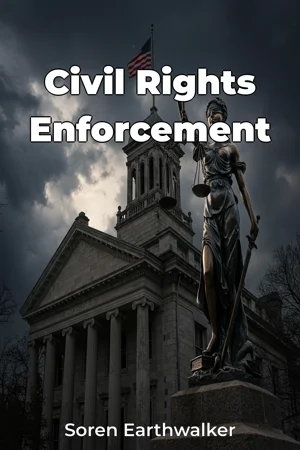
Are individual freedoms truly protected, or are they merely theoretical rights susceptible to erosion? "Civil Rights Enforcement" delves into the complex mechanisms designed to safeguard these freedoms, offering a comprehensive examination of the legal precedents, governmental oversight, and societal forces that shape the landscape of civil rights in a modern context. This book is about the practical application of civil rights laws and the effectiveness of the institutions tasked with their enforcement. The book concentrates on three interconnected themes: the evolution of civil rights law through landmark court cases, the role and efficacy of federal and state oversight bodies (such as the Department of Justice's Civil Rights Division and state-level human rights commissions), and the persistent challenges in achieving full compliance and equity across diverse sectors. These themes are crucial because the strength of a democratic society rests upon its commitment to protecting the rights of all its citizens, particularly the most vulnerable. Understanding civil rights enforcement requires a grasp of American legal and political history. The book provides context by examining significant periods, especially the aftermath of the Civil War and the Civil Rights Movement of the 1950s and 1960s, which led to foundational legislation. Readers will gain an understanding of the interplay between legislative action, judicial interpretation, and executive branch implementation in shaping civil rights protections. The central argument of "Civil Rights Enforcement" is that while significant legal and institutional frameworks exist to protect individual liberties, their effectiveness is often undermined by inconsistent application, political pressures, and evolving societal biases. We contend that a deeper understanding of these challenges is necessary to strengthen enforcement mechanisms and ensure genuine equality. The book's structure is designed to provide a comprehensive overview, beginning with an introduction to the core concepts of civil rights law and enforcement. This section defines key terms and outlines the philosophical underpinnings of civil rights protections. The subsequent sections explore major areas of civil rights enforcement, including voting rights, employment discrimination, housing equality, and access to education. Each area is examined through case studies, statistical analysis, and assessments of the relevant oversight bodies. The book culminates with an analysis of current challenges and proposes tangible strategies for improving civil rights enforcement in the future. The analysis relies on diverse sources, including legal case files, government reports, academic research, and statistical data from federal agencies. The book incorporates unique datasets on enforcement actions, such as patterns in lawsuits filed by the Department of Justice and outcomes of complaints filed with the Equal Employment Opportunity Commission. "Civil Rights Enforcement" intersects with several disciplines, including law, political science, sociology, and public policy. The legal analysis is enriched by insights from political science on power dynamics and institutional behavior, while sociological perspectives illuminate the social and cultural factors that contribute to discrimination and inequality. Public policy considerations inform the book's recommendations for improving enforcement strategies. What distinguishes this book is its focus on the practical realities of civil rights enforcement. Rather than providing a purely theoretical overview, it delves into the complexities of implementation, highlighting both successes and failures. It offers a nuanced understanding and avoids simplistic narratives. The book adopts an academic yet accessible tone, making it suitable for students, legal professionals, policymakers, and anyone interested in understanding the realities of civil rights protection. As a work in the genres of Politics and History, "Civil Rights Enforcement" is committed to presenting a balanced and fact-based analysis. It recognizes the importance of rigorous scholarship and avoids partisan advocacy, aiming to provide readers with the tools to form their own informed opinions. The book's scope is primarily focused on the United States, although it may draw comparisons with other countries where relevant. It acknowledges that civil rights issues vary considerably across different contexts and does not attempt to provide a universal framework. The insights offered in "Civil Rights Enforcement" have practical applications for individuals and organizations working to promote equality and justice. It equips readers with a deeper understanding of their rights and the available mechanisms for seeking redress. Furthermore, it provides policymakers and advocates with evidence-based recommendations for improving enforcement strategies. The book also examines ongoing debates surrounding issues such as affirmative action, voting regulations, and the role of government in addressing systemic inequalities. By presenting diverse perspectives and analyzing the evidence, it encourages readers to engage critically with these complex issues.
Are individual freedoms truly protected, or are they merely theoretical rights susceptible to erosion? "Civil Rights Enforcement" delves into the complex mechanisms designed to safeguard these freedoms, offering a comprehensive examination of the legal precedents, governmental oversight, and societal forces that shape the landscape of civil rights in a modern context. This book is about the practical application of civil rights laws and the effectiveness of the institutions tasked with their enforcement. The book concentrates on three interconnected themes: the evolution of civil rights law through landmark court cases, the role and efficacy of federal and state oversight bodies (such as the Department of Justice's Civil Rights Division and state-level human rights commissions), and the persistent challenges in achieving full compliance and equity across diverse sectors. These themes are crucial because the strength of a democratic society rests upon its commitment to protecting the rights of all its citizens, particularly the most vulnerable. Understanding civil rights enforcement requires a grasp of American legal and political history. The book provides context by examining significant periods, especially the aftermath of the Civil War and the Civil Rights Movement of the 1950s and 1960s, which led to foundational legislation. Readers will gain an understanding of the interplay between legislative action, judicial interpretation, and executive branch implementation in shaping civil rights protections. The central argument of "Civil Rights Enforcement" is that while significant legal and institutional frameworks exist to protect individual liberties, their effectiveness is often undermined by inconsistent application, political pressures, and evolving societal biases. We contend that a deeper understanding of these challenges is necessary to strengthen enforcement mechanisms and ensure genuine equality. The book's structure is designed to provide a comprehensive overview, beginning with an introduction to the core concepts of civil rights law and enforcement. This section defines key terms and outlines the philosophical underpinnings of civil rights protections. The subsequent sections explore major areas of civil rights enforcement, including voting rights, employment discrimination, housing equality, and access to education. Each area is examined through case studies, statistical analysis, and assessments of the relevant oversight bodies. The book culminates with an analysis of current challenges and proposes tangible strategies for improving civil rights enforcement in the future. The analysis relies on diverse sources, including legal case files, government reports, academic research, and statistical data from federal agencies. The book incorporates unique datasets on enforcement actions, such as patterns in lawsuits filed by the Department of Justice and outcomes of complaints filed with the Equal Employment Opportunity Commission. "Civil Rights Enforcement" intersects with several disciplines, including law, political science, sociology, and public policy. The legal analysis is enriched by insights from political science on power dynamics and institutional behavior, while sociological perspectives illuminate the social and cultural factors that contribute to discrimination and inequality. Public policy considerations inform the book's recommendations for improving enforcement strategies. What distinguishes this book is its focus on the practical realities of civil rights enforcement. Rather than providing a purely theoretical overview, it delves into the complexities of implementation, highlighting both successes and failures. It offers a nuanced understanding and avoids simplistic narratives. The book adopts an academic yet accessible tone, making it suitable for students, legal professionals, policymakers, and anyone interested in understanding the realities of civil rights protection. As a work in the genres of Politics and History, "Civil Rights Enforcement" is committed to presenting a balanced and fact-based analysis. It recognizes the importance of rigorous scholarship and avoids partisan advocacy, aiming to provide readers with the tools to form their own informed opinions. The book's scope is primarily focused on the United States, although it may draw comparisons with other countries where relevant. It acknowledges that civil rights issues vary considerably across different contexts and does not attempt to provide a universal framework. The insights offered in "Civil Rights Enforcement" have practical applications for individuals and organizations working to promote equality and justice. It equips readers with a deeper understanding of their rights and the available mechanisms for seeking redress. Furthermore, it provides policymakers and advocates with evidence-based recommendations for improving enforcement strategies. The book also examines ongoing debates surrounding issues such as affirmative action, voting regulations, and the role of government in addressing systemic inequalities. By presenting diverse perspectives and analyzing the evidence, it encourages readers to engage critically with these complex issues.
"Civil Rights Enforcement" examines the practical application of laws designed to protect individual freedoms, focusing on the effectiveness of institutions tasked with ensuring equality. It delves into the evolution of civil rights law, particularly after the Civil War and during the Civil Rights Movement, highlighting the impact of landmark court cases and legislation on voting rights, employment discrimination, housing equality, and access to education. The book uniquely combines legal analysis with insights from political science and sociology to explore the challenges in achieving full compliance and equity across diverse sectors. The book's central argument is that while legal and institutional frameworks exist, their effectiveness is often undermined by inconsistent application and political pressures. For example, the Department of Justice's Civil Rights Division and state-level human rights commissions play a critical role in government oversight, yet their impact can vary significantly. By using case studies, statistical analysis, and assessments of oversight bodies, the book progresses from defining core concepts to analyzing current challenges and proposing strategies for improving civil rights enforcement. This approach provides a comprehensive overview of civil rights law, making it valuable for students, legal professionals, and policymakers seeking a nuanced understanding of racial justice and social justice. The book avoids simplistic narratives, offering a fact-based analysis of how civil rights protections function in reality and equipping readers with the tools to form their own informed opinions on issues like affirmative action and voting regulations.
Book Details
ISBN
9788233972363
Publisher
Publifye AS
Your Licenses
You don't own any licenses for this book
Purchase a license below to unlock this book and download the EPUB.
Purchase License
Select a tier to unlock this book
Need bulk licensing?
Contact us for enterprise agreements.