
About This Book
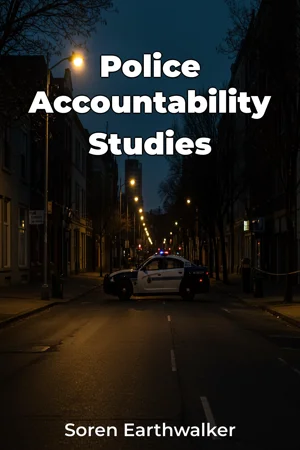
In an era of increasing scrutiny of law enforcement, how effective are the mechanisms designed to hold police accountable? "Police Accountability Studies" delves into this critical question, providing a detailed examination of the oversight systems in place to ensure responsible policing. This book explores the complex landscape of police accountability, a subject of immense importance given its impact on public trust, civil rights, and community safety. This book centers around three primary concepts. First, it thoroughly examines existing oversight bodies, such as internal affairs divisions, civilian review boards, and independent auditors. Second, it analyzes the legal and policy frameworks that govern police conduct and accountability. Third, it investigates the role of data transparency and public access to information in promoting police reform. These topics are essential because they directly impact the balance between police authority and citizen rights, influencing the fairness and legitimacy of the criminal justice system. Understanding the evolution of policing in America is crucial to grasping the current state of accountability. The book offers a historical context, tracing the development of police oversight from its early stages to the present-day challenges of body-worn cameras, data-driven policing, and community demands for reform. Readers will benefit from a basic understanding of criminal justice procedures, constitutional law related to policing, and the dynamics of police-community relations. The central argument of "Police Accountability Studies" is that while numerous mechanisms exist to oversee law enforcement, their effectiveness varies significantly depending on factors such as their independence, scope of authority, access to information, and community engagement. The book contends that a multi-faceted approach, combining robust external oversight with internal reforms and data transparency, is necessary to create genuinely accountable police departments. This argument is essential because it moves beyond simplistic solutions, advocating for systemic change that addresses the root causes of police misconduct. The book begins by introducing the key concepts of police accountability and the various forms of oversight. It then develops its argument in three major sections. The first analyzes the structure and function of different oversight models, evaluating their strengths and weaknesses based on investigative reports and empirical data. The second examines specific cases of police misconduct and the role of oversight in addressing them. The third explores the challenges of implementing meaningful reforms and offers recommendations for improving police accountability. The book culminates with a discussion of the practical implications of its findings, proposing concrete steps that policymakers, community leaders, and law enforcement agencies can take to enhance police accountability. "Police Accountability Studies" relies on a combination of qualitative and quantitative research methods. It draws upon investigative reports from government agencies, academic studies, public data releases, and case law. Unique data sources include analyses of complaint data, officer disciplinary records, and surveys of community perceptions of police accountability. This book connects to broader fields of study, including public administration, political science, and sociology. It examines policy implementation, power dynamics between state and citizens, and the social effects of policing. These connections enrich the book’s argument by providing a more holistic understanding of the complexities of police accountability. A unique aspect of "Police Accountability Studies" is its focus on the practical challenges of implementing effective oversight. It moves beyond theoretical discussions, offering concrete examples of successful and unsuccessful initiatives. The tone of the book is academic yet accessible, aiming to inform and engage a broad audience. The writing style is clear, concise, and evidence-based, avoiding jargon and unnecessary complexity. The target audience includes students, academics, policymakers, law enforcement professionals, and community activists interested in police reform. This book is valuable to them because it provides a comprehensive and practical guide to understanding and improving police accountability. As a contribution to the fields of Politics and Social Science, the book maintains a focus on empirical evidence, objective analysis, and policy recommendations. It engages with existing scholarship and contributes to ongoing debates about police accountability. The book's scope is limited to the United States, focusing on federal, state, and local efforts to oversee law enforcement. While it acknowledges international perspectives, its primary focus is on the American context. The information in the book can be applied practically by readers in several ways. Policymakers can use its recommendations to design more effective oversight systems. Law enforcement agencies can use its findings to improve internal accountability. Community activists can use its analysis to advocate for police reform. "Police Accountability Studies" addresses several ongoing debates in the field, including the role of civilian review boards, the use of body-worn cameras, and the impact of qualified immunity. It presents evidence-based arguments on both sides of these debates, encouraging readers to form their own informed opinions.
In an era of increasing scrutiny of law enforcement, how effective are the mechanisms designed to hold police accountable? "Police Accountability Studies" delves into this critical question, providing a detailed examination of the oversight systems in place to ensure responsible policing. This book explores the complex landscape of police accountability, a subject of immense importance given its impact on public trust, civil rights, and community safety. This book centers around three primary concepts. First, it thoroughly examines existing oversight bodies, such as internal affairs divisions, civilian review boards, and independent auditors. Second, it analyzes the legal and policy frameworks that govern police conduct and accountability. Third, it investigates the role of data transparency and public access to information in promoting police reform. These topics are essential because they directly impact the balance between police authority and citizen rights, influencing the fairness and legitimacy of the criminal justice system. Understanding the evolution of policing in America is crucial to grasping the current state of accountability. The book offers a historical context, tracing the development of police oversight from its early stages to the present-day challenges of body-worn cameras, data-driven policing, and community demands for reform. Readers will benefit from a basic understanding of criminal justice procedures, constitutional law related to policing, and the dynamics of police-community relations. The central argument of "Police Accountability Studies" is that while numerous mechanisms exist to oversee law enforcement, their effectiveness varies significantly depending on factors such as their independence, scope of authority, access to information, and community engagement. The book contends that a multi-faceted approach, combining robust external oversight with internal reforms and data transparency, is necessary to create genuinely accountable police departments. This argument is essential because it moves beyond simplistic solutions, advocating for systemic change that addresses the root causes of police misconduct. The book begins by introducing the key concepts of police accountability and the various forms of oversight. It then develops its argument in three major sections. The first analyzes the structure and function of different oversight models, evaluating their strengths and weaknesses based on investigative reports and empirical data. The second examines specific cases of police misconduct and the role of oversight in addressing them. The third explores the challenges of implementing meaningful reforms and offers recommendations for improving police accountability. The book culminates with a discussion of the practical implications of its findings, proposing concrete steps that policymakers, community leaders, and law enforcement agencies can take to enhance police accountability. "Police Accountability Studies" relies on a combination of qualitative and quantitative research methods. It draws upon investigative reports from government agencies, academic studies, public data releases, and case law. Unique data sources include analyses of complaint data, officer disciplinary records, and surveys of community perceptions of police accountability. This book connects to broader fields of study, including public administration, political science, and sociology. It examines policy implementation, power dynamics between state and citizens, and the social effects of policing. These connections enrich the book’s argument by providing a more holistic understanding of the complexities of police accountability. A unique aspect of "Police Accountability Studies" is its focus on the practical challenges of implementing effective oversight. It moves beyond theoretical discussions, offering concrete examples of successful and unsuccessful initiatives. The tone of the book is academic yet accessible, aiming to inform and engage a broad audience. The writing style is clear, concise, and evidence-based, avoiding jargon and unnecessary complexity. The target audience includes students, academics, policymakers, law enforcement professionals, and community activists interested in police reform. This book is valuable to them because it provides a comprehensive and practical guide to understanding and improving police accountability. As a contribution to the fields of Politics and Social Science, the book maintains a focus on empirical evidence, objective analysis, and policy recommendations. It engages with existing scholarship and contributes to ongoing debates about police accountability. The book's scope is limited to the United States, focusing on federal, state, and local efforts to oversee law enforcement. While it acknowledges international perspectives, its primary focus is on the American context. The information in the book can be applied practically by readers in several ways. Policymakers can use its recommendations to design more effective oversight systems. Law enforcement agencies can use its findings to improve internal accountability. Community activists can use its analysis to advocate for police reform. "Police Accountability Studies" addresses several ongoing debates in the field, including the role of civilian review boards, the use of body-worn cameras, and the impact of qualified immunity. It presents evidence-based arguments on both sides of these debates, encouraging readers to form their own informed opinions.
"Police Accountability Studies" examines the effectiveness of current systems designed to hold law enforcement responsible, a critical issue impacting public trust and civil rights. The book explores oversight bodies like civilian review boards and analyzes legal frameworks governing police conduct. It also investigates how data transparency can promote police reform. Intriguingly, the effectiveness of oversight mechanisms significantly varies depending on factors like independence and community engagement. The book argues for a multi-faceted approach combining robust external oversight with internal reforms and data transparency to create truly accountable police departments. It traces the evolution of police oversight, from its early stages to current challenges like body-worn cameras. The book progresses by first introducing key concepts, then analyzing different oversight models, examining specific misconduct cases, and offering reform recommendations. Through qualitative and quantitative research methods, including analyses of complaint data and community surveys, the book offers a practical guide for policymakers, law enforcement, and community activists. It connects to broader fields like public administration and sociology, providing a holistic understanding of the complexities of police accountability and policy implementation. A unique focus is placed on the practical challenges and successes of implementing oversight initiatives.
Book Details
ISBN
9788233972332
Publisher
Publifye AS
Your Licenses
You don't own any licenses for this book
Purchase a license below to unlock this book and download the EPUB.
Purchase License
Select a tier to unlock this book
Need bulk licensing?
Contact us for enterprise agreements.