
About This Book
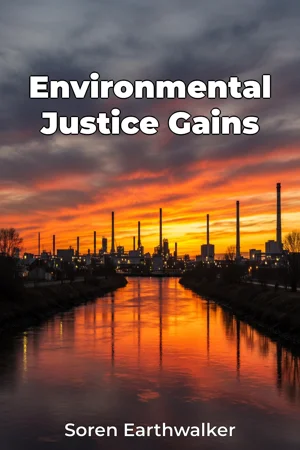
What if clean air and safe water were not universally guaranteed rights, but privileges unequally distributed across communities? "Environmental Justice Gains" explores the ongoing struggle for equitable environmental protection, revealing how regulatory actions, informed by rigorous environmental agency findings, are shaping a more just future. This book examines the complex interplay of politics and environmental policy, focusing on how targeted interventions strive to correct historical disparities in environmental quality. This book addresses two primary topics: first, the systemic inequalities in exposure to environmental hazards, and second, the effectiveness of regulatory interventions designed to mitigate these disparities. Environmental injustice disproportionately affects marginalized communities, who often bear the brunt of pollution from industrial facilities, waste disposal sites, and inadequate infrastructure. Understanding the roots and consequences of these inequalities is paramount. Equally important is assessing the impact of policies aimed at rectifying these wrongs, determining what works, what doesn't, and why. These topics matter because environmental justice is not just an environmental issue; it is a matter of public health, economic opportunity, and social equity. To fully grasp the complexities of contemporary environmental justice, this book delves into the historical context of discriminatory zoning practices, industrial siting decisions influenced by racial and socioeconomic factors, and the legacy of environmental racism. It provides a foundation in environmental law and policy, explaining key legislation such as the Clean Air Act and the Clean Water Act, and the role of the Environmental Protection Agency (EPA) in enforcing these laws. The central argument of "Environmental Justice Gains" is that while significant progress has been made in addressing environmental injustice through regulatory action, persistent disparities demand a more comprehensive and integrated approach that centers community engagement and data-driven decision-making. The book emphasizes the importance of robust scientific research in identifying environmental hazards and informing policy interventions. The book begins with an overview of environmental justice principles and the historical context of environmental inequity. It then examines specific cases of environmental injustice across the United States, analyzing the regulatory frameworks applied to these situations and the outcomes achieved. Major sections are dedicated to evaluating the effectiveness of different regulatory tools, such as permitting requirements, enforcement actions, and community engagement strategies. The book culminates in recommendations for improving environmental justice outcomes through policy reform, increased community empowerment, and innovative technological solutions. Practical applications of the book's findings are illustrated through case studies of successful environmental justice initiatives and analyses of ongoing challenges. The analysis presented relies on a variety of evidence, including EPA reports, academic studies, community-based research, and legal case files. Quantitative data on pollution levels, health outcomes, and demographic characteristics are integrated with qualitative insights from interviews with community members, environmental advocates, and policymakers. This book intersects with several academic fields, including public health, sociology, urban planning, and law. Public health perspectives are essential for understanding the health consequences of environmental exposures. Sociological analysis sheds light on the social and economic factors that contribute to environmental inequality. Urban planning principles inform strategies for creating more equitable and sustainable communities. Legal frameworks provide the basis for regulatory interventions and environmental enforcement. A unique aspect of this book is its focus on data-driven evaluation of environmental justice policies. It employs statistical methods to assess the impact of regulatory interventions on environmental quality and health outcomes in marginalized communities. This evidence based approach provides valuable insights for policymakers and advocates seeking to advance environmental justice. The book adopts a professional and objective tone, presenting information in a clear and accessible manner while maintaining scholarly rigor. It is intended for students, researchers, policymakers, environmental advocates, and community members interested in understanding and addressing environmental injustice. The book adheres to the conventions of academic non-fiction genre. The scope of the book is limited to the United States, focusing on federal and state regulatory actions. It does not extensively cover international environmental justice issues. Readers can apply the information in this book to advocate for policy changes, support community-based environmental justice initiatives, and promote more equitable and sustainable development practices. The book acknowledges ongoing debates surrounding the role of government regulation in addressing environmental injustice, including discussions about the potential for unintended consequences and the importance of balancing environmental protection with economic development. It emphasizes the need for inclusive and participatory decision-making processes that reflect the values and priorities of affected communities.
What if clean air and safe water were not universally guaranteed rights, but privileges unequally distributed across communities? "Environmental Justice Gains" explores the ongoing struggle for equitable environmental protection, revealing how regulatory actions, informed by rigorous environmental agency findings, are shaping a more just future. This book examines the complex interplay of politics and environmental policy, focusing on how targeted interventions strive to correct historical disparities in environmental quality. This book addresses two primary topics: first, the systemic inequalities in exposure to environmental hazards, and second, the effectiveness of regulatory interventions designed to mitigate these disparities. Environmental injustice disproportionately affects marginalized communities, who often bear the brunt of pollution from industrial facilities, waste disposal sites, and inadequate infrastructure. Understanding the roots and consequences of these inequalities is paramount. Equally important is assessing the impact of policies aimed at rectifying these wrongs, determining what works, what doesn't, and why. These topics matter because environmental justice is not just an environmental issue; it is a matter of public health, economic opportunity, and social equity. To fully grasp the complexities of contemporary environmental justice, this book delves into the historical context of discriminatory zoning practices, industrial siting decisions influenced by racial and socioeconomic factors, and the legacy of environmental racism. It provides a foundation in environmental law and policy, explaining key legislation such as the Clean Air Act and the Clean Water Act, and the role of the Environmental Protection Agency (EPA) in enforcing these laws. The central argument of "Environmental Justice Gains" is that while significant progress has been made in addressing environmental injustice through regulatory action, persistent disparities demand a more comprehensive and integrated approach that centers community engagement and data-driven decision-making. The book emphasizes the importance of robust scientific research in identifying environmental hazards and informing policy interventions. The book begins with an overview of environmental justice principles and the historical context of environmental inequity. It then examines specific cases of environmental injustice across the United States, analyzing the regulatory frameworks applied to these situations and the outcomes achieved. Major sections are dedicated to evaluating the effectiveness of different regulatory tools, such as permitting requirements, enforcement actions, and community engagement strategies. The book culminates in recommendations for improving environmental justice outcomes through policy reform, increased community empowerment, and innovative technological solutions. Practical applications of the book's findings are illustrated through case studies of successful environmental justice initiatives and analyses of ongoing challenges. The analysis presented relies on a variety of evidence, including EPA reports, academic studies, community-based research, and legal case files. Quantitative data on pollution levels, health outcomes, and demographic characteristics are integrated with qualitative insights from interviews with community members, environmental advocates, and policymakers. This book intersects with several academic fields, including public health, sociology, urban planning, and law. Public health perspectives are essential for understanding the health consequences of environmental exposures. Sociological analysis sheds light on the social and economic factors that contribute to environmental inequality. Urban planning principles inform strategies for creating more equitable and sustainable communities. Legal frameworks provide the basis for regulatory interventions and environmental enforcement. A unique aspect of this book is its focus on data-driven evaluation of environmental justice policies. It employs statistical methods to assess the impact of regulatory interventions on environmental quality and health outcomes in marginalized communities. This evidence based approach provides valuable insights for policymakers and advocates seeking to advance environmental justice. The book adopts a professional and objective tone, presenting information in a clear and accessible manner while maintaining scholarly rigor. It is intended for students, researchers, policymakers, environmental advocates, and community members interested in understanding and addressing environmental injustice. The book adheres to the conventions of academic non-fiction genre. The scope of the book is limited to the United States, focusing on federal and state regulatory actions. It does not extensively cover international environmental justice issues. Readers can apply the information in this book to advocate for policy changes, support community-based environmental justice initiatives, and promote more equitable and sustainable development practices. The book acknowledges ongoing debates surrounding the role of government regulation in addressing environmental injustice, including discussions about the potential for unintended consequences and the importance of balancing environmental protection with economic development. It emphasizes the need for inclusive and participatory decision-making processes that reflect the values and priorities of affected communities.
"Environmental Justice Gains" delves into the critical issue of unequal environmental protection, specifically how marginalized communities disproportionately face environmental hazards while exploring the effectiveness of current regulatory actions. It highlights how environmental justice encompasses public health, economic opportunity, and social equity, demonstrating that clean air and safe water are not universally accessible. Readers gain insights into how discriminatory zoning practices and industrial siting decisions have historically exacerbated these inequalities, creating legacies of environmental racism. The book examines environmental policy and law, particularly the Clean Air Act and Clean Water Act, while assessing the Environmental Protection Agency's (EPA) role in enforcement. It emphasizes the necessity of community engagement and data-driven decision-making to address persistent disparities, advocating for a comprehensive and integrated approach. Case studies of successful environmental justice initiatives and analyses of ongoing challenges are used to illustrate the practical applications of its findings. Beginning with an overview of environmental justice principles, the book progresses to examine environmental injustice cases across the United States, analyzing the regulatory frameworks applied and outcomes achieved. It concludes with recommendations for improving environmental justice outcomes through policy reform, community empowerment, and innovative technological solutions, making it valuable for policymakers, advocates, and community members alike.
Book Details
ISBN
9788233972325
Publisher
Publifye AS
Your Licenses
You don't own any licenses for this book
Purchase a license below to unlock this book and download the EPUB.
Purchase License
Select a tier to unlock this book
Need bulk licensing?
Contact us for enterprise agreements.