
About This Book
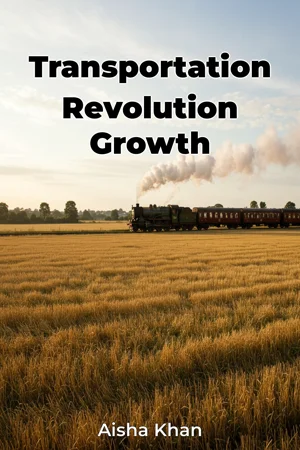
How did the convergence of technological advancements reshape not only the physical landscape but also the social and economic fabric of modern society? "Transportation Revolution Growth" explores the transformative period of innovation in railroads, automobiles, and aviation, examining their profound effects on trade, travel, and global interconnectedness. This book is important because it delves into the crucial advancements that propelled the world into an era of unprecedented mobility, impacting how we live, work, and interact with one another. The book examines the historical backdrop against which these transportation technologies emerged, considering the social and scientific climates that fostered their development. It assumes a basic familiarity with 19th and 20th-century history, but provides detailed explanations of the engineering and economic principles at play. The core argument of "Transportation Revolution Growth" is that the synergistic development of railroads, automobiles, and aviation acted as a catalyst for global integration and economic expansion. These innovations dramatically reduced the friction of distance, enabling faster and more efficient movement of goods and people, leading to increased trade, urbanization, and cultural exchange. The book is structured to first introduce the early stages of railroad development, tracing its origins and expansion across continents, particularly highlighting the impact on industrial growth and westward expansion in the United States. It subsequently pivots to the rise of the automobile, exploring its evolution from a luxury item to a mass-produced commodity and its implications for suburbanization, personal freedom, and infrastructure development. Finally, it delves into the advent of aviation, covering its early experimental phase, its role in military conflicts, and its eventual transformation into a global transportation network. The culmination of the argument synthesizes these individual narratives, demonstrating how these three modes of transportation converged to create a dynamic and interconnected world. The book concludes with a discussion of contemporary challenges and future trends in transportation, such as sustainability and automation. This book draws upon a diverse range of primary and secondary sources, including engineering schematics, historical photographs, government documents, statistical data, and firsthand accounts from engineers, entrepreneurs, and travelers. The analysis incorporates quantitative data on transportation costs, travel times, and trade volumes to support its claims. "Transportation Revolution Growth" connects to the fields of economics, sociology, and urban planning, explaining how transportation innovations influenced economic growth patterns, social stratification, and the spatial organization of cities and regions. For example, the book elucidates how the automobile reshaped urban landscapes and contributed to suburban sprawl, while aviation fostered globalization and international business. This book adopts a holistic perspective, examining the technological, economic, social, and cultural dimensions of the transportation revolution. It moves beyond a purely technological history by considering the human element and the societal impact of these innovations. The tone of the book is factual and analytical, while remaining accessible to a general audience. The writing style is clear, concise, and engaging, incorporating compelling anecdotes and case studies to illustrate key points. The intended audience includes students and scholars of technology, history, economics, and transportation, as well as general readers interested in learning about the forces that shaped the modern world. The book will appeal to anyone seeking to understand the historical roots of our contemporary transportation systems and their broader societal implications. As a work of history, "Transportation Revolution Growth" adheres to the conventions of rigorous scholarship, including thorough documentation, balanced analysis, and clear presentation of evidence. It also incorporates elements of technological history, providing detailed explanations of the engineering principles and technical challenges involved in developing these transportation systems. While the book provides a comprehensive overview of the transportation revolution, it focuses primarily on developments in the United States and Europe, with limited attention to other regions of the world. It also emphasizes the economic and social impacts of these technologies, while acknowledging that other perspectives, such as environmental impacts, warrant further exploration. Readers can apply the insights from this book to understand contemporary transportation challenges, such as traffic congestion, infrastructure decay, and the need for sustainable transportation solutions. By understanding the historical evolution of transportation systems, readers can gain a deeper appreciation for the complexities of planning and managing our transportation infrastructure in the 21st century. The book will address debates surrounding the social and environmental consequences of transportation technologies, such as the impact of automobile emissions on air quality and the role of transportation infrastructure in perpetuating social inequalities. It offers a nuanced perspective on these issues, acknowledging both the benefits and drawbacks of these innovations.
How did the convergence of technological advancements reshape not only the physical landscape but also the social and economic fabric of modern society? "Transportation Revolution Growth" explores the transformative period of innovation in railroads, automobiles, and aviation, examining their profound effects on trade, travel, and global interconnectedness. This book is important because it delves into the crucial advancements that propelled the world into an era of unprecedented mobility, impacting how we live, work, and interact with one another. The book examines the historical backdrop against which these transportation technologies emerged, considering the social and scientific climates that fostered their development. It assumes a basic familiarity with 19th and 20th-century history, but provides detailed explanations of the engineering and economic principles at play. The core argument of "Transportation Revolution Growth" is that the synergistic development of railroads, automobiles, and aviation acted as a catalyst for global integration and economic expansion. These innovations dramatically reduced the friction of distance, enabling faster and more efficient movement of goods and people, leading to increased trade, urbanization, and cultural exchange. The book is structured to first introduce the early stages of railroad development, tracing its origins and expansion across continents, particularly highlighting the impact on industrial growth and westward expansion in the United States. It subsequently pivots to the rise of the automobile, exploring its evolution from a luxury item to a mass-produced commodity and its implications for suburbanization, personal freedom, and infrastructure development. Finally, it delves into the advent of aviation, covering its early experimental phase, its role in military conflicts, and its eventual transformation into a global transportation network. The culmination of the argument synthesizes these individual narratives, demonstrating how these three modes of transportation converged to create a dynamic and interconnected world. The book concludes with a discussion of contemporary challenges and future trends in transportation, such as sustainability and automation. This book draws upon a diverse range of primary and secondary sources, including engineering schematics, historical photographs, government documents, statistical data, and firsthand accounts from engineers, entrepreneurs, and travelers. The analysis incorporates quantitative data on transportation costs, travel times, and trade volumes to support its claims. "Transportation Revolution Growth" connects to the fields of economics, sociology, and urban planning, explaining how transportation innovations influenced economic growth patterns, social stratification, and the spatial organization of cities and regions. For example, the book elucidates how the automobile reshaped urban landscapes and contributed to suburban sprawl, while aviation fostered globalization and international business. This book adopts a holistic perspective, examining the technological, economic, social, and cultural dimensions of the transportation revolution. It moves beyond a purely technological history by considering the human element and the societal impact of these innovations. The tone of the book is factual and analytical, while remaining accessible to a general audience. The writing style is clear, concise, and engaging, incorporating compelling anecdotes and case studies to illustrate key points. The intended audience includes students and scholars of technology, history, economics, and transportation, as well as general readers interested in learning about the forces that shaped the modern world. The book will appeal to anyone seeking to understand the historical roots of our contemporary transportation systems and their broader societal implications. As a work of history, "Transportation Revolution Growth" adheres to the conventions of rigorous scholarship, including thorough documentation, balanced analysis, and clear presentation of evidence. It also incorporates elements of technological history, providing detailed explanations of the engineering principles and technical challenges involved in developing these transportation systems. While the book provides a comprehensive overview of the transportation revolution, it focuses primarily on developments in the United States and Europe, with limited attention to other regions of the world. It also emphasizes the economic and social impacts of these technologies, while acknowledging that other perspectives, such as environmental impacts, warrant further exploration. Readers can apply the insights from this book to understand contemporary transportation challenges, such as traffic congestion, infrastructure decay, and the need for sustainable transportation solutions. By understanding the historical evolution of transportation systems, readers can gain a deeper appreciation for the complexities of planning and managing our transportation infrastructure in the 21st century. The book will address debates surrounding the social and environmental consequences of transportation technologies, such as the impact of automobile emissions on air quality and the role of transportation infrastructure in perpetuating social inequalities. It offers a nuanced perspective on these issues, acknowledging both the benefits and drawbacks of these innovations.
"Transportation Revolution Growth" explores how technological advancements in railroads, automobiles, and aviation reshaped society, impacting trade, travel, and global interconnectedness. It examines the historical, social, and scientific climates that fostered these innovations, arguing that their synergistic development acted as a catalyst for global integration and economic expansion. For example, the rise of railroads significantly boosted industrial growth and westward expansion, while the advent of aviation transformed global interactions. The book progresses from the early stages of railroad development to the rise of the automobile and finally delves into the advent of aviation. By tracing this evolution, the book demonstrates how these three modes of transportation converged to create a dynamic and interconnected world. It adopts a holistic perspective, examining the technological, economic, social, and cultural dimensions of this transformation, incorporating diverse sources like engineering schematics and firsthand accounts. This approach makes it valuable for students, scholars, and general readers interested in understanding the historical roots of modern transportation systems.
Book Details
ISBN
9788233972295
Publisher
Publifye AS
Your Licenses
You don't own any licenses for this book
Purchase a license below to unlock this book and download the EPUB.
Purchase License
Select a tier to unlock this book
Need bulk licensing?
Contact us for enterprise agreements.