
About This Book
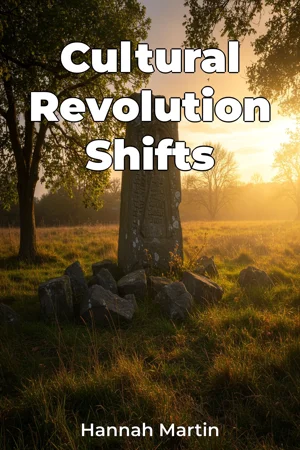
How do moments of intense societal change irrevocably reshape our cultural landscape? "Cultural Revolution Shifts" explores the profound and lasting impacts of major cultural upheavals on art, politics, and societal norms. This book delves into pivotal periods in history, examining how these transformative events acted as crucibles, forging new artistic expressions, political ideologies, and social structures. The central argument of "Cultural Revolution Shifts" is that cultural revolutions, while often disruptive and chaotic, serve as critical catalysts for societal evolution. These periods force a re-evaluation of existing values, beliefs, and power structures, leading to significant, and often unpredictable, shifts in cultural paradigms. Understanding these shifts is crucial for comprehending the trajectory of human civilization and the complex interplay between culture and power. This book is structured to provide a comprehensive and nuanced analysis of cultural transformation. It begins by defining "cultural revolution" and establishing a framework for analyzing these complex phenomena. The initial chapters explore the theoretical underpinnings of cultural change, drawing upon historical analysis and sociological perspectives. The core of the book is dedicated to examining specific case studies, analyzing key cultural revolutions across different historical periods and geographic locations. These case studies will focus on two major points: the immediate impact of revolutionary events on artistic production and expression; and the subsequent evolution of political thought and social norms. The book utilizes a range of evidence, including primary source documents, artwork analysis, political manifestos, and sociological studies. Unique data sources, such as previously untranslated historical texts and newly discovered artistic collections, are incorporated to offer fresh perspectives on these well-trodden historical events. "Cultural Revolution Shifts" connects to other fields of study, including sociology, political science, and art history. By integrating these perspectives, the book provides a holistic understanding of cultural revolutions and their multifaceted consequences. The book presents an innovative approach by moving beyond a purely chronological narrative. It focuses on comparative analysis, identifying common threads and divergent paths across different cultural revolutions. This allows for a deeper understanding of the underlying mechanisms that drive cultural change. Written in an accessible and engaging style, "Cultural Revolution Shifts" is intended for a broad audience, including students, academics, and general readers interested in history, art, and political science. It will be of particular value to those seeking a deeper understanding of the forces that shape our world and the complex relationship between culture and power. The scope of the book is intentionally broad, encompassing a range of cultural revolutions from different periods and regions. However, it acknowledges the limitations of a single volume and focuses on providing in-depth analysis of selected case studies, rather than attempting an exhaustive global survey. The information presented in "Cultural Revolution Shifts" has practical applications for policymakers, artists, and social activists. By understanding the dynamics of cultural change, these individuals can better navigate periods of societal upheaval and work towards creating a more just and equitable world. The book addresses ongoing debates within academia regarding the definition and significance of cultural revolutions. It acknowledges the diverse perspectives on these events and offers a balanced and nuanced analysis that takes into account multiple viewpoints. "Cultural Revolution Shifts" invites readers to critically examine the past, engage with the present, and contemplate the future of cultural change.
How do moments of intense societal change irrevocably reshape our cultural landscape? "Cultural Revolution Shifts" explores the profound and lasting impacts of major cultural upheavals on art, politics, and societal norms. This book delves into pivotal periods in history, examining how these transformative events acted as crucibles, forging new artistic expressions, political ideologies, and social structures. The central argument of "Cultural Revolution Shifts" is that cultural revolutions, while often disruptive and chaotic, serve as critical catalysts for societal evolution. These periods force a re-evaluation of existing values, beliefs, and power structures, leading to significant, and often unpredictable, shifts in cultural paradigms. Understanding these shifts is crucial for comprehending the trajectory of human civilization and the complex interplay between culture and power. This book is structured to provide a comprehensive and nuanced analysis of cultural transformation. It begins by defining "cultural revolution" and establishing a framework for analyzing these complex phenomena. The initial chapters explore the theoretical underpinnings of cultural change, drawing upon historical analysis and sociological perspectives. The core of the book is dedicated to examining specific case studies, analyzing key cultural revolutions across different historical periods and geographic locations. These case studies will focus on two major points: the immediate impact of revolutionary events on artistic production and expression; and the subsequent evolution of political thought and social norms. The book utilizes a range of evidence, including primary source documents, artwork analysis, political manifestos, and sociological studies. Unique data sources, such as previously untranslated historical texts and newly discovered artistic collections, are incorporated to offer fresh perspectives on these well-trodden historical events. "Cultural Revolution Shifts" connects to other fields of study, including sociology, political science, and art history. By integrating these perspectives, the book provides a holistic understanding of cultural revolutions and their multifaceted consequences. The book presents an innovative approach by moving beyond a purely chronological narrative. It focuses on comparative analysis, identifying common threads and divergent paths across different cultural revolutions. This allows for a deeper understanding of the underlying mechanisms that drive cultural change. Written in an accessible and engaging style, "Cultural Revolution Shifts" is intended for a broad audience, including students, academics, and general readers interested in history, art, and political science. It will be of particular value to those seeking a deeper understanding of the forces that shape our world and the complex relationship between culture and power. The scope of the book is intentionally broad, encompassing a range of cultural revolutions from different periods and regions. However, it acknowledges the limitations of a single volume and focuses on providing in-depth analysis of selected case studies, rather than attempting an exhaustive global survey. The information presented in "Cultural Revolution Shifts" has practical applications for policymakers, artists, and social activists. By understanding the dynamics of cultural change, these individuals can better navigate periods of societal upheaval and work towards creating a more just and equitable world. The book addresses ongoing debates within academia regarding the definition and significance of cultural revolutions. It acknowledges the diverse perspectives on these events and offers a balanced and nuanced analysis that takes into account multiple viewpoints. "Cultural Revolution Shifts" invites readers to critically examine the past, engage with the present, and contemplate the future of cultural change.
"Cultural Revolution Shifts" explores how major cultural upheavals reshape art, politics, and societal norms. It argues that these periods, though disruptive, are critical catalysts for societal evolution, forcing re-evaluation of values and power structures. The book examines how revolutionary events impact artistic expression and the subsequent evolution of political thought. For example, societal changes often lead to new forms of art that reflect altered values, or political manifestos become artistic statements. The book analyzes specific cultural revolutions across different historical periods and geographic locations, drawing upon primary source documents, artwork analysis, political manifestos, and sociological studies. It uniquely incorporates previously untranslated historical texts and newly discovered artistic collections. Rather than a chronological narrative, the book uses comparative analysis, identifying shared threads and divergent paths to understand cultural change mechanisms. The book begins by defining "cultural revolution" and establishing an analytical framework. Early chapters explore theoretical underpinnings, with the core dedicated to case studies. By integrating perspectives from sociology, political science, and art history, "Cultural Revolution Shifts" provides a holistic understanding of cultural revolutions and their consequences, appealing to students, academics, and anyone interested in history, art, and political science.
Book Details
ISBN
9788233972233
Publisher
Publifye AS
Your Licenses
You don't own any licenses for this book
Purchase a license below to unlock this book and download the EPUB.
Purchase License
Select a tier to unlock this book
Need bulk licensing?
Contact us for enterprise agreements.