
About This Book
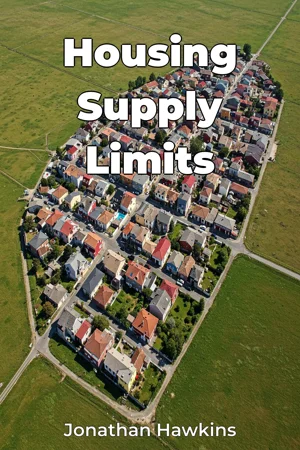
Why are housing prices skyrocketing while availability dwindles, leaving many priced out of desirable communities? This book, "Housing Supply Limits," investigates the intricate relationship between zoning restrictions, building constraints, and the resulting price spikes and housing shortages plaguing cities worldwide. We delve into the core economic and political factors that artificially limit housing supply and explore the consequences for individuals, families, and the overall economy. Understanding these dynamics is crucial for anyone interested in addressing the affordability crisis and creating more equitable housing markets. The book addresses three key topics: first, the nature and impact of various zoning regulations (single-family zoning, density restrictions, height limits, minimum lot sizes) and their cumulative effect on limiting the type and quantity of housing that can be built. We analyze how these regulations, often rooted in historical planning practices and community preferences, inadvertently stifle innovation and reduce the overall housing supply. Second, we examine the role of building constraints, including lengthy permitting processes, environmental regulations, and labor shortages, which add significant costs and delays to housing development. These constraints, while often intended to protect public safety and the environment, can significantly impede the construction of new housing and exacerbate existing shortages. Third, the book analyzes how these supply-side restrictions directly contribute to inflated housing prices and decreased affordability. We explore the economic mechanisms through which limited supply interacts with growing demand to create a competitive market where only the wealthiest can afford to live in desirable locations. "Housing Supply Limits" argues that restrictive zoning and burdensome building regulations are primary drivers of housing unaffordability and contribute to broader societal inequalities. The book contends that reforming these policies is essential to increasing housing supply, promoting economic opportunity, and creating more inclusive communities. This argument is particularly important now, as many cities are facing unprecedented housing crises and struggling to accommodate growing populations. The book is structured as follows: It begins with an introduction to the fundamental economic principles of supply and demand in the housing market, highlighting the unique characteristics of housing as a commodity. Subsequently, it dissects the various types of zoning regulations and building constraints, providing real-world examples of their impact on housing development. The middle chapters analyze the economic consequences of these restrictions, focusing on price elasticity, wealth inequality, and the displacement of low-income residents. The book then explores potential policy solutions, including zoning reform, streamlined permitting processes, and incentives for affordable housing development. It concludes with a discussion of the political challenges involved in implementing these reforms and the importance of community engagement in creating more equitable housing policies. The evidence presented throughout the book draws on a combination of economic modeling, econometric analysis of housing market data, case studies of cities with varying levels of regulation, and legal analysis of zoning ordinances. We utilize publicly available data from government agencies, academic research institutions, and industry organizations to provide a comprehensive and data-driven assessment of the issue. This book connects to several other fields of study, including urban planning, public policy, and sociology. Urban planning provides the historical and theoretical context for understanding zoning regulations. Public policy informs the discussion of potential policy solutions and their implementation. Sociology sheds light on the social and demographic consequences of housing unaffordability, such as increased segregation and displacement. "Housing Supply Limits" offers a balanced and fact-based analysis of a complex issue. The writing style is accessible and engaging, aiming to reach a broad audience interested in understanding the causes and consequences of the housing crisis. The target audience includes policymakers, urban planners, real estate professionals, academics, and concerned citizens who want to learn more about the factors contributing to housing unaffordability and potential solutions. This book will also appeal to students in economics, urban studies, and public policy programs. In line with the conventions of economics and political science writing, the book relies on empirical evidence, rigorous analysis, and clear and concise language to present its arguments. While the book aims to provide a comprehensive overview of the issue, it acknowledges certain limitations in scope. It primarily focuses on the supply-side factors contributing to housing unaffordability and does not delve deeply into demand-side factors such as demographic shifts or income inequality. The information presented in the book can be applied practically by readers in several ways. Policymakers can use the analysis to inform their decisions about zoning reform and housing policy. Urban planners can use the insights to design more inclusive and sustainable communities. Real estate professionals can use the knowledge to better understand the dynamics of the housing market. Concerned citizens can use the information to advocate for policy changes that promote housing affordability. The book addresses ongoing debates in the field regarding the effectiveness of different policy solutions, such as inclusionary zoning versus density bonuses. It also acknowledges the controversies surrounding zoning reform, including concerns about gentrification and neighborhood character.
Why are housing prices skyrocketing while availability dwindles, leaving many priced out of desirable communities? This book, "Housing Supply Limits," investigates the intricate relationship between zoning restrictions, building constraints, and the resulting price spikes and housing shortages plaguing cities worldwide. We delve into the core economic and political factors that artificially limit housing supply and explore the consequences for individuals, families, and the overall economy. Understanding these dynamics is crucial for anyone interested in addressing the affordability crisis and creating more equitable housing markets. The book addresses three key topics: first, the nature and impact of various zoning regulations (single-family zoning, density restrictions, height limits, minimum lot sizes) and their cumulative effect on limiting the type and quantity of housing that can be built. We analyze how these regulations, often rooted in historical planning practices and community preferences, inadvertently stifle innovation and reduce the overall housing supply. Second, we examine the role of building constraints, including lengthy permitting processes, environmental regulations, and labor shortages, which add significant costs and delays to housing development. These constraints, while often intended to protect public safety and the environment, can significantly impede the construction of new housing and exacerbate existing shortages. Third, the book analyzes how these supply-side restrictions directly contribute to inflated housing prices and decreased affordability. We explore the economic mechanisms through which limited supply interacts with growing demand to create a competitive market where only the wealthiest can afford to live in desirable locations. "Housing Supply Limits" argues that restrictive zoning and burdensome building regulations are primary drivers of housing unaffordability and contribute to broader societal inequalities. The book contends that reforming these policies is essential to increasing housing supply, promoting economic opportunity, and creating more inclusive communities. This argument is particularly important now, as many cities are facing unprecedented housing crises and struggling to accommodate growing populations. The book is structured as follows: It begins with an introduction to the fundamental economic principles of supply and demand in the housing market, highlighting the unique characteristics of housing as a commodity. Subsequently, it dissects the various types of zoning regulations and building constraints, providing real-world examples of their impact on housing development. The middle chapters analyze the economic consequences of these restrictions, focusing on price elasticity, wealth inequality, and the displacement of low-income residents. The book then explores potential policy solutions, including zoning reform, streamlined permitting processes, and incentives for affordable housing development. It concludes with a discussion of the political challenges involved in implementing these reforms and the importance of community engagement in creating more equitable housing policies. The evidence presented throughout the book draws on a combination of economic modeling, econometric analysis of housing market data, case studies of cities with varying levels of regulation, and legal analysis of zoning ordinances. We utilize publicly available data from government agencies, academic research institutions, and industry organizations to provide a comprehensive and data-driven assessment of the issue. This book connects to several other fields of study, including urban planning, public policy, and sociology. Urban planning provides the historical and theoretical context for understanding zoning regulations. Public policy informs the discussion of potential policy solutions and their implementation. Sociology sheds light on the social and demographic consequences of housing unaffordability, such as increased segregation and displacement. "Housing Supply Limits" offers a balanced and fact-based analysis of a complex issue. The writing style is accessible and engaging, aiming to reach a broad audience interested in understanding the causes and consequences of the housing crisis. The target audience includes policymakers, urban planners, real estate professionals, academics, and concerned citizens who want to learn more about the factors contributing to housing unaffordability and potential solutions. This book will also appeal to students in economics, urban studies, and public policy programs. In line with the conventions of economics and political science writing, the book relies on empirical evidence, rigorous analysis, and clear and concise language to present its arguments. While the book aims to provide a comprehensive overview of the issue, it acknowledges certain limitations in scope. It primarily focuses on the supply-side factors contributing to housing unaffordability and does not delve deeply into demand-side factors such as demographic shifts or income inequality. The information presented in the book can be applied practically by readers in several ways. Policymakers can use the analysis to inform their decisions about zoning reform and housing policy. Urban planners can use the insights to design more inclusive and sustainable communities. Real estate professionals can use the knowledge to better understand the dynamics of the housing market. Concerned citizens can use the information to advocate for policy changes that promote housing affordability. The book addresses ongoing debates in the field regarding the effectiveness of different policy solutions, such as inclusionary zoning versus density bonuses. It also acknowledges the controversies surrounding zoning reform, including concerns about gentrification and neighborhood character.
"Housing Supply Limits" examines how zoning restrictions and building constraints contribute to skyrocketing housing prices and limited availability. It explores the economic and political factors that artificially limit housing supply, impacting individuals, families, and the broader economy. Did you know that single-family zoning, often rooted in historical planning, can inadvertently stifle innovation, limiting housing options? Or that lengthy permitting processes significantly delay housing development, adding costs and exacerbating existing shortages? The book progresses from fundamental economic principles to dissecting zoning regulations and building constraints. It analyzes the economic consequences of these restrictions, such as wealth inequality, and then explores potential policy solutions. By using real-world examples and data-driven assessments, the book argues that reforming these policies is essential for increasing housing supply and promoting economic opportunity. It explains the impact of density restrictions and height limits on housing affordability. Ultimately, "Housing Supply Limits" offers a balanced analysis of a complex issue, making it a valuable resource for policymakers, urban planners, real estate professionals, and concerned citizens seeking to understand and address the housing crisis. The book's approach, blending economic modeling, case studies, and legal analysis, provides a comprehensive understanding of the interplay between housing supply, housing affordability, and public policy.
Book Details
ISBN
9788233972202
Publisher
Publifye AS
Your Licenses
You don't own any licenses for this book
Purchase a license below to unlock this book and download the EPUB.
Purchase License
Select a tier to unlock this book
Need bulk licensing?
Contact us for enterprise agreements.