
About This Book
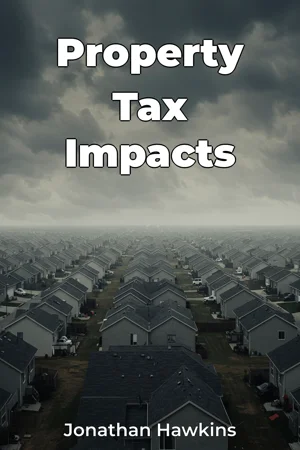
Can property taxes be a lever for shaping not just municipal budgets, but also the very fabric of our communities? "Property Tax Impacts" delves into the intricate relationship between taxation frameworks and the dynamics of housing supply and demand, offering a crucial examination of how these policies influence urban development, affordability, and social equity. This book tackles two essential topics: the ways in which property taxes affect housing affordability for different income groups and the impact of these taxes on the incentives for new construction and property improvements. These topics are highly relevant as municipalities grapple with housing shortages, rising property values, and the need for sustainable revenue streams. Understanding the impact of property taxes requires consideration of historical trends in municipal finance and housing policy, as well as an understanding of basic economic principles of supply and demand. The book presumes a foundational knowledge of economic concepts like elasticity and market equilibrium, but it also provides context for readers unfamiliar with the nuances of municipal budgeting and property assessment practices. The central argument of "Property Tax Impacts" is that property tax policies, often implemented with limited understanding of their broader consequences, can inadvertently exacerbate housing affordability issues, stifle development in certain areas, and contribute to inequalities within and between communities. This argument has significant implications for policymakers, developers, and homeowners alike, as it challenges conventional wisdom about the role and effects of property taxation. The book begins by introducing the fundamental concepts of property taxation, including assessment methods, tax rates, and exemption policies. It then develops the argument through several key sections. One section analyzes how different property tax structures, such as progressive or regressive systems, affect housing affordability for low, middle, and high-income households. Another section examines the influence of property taxes on developers' decisions to invest in new construction or renovate existing properties, considering factors like land value, construction costs, and expected returns. A third section explores the spillover effects of property tax policies on neighboring communities, considering issues like tax competition and regional inequality. The book culminates by exploring potential reforms to property tax systems that could promote more equitable and sustainable housing markets. The evidence presented relies heavily on municipal finance reports, housing market data, and econometric analysis. The book also incorporates case studies of specific cities and regions with varying property tax systems to illustrate the real-world effects of different policies. Furthermore, the book adopts a quantitative approach, leveraging statistical models to estimate the causal impact of property taxes on housing supply and demand. "Property Tax Impacts" connects to several other fields of study, including urban planning, public finance, and sociology. The book demonstrates how property tax policies can either reinforce or mitigate patterns of segregation and inequality. It also acknowledges that effective property tax reform requires collaboration between policymakers, urban planners, and community stakeholders. What sets this book apart is its holistic approach to analyzing property tax impacts. Rather than focusing solely on the revenue-generating aspects of these taxes, it considers the broader social, economic, and environmental consequences. The tone and writing style are academic and analytical, providing a balanced presentation of evidence and arguments. The book caters to a wide audience, including academics, policymakers, urban planners, real estate professionals, and informed citizens interested in understanding the complexities of property taxation and its effects on housing markets. The scope of the book is limited to the United States, although many of the principles and concepts discussed are applicable to other countries with similar property tax systems. While the book addresses controversies surrounding property tax policies, such as the debate over tax abatements for developers, it strives to provide a fair and objective analysis of these issues. The information in the book can be applied practically by readers in several ways. Policymakers can use the book's findings to inform decisions about property tax rates, assessment methods, and exemption policies. Developers can use the book to assess the potential risks and rewards of investing in different types of housing projects in different locations. Homeowners can use the book to understand how property taxes affect their housing costs and property values.
Can property taxes be a lever for shaping not just municipal budgets, but also the very fabric of our communities? "Property Tax Impacts" delves into the intricate relationship between taxation frameworks and the dynamics of housing supply and demand, offering a crucial examination of how these policies influence urban development, affordability, and social equity. This book tackles two essential topics: the ways in which property taxes affect housing affordability for different income groups and the impact of these taxes on the incentives for new construction and property improvements. These topics are highly relevant as municipalities grapple with housing shortages, rising property values, and the need for sustainable revenue streams. Understanding the impact of property taxes requires consideration of historical trends in municipal finance and housing policy, as well as an understanding of basic economic principles of supply and demand. The book presumes a foundational knowledge of economic concepts like elasticity and market equilibrium, but it also provides context for readers unfamiliar with the nuances of municipal budgeting and property assessment practices. The central argument of "Property Tax Impacts" is that property tax policies, often implemented with limited understanding of their broader consequences, can inadvertently exacerbate housing affordability issues, stifle development in certain areas, and contribute to inequalities within and between communities. This argument has significant implications for policymakers, developers, and homeowners alike, as it challenges conventional wisdom about the role and effects of property taxation. The book begins by introducing the fundamental concepts of property taxation, including assessment methods, tax rates, and exemption policies. It then develops the argument through several key sections. One section analyzes how different property tax structures, such as progressive or regressive systems, affect housing affordability for low, middle, and high-income households. Another section examines the influence of property taxes on developers' decisions to invest in new construction or renovate existing properties, considering factors like land value, construction costs, and expected returns. A third section explores the spillover effects of property tax policies on neighboring communities, considering issues like tax competition and regional inequality. The book culminates by exploring potential reforms to property tax systems that could promote more equitable and sustainable housing markets. The evidence presented relies heavily on municipal finance reports, housing market data, and econometric analysis. The book also incorporates case studies of specific cities and regions with varying property tax systems to illustrate the real-world effects of different policies. Furthermore, the book adopts a quantitative approach, leveraging statistical models to estimate the causal impact of property taxes on housing supply and demand. "Property Tax Impacts" connects to several other fields of study, including urban planning, public finance, and sociology. The book demonstrates how property tax policies can either reinforce or mitigate patterns of segregation and inequality. It also acknowledges that effective property tax reform requires collaboration between policymakers, urban planners, and community stakeholders. What sets this book apart is its holistic approach to analyzing property tax impacts. Rather than focusing solely on the revenue-generating aspects of these taxes, it considers the broader social, economic, and environmental consequences. The tone and writing style are academic and analytical, providing a balanced presentation of evidence and arguments. The book caters to a wide audience, including academics, policymakers, urban planners, real estate professionals, and informed citizens interested in understanding the complexities of property taxation and its effects on housing markets. The scope of the book is limited to the United States, although many of the principles and concepts discussed are applicable to other countries with similar property tax systems. While the book addresses controversies surrounding property tax policies, such as the debate over tax abatements for developers, it strives to provide a fair and objective analysis of these issues. The information in the book can be applied practically by readers in several ways. Policymakers can use the book's findings to inform decisions about property tax rates, assessment methods, and exemption policies. Developers can use the book to assess the potential risks and rewards of investing in different types of housing projects in different locations. Homeowners can use the book to understand how property taxes affect their housing costs and property values.
"Property Tax Impacts" examines the profound ways property taxes shape communities, going beyond municipal budgets to influence housing affordability and urban development. This book delves into the intricate relationship between property taxation and housing supply and demand, revealing how these policies can inadvertently affect housing affordability and incentives for new construction. For instance, the book highlights how different property tax structures can impact low, middle, and high-income households differently. The book uses municipal finance reports, housing market data, and econometric analysis to demonstrate its arguments. Case studies of specific cities and regions are explored, illustrating the real-world effects of different policies. By adopting a quantitative approach, the book estimates the causal impact of property taxes on housing supply and demand, offering a balanced and evidence-based analysis. The book progresses from introducing fundamental concepts of property taxation to analyzing the influence of these taxes on developers' decisions and the spillover effects on neighboring communities. Ultimately, it proposes potential reforms to promote more equitable and sustainable housing markets. This holistic approach, considering social, economic, and environmental consequences, distinguishes the book and makes it valuable for policymakers, urban planners, and anyone interested in the complexities of property taxation.
Book Details
ISBN
9788233972189
Publisher
Publifye AS
Your Licenses
You don't own any licenses for this book
Purchase a license below to unlock this book and download the EPUB.
Purchase License
Select a tier to unlock this book
Need bulk licensing?
Contact us for enterprise agreements.