
About This Book
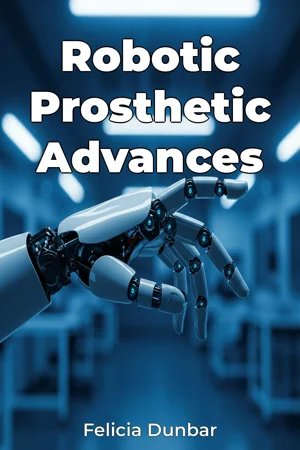
How close are we to truly seamless integration between humans and machines, particularly for those who have lost limbs? "Robotic Prosthetic Advances" delves into the revolutionary strides being made in artificial limbs, focusing primarily on two critical areas: advanced sensor integration offering enhanced sensory feedback, and sophisticated motor control systems enabling more natural movement. These advancements represent crucial steps toward restoring not just physical function, but also a greater sense of embodiment for amputees. This book is important because it provides a structured overview of a rapidly evolving field impacting healthcare, engineering, and quality of life. It grounds cutting-edge innovations within a historical and scientific context. Readers with an interest in biomedical engineering, robotics, or assistive technologies will find this book illuminating, though no prior expertise is required. The central argument of "Robotic Prosthetic Advances" is that the convergence of improved sensing capabilities and refined motor control algorithms is fundamentally transforming the functionality and user experience of artificial limbs, propelling them closer to replicating the complexities of biological limbs. It is a critical juncture in the development of prosthetic technology. The book begins by outlining the historical progression of prosthetic limbs from basic mechanical devices to the sophisticated, computer-controlled systems of today. It details the underlying principles of sensor technology, including pressure sensors, electromyography (EMG), and neural interfaces. This section provides a necessary foundation for understanding the complexities of modern prosthetic design. The core of the book is then divided into two major sections. The first explores innovations in sensor integration. This includes discussions of how prosthetic hands can now provide tactile feedback, allowing users to sense pressure, texture, and temperature. The second section is about improved motor control. It examines the algorithms and control systems that allow prosthetic limbs to respond more intuitively to the user's intentions. Topics include advanced pattern recognition techniques, machine learning algorithms for adaptive control, and the development of myoelectric control systems that interpret muscle signals with greater accuracy. A concluding section examines the challenges that remain – including the need for more durable and biocompatible materials, the development of more sophisticated neural interfaces, and the high cost of advanced prosthetics, which limits accessibility. The book closes with a discussion of the ethical and societal implications of advanced prosthetic technology. The evidence presented throughout the book is drawn from a wide range of sources, including peer-reviewed scientific publications, clinical trial data, and case studies of individuals using advanced prosthetic limbs. It also incorporates insights from interviews with leading researchers and engineers in the field. "Robotic Prosthetic Advances" also touches on several interdisciplinary connections. It draws from materials science in the development of lighter and stronger prosthetic components. It integrates neuroscience to better understand the neural mechanisms underlying motor control and sensory feedback. It also consider human-computer interaction (HCI) principles to optimize the user experience and ensure that prosthetic limbs are intuitive and easy to control. A key feature of this book is its focus on the user experience. It moves beyond the technical specifications of prosthetic devices to explore how these devices impact the lives of amputees. This user-centered approach provides a unique perspective on the challenges and opportunities in the field. The tone of the book is informative and accessible, blending technical detail with clear explanations and real-world examples. It aims to demystify the complex engineering and scientific principles that underpin modern prosthetic technology. The target audience includes biomedical engineers, researchers in robotics and artificial intelligence, clinicians working with amputees, and anyone with a general interest in the future of assistive technology. It would be particularly valuable to students and researchers seeking a comprehensive overview of the field. In line with the conventions of technology and science writing, the book emphasizes factual accuracy, clear explanations, and rigorous analysis. All claims are supported by evidence and the limitations of current technology are acknowledged. The scope of the book is limited to advancements in upper-limb prosthetics, specifically focusing on sensor integration and motor control. It does not delve into the broader field of orthotics or other types of assistive devices. The information found within this book can be applied both directly and indirectly. Clinicians can use the information presented to make better informed decisions about prosthetic prescriptions. Engineers and researchers can use it to identify promising areas for future research and development. It also has relevance for policymakers involved in regulating the medical device industry and ensuring access to assistive technologies. Finally, the book acknowledges that there are ongoing debates in the field regarding the optimal approaches to neural interfacing, the role of artificial intelligence in prosthetic control, and the ethical implications of blurring the line between human and machine. It presents a balanced perspective on these issues.
How close are we to truly seamless integration between humans and machines, particularly for those who have lost limbs? "Robotic Prosthetic Advances" delves into the revolutionary strides being made in artificial limbs, focusing primarily on two critical areas: advanced sensor integration offering enhanced sensory feedback, and sophisticated motor control systems enabling more natural movement. These advancements represent crucial steps toward restoring not just physical function, but also a greater sense of embodiment for amputees. This book is important because it provides a structured overview of a rapidly evolving field impacting healthcare, engineering, and quality of life. It grounds cutting-edge innovations within a historical and scientific context. Readers with an interest in biomedical engineering, robotics, or assistive technologies will find this book illuminating, though no prior expertise is required. The central argument of "Robotic Prosthetic Advances" is that the convergence of improved sensing capabilities and refined motor control algorithms is fundamentally transforming the functionality and user experience of artificial limbs, propelling them closer to replicating the complexities of biological limbs. It is a critical juncture in the development of prosthetic technology. The book begins by outlining the historical progression of prosthetic limbs from basic mechanical devices to the sophisticated, computer-controlled systems of today. It details the underlying principles of sensor technology, including pressure sensors, electromyography (EMG), and neural interfaces. This section provides a necessary foundation for understanding the complexities of modern prosthetic design. The core of the book is then divided into two major sections. The first explores innovations in sensor integration. This includes discussions of how prosthetic hands can now provide tactile feedback, allowing users to sense pressure, texture, and temperature. The second section is about improved motor control. It examines the algorithms and control systems that allow prosthetic limbs to respond more intuitively to the user's intentions. Topics include advanced pattern recognition techniques, machine learning algorithms for adaptive control, and the development of myoelectric control systems that interpret muscle signals with greater accuracy. A concluding section examines the challenges that remain – including the need for more durable and biocompatible materials, the development of more sophisticated neural interfaces, and the high cost of advanced prosthetics, which limits accessibility. The book closes with a discussion of the ethical and societal implications of advanced prosthetic technology. The evidence presented throughout the book is drawn from a wide range of sources, including peer-reviewed scientific publications, clinical trial data, and case studies of individuals using advanced prosthetic limbs. It also incorporates insights from interviews with leading researchers and engineers in the field. "Robotic Prosthetic Advances" also touches on several interdisciplinary connections. It draws from materials science in the development of lighter and stronger prosthetic components. It integrates neuroscience to better understand the neural mechanisms underlying motor control and sensory feedback. It also consider human-computer interaction (HCI) principles to optimize the user experience and ensure that prosthetic limbs are intuitive and easy to control. A key feature of this book is its focus on the user experience. It moves beyond the technical specifications of prosthetic devices to explore how these devices impact the lives of amputees. This user-centered approach provides a unique perspective on the challenges and opportunities in the field. The tone of the book is informative and accessible, blending technical detail with clear explanations and real-world examples. It aims to demystify the complex engineering and scientific principles that underpin modern prosthetic technology. The target audience includes biomedical engineers, researchers in robotics and artificial intelligence, clinicians working with amputees, and anyone with a general interest in the future of assistive technology. It would be particularly valuable to students and researchers seeking a comprehensive overview of the field. In line with the conventions of technology and science writing, the book emphasizes factual accuracy, clear explanations, and rigorous analysis. All claims are supported by evidence and the limitations of current technology are acknowledged. The scope of the book is limited to advancements in upper-limb prosthetics, specifically focusing on sensor integration and motor control. It does not delve into the broader field of orthotics or other types of assistive devices. The information found within this book can be applied both directly and indirectly. Clinicians can use the information presented to make better informed decisions about prosthetic prescriptions. Engineers and researchers can use it to identify promising areas for future research and development. It also has relevance for policymakers involved in regulating the medical device industry and ensuring access to assistive technologies. Finally, the book acknowledges that there are ongoing debates in the field regarding the optimal approaches to neural interfacing, the role of artificial intelligence in prosthetic control, and the ethical implications of blurring the line between human and machine. It presents a balanced perspective on these issues.
"Robotic Prosthetic Advances" explores the remarkable progress in artificial limbs, focusing on how enhanced sensory feedback through advanced sensor integration and refined motor control systems are revolutionizing the field. Imagine a prosthetic hand capable of sensing texture or temperature; this book highlights how such tactile feedback is becoming a reality, offering amputees a more complete sensory experience. The advancements discussed aim to restore not just physical function but also a greater sense of embodiment. The book details the evolution of prosthetics, starting from basic mechanical devices to today's computer-controlled systems, emphasizing the critical juncture where improved sensing and refined motor control converge. Divided into sections on sensor innovations and motor control improvements, it examines topics like pattern recognition, machine learning for adaptive control, and myoelectric systems that more accurately interpret muscle signals. It emphasizes a user-centered approach, exploring how these devices impact lives. Concluding with a look at remaining challenges, "Robotic Prosthetic Advances" addresses the need for more durable materials, sophisticated neural interfaces, and affordable access. By presenting the ethical and societal implications alongside the scientific breakthroughs, it offers a balanced perspective on the future of assistive technology and its potential to blur the lines between human and machine.
Book Details
ISBN
9788233971915
Publisher
Publifye AS
Your Licenses
You don't own any licenses for this book
Purchase a license below to unlock this book and download the EPUB.
Purchase License
Select a tier to unlock this book
Need bulk licensing?
Contact us for enterprise agreements.