
About This Book
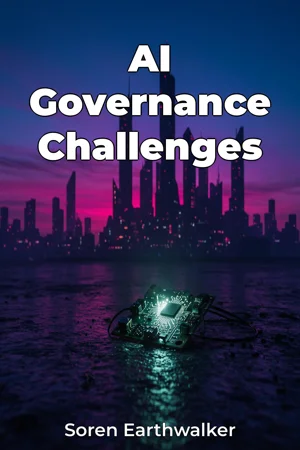
As artificial intelligence rapidly permeates every facet of modern life, are we adequately prepared for the societal and ethical dilemmas it presents? *AI Governance Challenges* delves into the complex regulatory landscape surrounding artificial intelligence, offering a comprehensive analysis of current and prospective frameworks for AI oversight. The book addresses the urgent need for responsible AI development and deployment, focusing on the critical aspects of transparency, risk assessment, and accountability. These themes are important because AI systems are increasingly influencing decisions that affect individuals and society, from loan applications and healthcare diagnoses to criminal justice and autonomous vehicles. Without careful governance, these technologies could perpetuate biases, erode privacy, and undermine human autonomy. To understand the current regulatory environment, the book examines the historical evolution of AI ethics and policy, tracing the development of guidelines and standards from various international bodies and national governments. This context is crucial for grasping the diverse approaches to AI governance and the challenges in harmonizing them across jurisdictions. Readers should possess a basic understanding of AI technologies and their potential impact on society, but the book provides a thorough explanation of key concepts and terminology. The central argument of *AI Governance Challenges* is that effective AI governance requires a multi-faceted approach that combines technical safeguards, ethical guidelines, and robust legal frameworks. This argument is vital because it challenges the prevailing tendency to rely solely on self-regulation by the tech industry, advocating instead for a more inclusive and accountable governance model. The book is structured in three primary sections. Initially, it introduces the core concepts of AI governance, including definitions of AI, discussions of ethical principles, and an overview of existing regulatory approaches. The second section is dedicated to in-depth analyses of key challenges, such as ensuring algorithmic transparency, mitigating bias in AI systems, and establishing clear lines of accountability for AI-related harms. This section will explore model interpretability, fairness metrics, and legal liability frameworks. The third and concluding section synthesizes these analyses into a comprehensive framework for AI governance, providing practical recommendations for policymakers, businesses, and researchers. It culminates by exploring the real-world implications of various governance strategies and presents case studies of successful and unsuccessful AI deployments. The book draws upon a wide range of evidence, including legal documents, policy reports, academic research, and case studies of AI applications in various sectors. Unique data sources include comparative analyses of AI governance frameworks across different countries, as well as empirical studies of the impact of AI on specific social groups. *AI Governance Challenges* connects to other fields beyond technology and politics, including law, ethics, and sociology. By exploring the legal implications of AI, examining the ethical considerations surrounding its use, and analyzing its societal impact, the book provides a holistic understanding of the challenges and opportunities presented by AI. A distinctive aspect of this book is its emphasis on a human-centered approach to AI governance. It argues that AI systems should be designed and deployed in a way that prioritizes human values, protects fundamental rights, and promotes social well-being. This perspective distinguishes it from purely technical or economic-driven approaches to AI governance. The book adopts an analytical and academic tone, while striving for clarity and accessibility. Technical concepts are explained in a way that is understandable to readers from diverse backgrounds. The intended audience includes policymakers, legal professionals, technology executives, AI researchers, and anyone interested in understanding the challenges and opportunities presented by AI governance. It is particularly valuable for those seeking to develop or implement responsible AI practices. As a work of non-fiction in the technology and politics genres, the book maintains a fact-based and objective approach, presenting evidence and arguments in a clear and unbiased manner. It acknowledges the complexities and uncertainties surrounding AI governance, avoiding simplistic solutions or exaggerated claims. The book focuses primarily on the regulatory and ethical aspects of AI governance, while acknowledging that other dimensions, such as economic and social impacts, are also important. The scope is limited to AI governance frameworks, with less focus on the technical details of AI systems themselves. The information in *AI Governance Challenges* can be applied practically by policymakers seeking to develop effective AI regulations, by businesses seeking to implement responsible AI practices, and by researchers seeking to advance the field of AI ethics and governance. The book addresses ongoing debates in the field, such as the tension between innovation and regulation, the appropriate level of government intervention in AI development, and the role of international cooperation in AI governance. By presenting different perspectives on these issues, the book encourages critical thinking and informed decision-making.
As artificial intelligence rapidly permeates every facet of modern life, are we adequately prepared for the societal and ethical dilemmas it presents? *AI Governance Challenges* delves into the complex regulatory landscape surrounding artificial intelligence, offering a comprehensive analysis of current and prospective frameworks for AI oversight. The book addresses the urgent need for responsible AI development and deployment, focusing on the critical aspects of transparency, risk assessment, and accountability. These themes are important because AI systems are increasingly influencing decisions that affect individuals and society, from loan applications and healthcare diagnoses to criminal justice and autonomous vehicles. Without careful governance, these technologies could perpetuate biases, erode privacy, and undermine human autonomy. To understand the current regulatory environment, the book examines the historical evolution of AI ethics and policy, tracing the development of guidelines and standards from various international bodies and national governments. This context is crucial for grasping the diverse approaches to AI governance and the challenges in harmonizing them across jurisdictions. Readers should possess a basic understanding of AI technologies and their potential impact on society, but the book provides a thorough explanation of key concepts and terminology. The central argument of *AI Governance Challenges* is that effective AI governance requires a multi-faceted approach that combines technical safeguards, ethical guidelines, and robust legal frameworks. This argument is vital because it challenges the prevailing tendency to rely solely on self-regulation by the tech industry, advocating instead for a more inclusive and accountable governance model. The book is structured in three primary sections. Initially, it introduces the core concepts of AI governance, including definitions of AI, discussions of ethical principles, and an overview of existing regulatory approaches. The second section is dedicated to in-depth analyses of key challenges, such as ensuring algorithmic transparency, mitigating bias in AI systems, and establishing clear lines of accountability for AI-related harms. This section will explore model interpretability, fairness metrics, and legal liability frameworks. The third and concluding section synthesizes these analyses into a comprehensive framework for AI governance, providing practical recommendations for policymakers, businesses, and researchers. It culminates by exploring the real-world implications of various governance strategies and presents case studies of successful and unsuccessful AI deployments. The book draws upon a wide range of evidence, including legal documents, policy reports, academic research, and case studies of AI applications in various sectors. Unique data sources include comparative analyses of AI governance frameworks across different countries, as well as empirical studies of the impact of AI on specific social groups. *AI Governance Challenges* connects to other fields beyond technology and politics, including law, ethics, and sociology. By exploring the legal implications of AI, examining the ethical considerations surrounding its use, and analyzing its societal impact, the book provides a holistic understanding of the challenges and opportunities presented by AI. A distinctive aspect of this book is its emphasis on a human-centered approach to AI governance. It argues that AI systems should be designed and deployed in a way that prioritizes human values, protects fundamental rights, and promotes social well-being. This perspective distinguishes it from purely technical or economic-driven approaches to AI governance. The book adopts an analytical and academic tone, while striving for clarity and accessibility. Technical concepts are explained in a way that is understandable to readers from diverse backgrounds. The intended audience includes policymakers, legal professionals, technology executives, AI researchers, and anyone interested in understanding the challenges and opportunities presented by AI governance. It is particularly valuable for those seeking to develop or implement responsible AI practices. As a work of non-fiction in the technology and politics genres, the book maintains a fact-based and objective approach, presenting evidence and arguments in a clear and unbiased manner. It acknowledges the complexities and uncertainties surrounding AI governance, avoiding simplistic solutions or exaggerated claims. The book focuses primarily on the regulatory and ethical aspects of AI governance, while acknowledging that other dimensions, such as economic and social impacts, are also important. The scope is limited to AI governance frameworks, with less focus on the technical details of AI systems themselves. The information in *AI Governance Challenges* can be applied practically by policymakers seeking to develop effective AI regulations, by businesses seeking to implement responsible AI practices, and by researchers seeking to advance the field of AI ethics and governance. The book addresses ongoing debates in the field, such as the tension between innovation and regulation, the appropriate level of government intervention in AI development, and the role of international cooperation in AI governance. By presenting different perspectives on these issues, the book encourages critical thinking and informed decision-making.
"AI Governance Challenges" explores the intricate regulatory environment surrounding artificial intelligence, a technology rapidly permeating modern life. It emphasizes the urgent need for responsible AI development, focusing on transparency, risk assessment, and accountability. The book highlights how AI systems increasingly influence critical decisions, impacting everything from loan applications to autonomous vehicles, underscoring the potential for biases and erosion of privacy if left ungoverned. The book argues for a multi-faceted approach to AI governance, combining technical safeguards, ethical guidelines, and robust legal frameworks. It traces the historical evolution of AI ethics and policy, examining international and national guidelines to provide context. Structured in three sections, the book first introduces core concepts, then analyzes challenges like algorithmic transparency and bias mitigation, and finally synthesizes these analyses into a comprehensive governance framework with practical recommendations. This book distinguishes itself by advocating for a human-centered approach, prioritizing human values and fundamental rights in AI system design and deployment. It uniquely presents comparative analyses of AI governance frameworks across countries and empirical studies on AI's social impact. The book, therefore, provides a valuable resource for policymakers, business leaders, researchers, and anyone keen to understand and navigate the complex world of AI governance.
Book Details
ISBN
9788233971885
Publisher
Publifye AS
Your Licenses
You don't own any licenses for this book
Purchase a license below to unlock this book and download the EPUB.
Purchase License
Select a tier to unlock this book
Need bulk licensing?
Contact us for enterprise agreements.