
About This Book
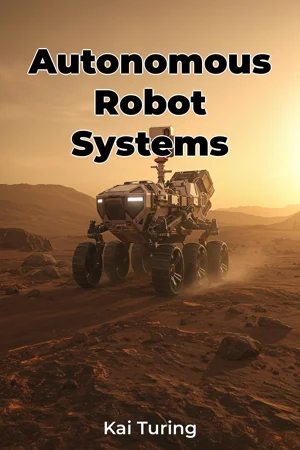
How will intelligent machines reshape our world? "Autonomous Robot Systems" delves into the core technologies enabling robots to operate independently, make informed decisions, and navigate complex environments. This book provides a comprehensive exploration of the principles, methodologies, and applications that define the burgeoning field of autonomous robotics. Understanding these systems is crucial because their impact extends across numerous sectors, from manufacturing and healthcare to exploration and transportation, fundamentally altering how tasks are performed and problems are solved. We begin by establishing a foundational understanding of the key architectural components and algorithmic frameworks that underpin autonomous robot systems. A fundamental aspect is sensor fusion, the process of integrating data from multiple sensors (cameras, LiDAR, IMUs, etc.) to create a unified and robust perception of the environment. This is crucial for robots to overcome the limitations of individual sensors and achieve reliable environmental awareness. The book also extensively covers pathfinding and motion planning algorithms, focusing on techniques that enable robots to efficiently and safely navigate from one point to another, while avoiding obstacles and adhering to operational constraints. Building upon these core principles, the book explores advanced topics such as decision-making under uncertainty, reinforcement learning for adaptive control, and human-robot interaction. We examine how robots can learn from experience to improve their performance in dynamic and unpredictable settings. Throughout the book, we present case studies and real-world examples that illustrate the practical applications of these technologies in various domains. It will delve into robotics applications in remote sensing, environmental monitoring, and precision agriculture, examining the unique challenges and innovative solutions developed in each area. The central argument of "Autonomous Robot Systems" is that effective autonomy hinges on the synergistic integration of perception, planning, and control. It emphasizes the importance of designing systems that are not only capable of performing specific tasks but also able to adapt to changing conditions, learn from experience, and interact safely and effectively with humans. The evidence presented throughout the book is drawn from a combination of theoretical analysis, simulation results, and experimental validation. We incorporate data from publicly available datasets, as well as original research findings, to support our claims and provide a rigorous assessment of the methods discussed. Further, this book interfaces directly with computer science and electrical engineering, which are inherently critical for the design and implementation of robot hardware and software. The book also connects to cognitive science, which provides insights into how robots can be designed to mimic human-like reasoning and decision-making processes. This interdisciplinary approach enhances the book's value by providing a more holistic perspective on the challenges and opportunities in autonomous robotics. A unique aspect of this book is its focus on providing practical guidance for implementing and deploying autonomous robot systems. We present a range of tools and techniques that can be used to design, simulate, and test robotic algorithms. This book is structured to cater to students, researchers, and professionals in robotics, artificial intelligence, and related fields. We aim to provide a clear and accessible introduction to the core concepts, while also offering in-depth coverage of advanced topics for readers with more specialized interests. While we cover a broad range of topics, the book intentionally limits its scope to focus on the algorithmic and architectural aspects of autonomous robot systems, without delving into the intricacies of specific hardware platforms or manufacturing processes. The information presented in this book can be applied to a wide range of real-world problems, from developing autonomous vehicles and delivery drones to creating robots that can assist in disaster response and healthcare. Given the rapid pace of innovation in this field, the book also addresses some of the ongoing debates and controversies surrounding the ethical and societal implications of autonomous robots.
How will intelligent machines reshape our world? "Autonomous Robot Systems" delves into the core technologies enabling robots to operate independently, make informed decisions, and navigate complex environments. This book provides a comprehensive exploration of the principles, methodologies, and applications that define the burgeoning field of autonomous robotics. Understanding these systems is crucial because their impact extends across numerous sectors, from manufacturing and healthcare to exploration and transportation, fundamentally altering how tasks are performed and problems are solved. We begin by establishing a foundational understanding of the key architectural components and algorithmic frameworks that underpin autonomous robot systems. A fundamental aspect is sensor fusion, the process of integrating data from multiple sensors (cameras, LiDAR, IMUs, etc.) to create a unified and robust perception of the environment. This is crucial for robots to overcome the limitations of individual sensors and achieve reliable environmental awareness. The book also extensively covers pathfinding and motion planning algorithms, focusing on techniques that enable robots to efficiently and safely navigate from one point to another, while avoiding obstacles and adhering to operational constraints. Building upon these core principles, the book explores advanced topics such as decision-making under uncertainty, reinforcement learning for adaptive control, and human-robot interaction. We examine how robots can learn from experience to improve their performance in dynamic and unpredictable settings. Throughout the book, we present case studies and real-world examples that illustrate the practical applications of these technologies in various domains. It will delve into robotics applications in remote sensing, environmental monitoring, and precision agriculture, examining the unique challenges and innovative solutions developed in each area. The central argument of "Autonomous Robot Systems" is that effective autonomy hinges on the synergistic integration of perception, planning, and control. It emphasizes the importance of designing systems that are not only capable of performing specific tasks but also able to adapt to changing conditions, learn from experience, and interact safely and effectively with humans. The evidence presented throughout the book is drawn from a combination of theoretical analysis, simulation results, and experimental validation. We incorporate data from publicly available datasets, as well as original research findings, to support our claims and provide a rigorous assessment of the methods discussed. Further, this book interfaces directly with computer science and electrical engineering, which are inherently critical for the design and implementation of robot hardware and software. The book also connects to cognitive science, which provides insights into how robots can be designed to mimic human-like reasoning and decision-making processes. This interdisciplinary approach enhances the book's value by providing a more holistic perspective on the challenges and opportunities in autonomous robotics. A unique aspect of this book is its focus on providing practical guidance for implementing and deploying autonomous robot systems. We present a range of tools and techniques that can be used to design, simulate, and test robotic algorithms. This book is structured to cater to students, researchers, and professionals in robotics, artificial intelligence, and related fields. We aim to provide a clear and accessible introduction to the core concepts, while also offering in-depth coverage of advanced topics for readers with more specialized interests. While we cover a broad range of topics, the book intentionally limits its scope to focus on the algorithmic and architectural aspects of autonomous robot systems, without delving into the intricacies of specific hardware platforms or manufacturing processes. The information presented in this book can be applied to a wide range of real-world problems, from developing autonomous vehicles and delivery drones to creating robots that can assist in disaster response and healthcare. Given the rapid pace of innovation in this field, the book also addresses some of the ongoing debates and controversies surrounding the ethical and societal implications of autonomous robots.
"Autonomous Robot Systems" explores the technologies enabling robots to operate independently in complex environments. It focuses on how these systems perceive, plan, and act, highlighting the integration of sensor fusion—combining data from cameras, LiDAR, and IMUs—to enhance environmental awareness. A key aspect covered is motion planning, detailing algorithms that allow robots to navigate efficiently while avoiding obstacles. The book progresses from foundational concepts to advanced topics like decision-making under uncertainty and reinforcement learning for adaptive control, showcasing how robots can learn from experience. Real-world case studies illustrate applications in remote sensing, environmental monitoring, and precision agriculture. The emphasis is on the synergistic integration of perception, planning, and control, providing practical guidance for implementing and deploying autonomous robot systems. This book uniquely emphasizes the algorithmic and architectural aspects of autonomous robots, offering tools and techniques for design, simulation, and testing. It caters to a broad audience, including students, researchers, and professionals interested in robotics, artificial intelligence, and semantics, providing both an accessible introduction and in-depth coverage of advanced topics.
Book Details
ISBN
9788233971861
Publisher
Publifye AS
Your Licenses
You don't own any licenses for this book
Purchase a license below to unlock this book and download the EPUB.
Purchase License
Select a tier to unlock this book
Need bulk licensing?
Contact us for enterprise agreements.