
About This Book
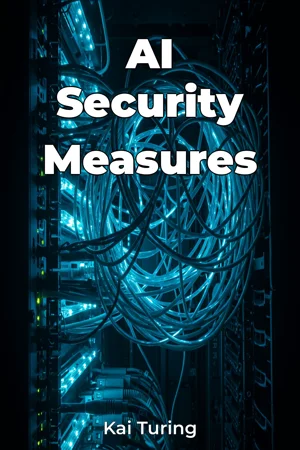
In an era defined by the rapid proliferation of artificial intelligence, how secure are the very systems designed to protect us? "AI Security Measures" delves into the increasingly critical intersection of machine learning and cybersecurity, exploring the vulnerabilities inherent in AI models and offering a comprehensive guide to safeguarding data against malicious attacks. This book addresses two fundamental topics: the mechanics of compromising machine learning models, including adversarial attacks and data poisoning, and the strategies for building robust and resilient AI systems. The significance of these topics cannot be overstated. As AI becomes deeply integrated into critical infrastructure, finance, healthcare, and national security, the potential consequences of a successful attack range from economic disruption to loss of life. We begin by establishing a foundational understanding of machine learning principles, including common algorithms, training methodologies, and deployment architectures. Prior knowledge of basic programming concepts and statistical analysis will be beneficial but not essential, as core concepts are explained. The central argument presented is that AI security is not merely an afterthought but an integral component of the AI development lifecycle. A proactive, defense-in-depth approach is paramount to mitigating the risks posed by increasingly sophisticated adversaries. "AI Security Measures" unfolds in a structured manner. First, it introduces the landscape of AI threats, detailing various attack vectors and their potential impact. Second, it explores techniques for hardening AI models against these attacks, covering topics such as adversarial training, input validation, and anomaly detection. Third, the book examines methods for securing the data used to train and operate AI systems, including data sanitization, access control, and privacy-preserving techniques. Finally, it addresses challenges of deployment and monitoring, highlighting the importance of continuous vigilance and adaptation. The analysis relies on a combination of academic research, real-world case studies, and practical examples. Publicly available datasets are used to illustrate attack methodologies and defense strategies, demonstrating how vulnerabilities can be exploited and mitigated. This book connects to several related fields, including cryptography, data privacy, and risk management. Cryptographic techniques are employed to secure data in transit and at rest, while data privacy principles guide the development of AI systems that minimize the leakage of sensitive information. Risk management frameworks provide a structured approach to identifying, assessing, and mitigating AI-related security threats. A unique aspect of this book lies in its holistic approach to AI security. It moves beyond traditional security measures and considers the specific vulnerabilities inherent in machine learning algorithms. It advocates for active, ongoing security measures and stresses the importance of human oversight. The tone is analytical and informative, balancing technical depth with accessibility for a broad audience. Complex concepts are explained clearly and concisely, with numerous examples and illustrations to aid understanding. The primary target audience comprises AI developers, cybersecurity professionals, data scientists, and IT managers. The book is valuable to anyone involved in the development, deployment, or management of AI systems, providing actionable insights and practical guidance for building more secure and resilient AI solutions. As a work in the 'AI and Semantics,' and 'Information Technology' genres, this book adheres to the standards of clarity, accuracy, and objectivity. Information is presented fairly, with appropriate citations and references to support claims. The scope of this book is limited to the security of machine learning models and the data used to train them. It does not cover broader ethical or societal implications of AI, nor does it delve into the specific security challenges of other AI subfields, such as robotics or natural language processing. The information presented can be applied directly to improve the security of AI systems in various domains. Developers can use the techniques described to harden their models against adversarial attacks, while IT managers can leverage the guidance to implement robust security policies and procedures. The field of AI security is constantly evolving, with new attacks and defenses being developed all the time. One ongoing debate centers on the trade-off between accuracy and robustness, with some researchers arguing that more robust models tend to be less accurate. This book addresses this debate by exploring techniques for achieving both high accuracy and strong security.
In an era defined by the rapid proliferation of artificial intelligence, how secure are the very systems designed to protect us? "AI Security Measures" delves into the increasingly critical intersection of machine learning and cybersecurity, exploring the vulnerabilities inherent in AI models and offering a comprehensive guide to safeguarding data against malicious attacks. This book addresses two fundamental topics: the mechanics of compromising machine learning models, including adversarial attacks and data poisoning, and the strategies for building robust and resilient AI systems. The significance of these topics cannot be overstated. As AI becomes deeply integrated into critical infrastructure, finance, healthcare, and national security, the potential consequences of a successful attack range from economic disruption to loss of life. We begin by establishing a foundational understanding of machine learning principles, including common algorithms, training methodologies, and deployment architectures. Prior knowledge of basic programming concepts and statistical analysis will be beneficial but not essential, as core concepts are explained. The central argument presented is that AI security is not merely an afterthought but an integral component of the AI development lifecycle. A proactive, defense-in-depth approach is paramount to mitigating the risks posed by increasingly sophisticated adversaries. "AI Security Measures" unfolds in a structured manner. First, it introduces the landscape of AI threats, detailing various attack vectors and their potential impact. Second, it explores techniques for hardening AI models against these attacks, covering topics such as adversarial training, input validation, and anomaly detection. Third, the book examines methods for securing the data used to train and operate AI systems, including data sanitization, access control, and privacy-preserving techniques. Finally, it addresses challenges of deployment and monitoring, highlighting the importance of continuous vigilance and adaptation. The analysis relies on a combination of academic research, real-world case studies, and practical examples. Publicly available datasets are used to illustrate attack methodologies and defense strategies, demonstrating how vulnerabilities can be exploited and mitigated. This book connects to several related fields, including cryptography, data privacy, and risk management. Cryptographic techniques are employed to secure data in transit and at rest, while data privacy principles guide the development of AI systems that minimize the leakage of sensitive information. Risk management frameworks provide a structured approach to identifying, assessing, and mitigating AI-related security threats. A unique aspect of this book lies in its holistic approach to AI security. It moves beyond traditional security measures and considers the specific vulnerabilities inherent in machine learning algorithms. It advocates for active, ongoing security measures and stresses the importance of human oversight. The tone is analytical and informative, balancing technical depth with accessibility for a broad audience. Complex concepts are explained clearly and concisely, with numerous examples and illustrations to aid understanding. The primary target audience comprises AI developers, cybersecurity professionals, data scientists, and IT managers. The book is valuable to anyone involved in the development, deployment, or management of AI systems, providing actionable insights and practical guidance for building more secure and resilient AI solutions. As a work in the 'AI and Semantics,' and 'Information Technology' genres, this book adheres to the standards of clarity, accuracy, and objectivity. Information is presented fairly, with appropriate citations and references to support claims. The scope of this book is limited to the security of machine learning models and the data used to train them. It does not cover broader ethical or societal implications of AI, nor does it delve into the specific security challenges of other AI subfields, such as robotics or natural language processing. The information presented can be applied directly to improve the security of AI systems in various domains. Developers can use the techniques described to harden their models against adversarial attacks, while IT managers can leverage the guidance to implement robust security policies and procedures. The field of AI security is constantly evolving, with new attacks and defenses being developed all the time. One ongoing debate centers on the trade-off between accuracy and robustness, with some researchers arguing that more robust models tend to be less accurate. This book addresses this debate by exploring techniques for achieving both high accuracy and strong security.
"AI Security Measures" addresses the critical intersection of artificial intelligence and cybersecurity, focusing on the vulnerabilities within AI models and strategies to protect data. It highlights how AI systems, while powerful, are susceptible to adversarial attacks and data poisoning, potentially leading to severe consequences in sectors like finance and healthcare. This book uniquely emphasizes a proactive, defense-in-depth approach, advocating that AI security should be integral to the AI development lifecycle, rather than an afterthought. The book explores methods for securing AI systems, from understanding machine learning principles to hardening models against attacks using techniques like adversarial training and anomaly detection. For example, the text examines how publicly available datasets demonstrate both the exploitation and mitigation of vulnerabilities. Furthermore, the book investigates data sanitization and privacy-preserving techniques to safeguard training data. Progressing from foundational concepts, the book details AI threats, model hardening, data security, and deployment monitoring. This approach provides AI developers, cybersecurity professionals, and IT managers with actionable insights to build more resilient AI solutions within the realms of AI and Semantics and Information Technology.
Book Details
ISBN
9788233971823
Publisher
Publifye AS
Your Licenses
You don't own any licenses for this book
Purchase a license below to unlock this book and download the EPUB.
Purchase License
Select a tier to unlock this book
Need bulk licensing?
Contact us for enterprise agreements.