
About This Book
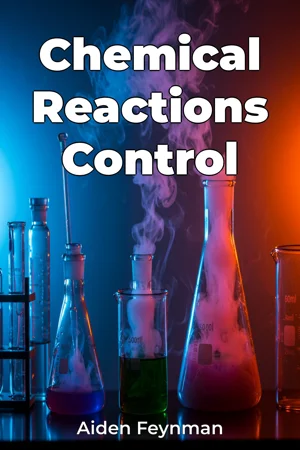
In the relentless pursuit of efficiency and innovation, how do we fine-tune chemical reactions to achieve optimal industrial outputs? "Chemical Reactions Control" delves into the intricate art and science of manipulating reaction conditions to maximize yields, minimize waste, and drive industrial progress. This book is a detailed exploration of the key factors that govern chemical reactions, focusing on temperature, catalysts, and pressure. Understanding and mastering these variables is crucial for chemists, engineers, and anyone involved in chemical manufacturing, enabling them to design and operate processes that are both economically viable and environmentally responsible. The book’s central argument is that a comprehensive understanding of chemical kinetics, thermodynamics, and reactor design, combined with precise control over reaction parameters, is essential for optimizing industrial chemical processes. This argument underscores the importance of integrating theoretical knowledge with practical applications, bridging the gap between laboratory research and large-scale production. This is vital in the chemical industry to provide useful products to society efficiently and safely. "Chemical Reactions Control" begins by laying the groundwork with fundamental principles of chemical kinetics and thermodynamics. It introduces reaction rates, equilibrium constants, and activation energy, concepts that are subsequently applied throughout the book. It then pivots to an examination of the three primary control factors: temperature, catalysts, and pressure. The sections on temperature explore its effect on reaction rates and equilibrium, examining both exothermic and endothermic reactions. The catalyst sections discuss homogeneous and heterogeneous catalysts, elaborating on their mechanisms and applications. The pressure sections cover gas-phase reactions and high-pressure processes, emphasizing safety and design considerations. The book culminates in an exploration of reactor design and optimization, integrating the principles discussed earlier to illustrate how to design and operate efficient chemical reactors. Each section incorporates real-world examples and case studies. The evidence presented in this book is drawn from a wide range of sources including peer-reviewed scientific literature, industrial case studies, and experimental data. It synthesizes findings from physical chemistry, chemical engineering, and materials science, providing a holistic view of reaction control. The book will contain data from computational modeling and simulation to demonstrate reaction mechanisms and process optimization. "Chemical Reactions Control" also highlights the interdisciplinary nature of chemical reaction control, connecting with fields such as materials science, environmental science, and economics. Understanding how catalysts interact with materials at the nanoscale can drive the development of more efficient catalytic processes. Considering the environmental impact of chemical processes is essential for sustainable manufacturing. Likewise, the economic considerations of reaction optimization, such as reducing energy consumption and minimizing waste, are vital for industrial competitiveness. A feature of the book is its integrated approach, combining theoretical aspects with practical examples and case studies. Instead of treating temperature, catalysts, and pressure as isolated variables, it emphasizes their interconnectedness and synergistic effects. This approach provides a more realistic and nuanced understanding of reaction control, preparing readers to tackle complex industrial challenges. Written in a clear and accessible style, "Chemical Reactions Control" targets a broad audience, from advanced undergraduate and graduate students in chemistry and chemical engineering to practicing engineers and scientists in the chemical industry. It provides valuable insights for anyone seeking to deepen their understanding of chemical reactions and improve the efficiency of chemical processes. The content meets the expectations of a non-fiction science book, offering rigorous analysis, detailed explanations, and practical guidance. The scope of "Chemical Reactions Control" is limited to the manipulation of temperature, catalysts, and pressure. While other factors such as pH, solvent effects, and mixing can also influence reaction outcomes, they are not covered in detail. This focused approach allows for a more in-depth treatment of the core variables, enabling readers to develop a strong foundation in these critical areas. The information presented in the book has numerous real-world applications. Readers can use the principles and techniques to optimize reaction conditions in existing chemical plants, design new and more efficient chemical processes, and develop innovative catalytic materials. The case studies provide practical examples of how reaction control can lead to significant improvements in product yield, energy efficiency, and process safety. Finally, "Chemical Reactions Control" addresses ongoing debates and controversies in the field, such as the search for more sustainable and environmentally friendly catalysts and the development of more efficient high-pressure processes. By acknowledging these challenges, the book encourages critical thinking and innovation, inspiring readers to contribute to the advancement of chemical reaction control.
In the relentless pursuit of efficiency and innovation, how do we fine-tune chemical reactions to achieve optimal industrial outputs? "Chemical Reactions Control" delves into the intricate art and science of manipulating reaction conditions to maximize yields, minimize waste, and drive industrial progress. This book is a detailed exploration of the key factors that govern chemical reactions, focusing on temperature, catalysts, and pressure. Understanding and mastering these variables is crucial for chemists, engineers, and anyone involved in chemical manufacturing, enabling them to design and operate processes that are both economically viable and environmentally responsible. The book’s central argument is that a comprehensive understanding of chemical kinetics, thermodynamics, and reactor design, combined with precise control over reaction parameters, is essential for optimizing industrial chemical processes. This argument underscores the importance of integrating theoretical knowledge with practical applications, bridging the gap between laboratory research and large-scale production. This is vital in the chemical industry to provide useful products to society efficiently and safely. "Chemical Reactions Control" begins by laying the groundwork with fundamental principles of chemical kinetics and thermodynamics. It introduces reaction rates, equilibrium constants, and activation energy, concepts that are subsequently applied throughout the book. It then pivots to an examination of the three primary control factors: temperature, catalysts, and pressure. The sections on temperature explore its effect on reaction rates and equilibrium, examining both exothermic and endothermic reactions. The catalyst sections discuss homogeneous and heterogeneous catalysts, elaborating on their mechanisms and applications. The pressure sections cover gas-phase reactions and high-pressure processes, emphasizing safety and design considerations. The book culminates in an exploration of reactor design and optimization, integrating the principles discussed earlier to illustrate how to design and operate efficient chemical reactors. Each section incorporates real-world examples and case studies. The evidence presented in this book is drawn from a wide range of sources including peer-reviewed scientific literature, industrial case studies, and experimental data. It synthesizes findings from physical chemistry, chemical engineering, and materials science, providing a holistic view of reaction control. The book will contain data from computational modeling and simulation to demonstrate reaction mechanisms and process optimization. "Chemical Reactions Control" also highlights the interdisciplinary nature of chemical reaction control, connecting with fields such as materials science, environmental science, and economics. Understanding how catalysts interact with materials at the nanoscale can drive the development of more efficient catalytic processes. Considering the environmental impact of chemical processes is essential for sustainable manufacturing. Likewise, the economic considerations of reaction optimization, such as reducing energy consumption and minimizing waste, are vital for industrial competitiveness. A feature of the book is its integrated approach, combining theoretical aspects with practical examples and case studies. Instead of treating temperature, catalysts, and pressure as isolated variables, it emphasizes their interconnectedness and synergistic effects. This approach provides a more realistic and nuanced understanding of reaction control, preparing readers to tackle complex industrial challenges. Written in a clear and accessible style, "Chemical Reactions Control" targets a broad audience, from advanced undergraduate and graduate students in chemistry and chemical engineering to practicing engineers and scientists in the chemical industry. It provides valuable insights for anyone seeking to deepen their understanding of chemical reactions and improve the efficiency of chemical processes. The content meets the expectations of a non-fiction science book, offering rigorous analysis, detailed explanations, and practical guidance. The scope of "Chemical Reactions Control" is limited to the manipulation of temperature, catalysts, and pressure. While other factors such as pH, solvent effects, and mixing can also influence reaction outcomes, they are not covered in detail. This focused approach allows for a more in-depth treatment of the core variables, enabling readers to develop a strong foundation in these critical areas. The information presented in the book has numerous real-world applications. Readers can use the principles and techniques to optimize reaction conditions in existing chemical plants, design new and more efficient chemical processes, and develop innovative catalytic materials. The case studies provide practical examples of how reaction control can lead to significant improvements in product yield, energy efficiency, and process safety. Finally, "Chemical Reactions Control" addresses ongoing debates and controversies in the field, such as the search for more sustainable and environmentally friendly catalysts and the development of more efficient high-pressure processes. By acknowledging these challenges, the book encourages critical thinking and innovation, inspiring readers to contribute to the advancement of chemical reaction control.
"Chemical Reactions Control" explores the science and art of manipulating chemical reactions, a crucial skill for optimizing industrial outputs, minimizing waste, and driving innovation. The book focuses on mastering key variables like temperature, catalysts, and pressure to enhance chemical processes. Did you know that understanding chemical kinetics and thermodynamics is vital for bridging the gap between lab research and large-scale production? Mastering reaction parameters allows for economically viable and environmentally responsible chemical manufacturing. This book begins with the fundamentals of chemical kinetics and thermodynamics before diving into the three primary control factors: temperature, catalysts, and pressure. It examines how temperature affects reaction rates, distinguishes between homogeneous and heterogeneous catalysts, and discusses the safety considerations of high-pressure processes. Real-world examples and case studies illustrate these concepts. The book culminates in reactor design and optimization, integrating previously discussed principles to show how to design efficient chemical reactors. The book's integrated approach emphasizes the interconnectedness of these variables, providing a realistic understanding of reaction control. Targeting a broad audience from students to industry professionals, it offers valuable insights for improving chemical process efficiency by understanding the core variables that drive chemical reaction control.
Book Details
ISBN
9788233971717
Publisher
Publifye AS
Your Licenses
You don't own any licenses for this book
Purchase a license below to unlock this book and download the EPUB.
Purchase License
Select a tier to unlock this book
Need bulk licensing?
Contact us for enterprise agreements.