
About This Book
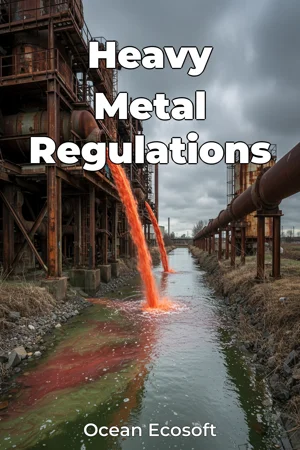
How safe is our water, really? *Heavy Metal Regulations* delves into the complex world of policies and standards designed to control the discharge of toxic heavy metals into our environment. It is a critical examination of the effectiveness of current regulatory frameworks at both governmental and international levels. This is not just an environmental issue; it's a political, economic, and public health crisis in the making. The book centers on three primary themes. First, it analyzes the sources and pathways of heavy metal contamination, from industrial effluent to agricultural runoff. Second, it scrutinizes the evolution and implementation of current environmental protection policies, highlighting successes and failures. Third, it proposes avenues for improvement in monitoring, remediation, and preventive strategies. These topics are important because heavy metal pollution poses significant risks to human health, ecosystems, and economic stability, demanding a more robust and adaptive regulatory environment to mitigate these impacts. Understanding the gravity of this issue requires acknowledging its historical context. *Heavy Metal Regulations* traces the development of environmental regulations from the mid-20th century to the present day, examining landmark legal cases, policy shifts, and technological advancements that have shaped the current landscape. Familiarity with basic chemistry and environmental science principles will be beneficial for the reader, though the book is written to be accessible to a broad audience. The central argument of *Heavy Metal Regulations* is that current regulatory approaches, while well-intentioned, are often insufficient to adequately address the complex and evolving challenges of heavy metal pollution. The book argues for a fundamental shift towards proactive, adaptable, and globally coordinated regulatory strategies. The book unfolds methodically, beginning with an introduction to the most common and dangerous heavy metals, their sources, and their impacts on the environment and human health. It then analyzes key international agreements and national policies, such as the Clean Water Act in the United States and the European Union's Water Framework Directive. Major points include detailed case studies of specific instances of heavy metal contamination, such as the Minimata disease outbreak in Japan and the Flint water crisis in the United States, examining the regulatory failures that contributed to these disasters. The book culminates with a proposed framework for a more effective and sustainable regulatory regime, emphasizing the importance of technological innovation, public participation, and international cooperation. To support its arguments, *Heavy Metal Regulations* draws upon a wide range of evidence, including scientific studies, government reports, and legal documents. It also incorporates data from international organizations like the World Health Organization (WHO) and the United Nations Environment Programme (UNEP). The book uses comparative analysis of different regulatory approaches across countries to highlight best practices and identify common weaknesses. *Heavy Metal Regulations* connects to several other fields of study. Environmental science provides the foundation for understanding the chemical and biological processes involved in heavy metal pollution. Political science helps to analyze the policy-making process and the influence of various stakeholders. Economics sheds light on the costs and benefits of different regulatory interventions. These interdisciplinary connections strengthen the book's analysis and offer a more comprehensive understanding of the challenges and opportunities in this area. *Heavy Metal Regulations* adopts a fact-based, analytical approach to presenting information. It avoids sensationalism and instead focuses on providing a clear and thorough assessment of the current state of heavy metal regulations. This book is aimed at policymakers, environmental professionals, researchers, and anyone concerned about the quality of our water and the health of our planet. It offers insights into the complex challenges of regulating heavy metal pollution and provides a roadmap for creating a more sustainable future. In line with the established conventions of environmental and political non-fiction, *Heavy Metal Regulations* strives for objectivity, clarity, and rigor in its presentation of information. It acknowledges the inherent uncertainties and complexities of the subject matter and avoids making overly simplistic or definitive claims. The scope of *Heavy Metal Regulations* is limited to the regulatory aspects of heavy metal pollution. While it touches upon the technical aspects of remediation and treatment, it does not provide a comprehensive guide to these topics. The book focuses primarily on the legal and policy frameworks that govern the discharge of heavy metals into the environment. The information in *Heavy Metal Regulations* can be applied practically by policymakers to improve existing regulations, by environmental professionals to develop more effective monitoring and remediation strategies, and by concerned citizens to advocate for stronger environmental protections. The book addresses contentious issues such as the appropriate level of regulation, the balance between economic development and environmental protection, and the role of international cooperation. It acknowledges the existence of conflicting interests and perspectives and seeks to provide a balanced and informed analysis of these debates.
How safe is our water, really? *Heavy Metal Regulations* delves into the complex world of policies and standards designed to control the discharge of toxic heavy metals into our environment. It is a critical examination of the effectiveness of current regulatory frameworks at both governmental and international levels. This is not just an environmental issue; it's a political, economic, and public health crisis in the making. The book centers on three primary themes. First, it analyzes the sources and pathways of heavy metal contamination, from industrial effluent to agricultural runoff. Second, it scrutinizes the evolution and implementation of current environmental protection policies, highlighting successes and failures. Third, it proposes avenues for improvement in monitoring, remediation, and preventive strategies. These topics are important because heavy metal pollution poses significant risks to human health, ecosystems, and economic stability, demanding a more robust and adaptive regulatory environment to mitigate these impacts. Understanding the gravity of this issue requires acknowledging its historical context. *Heavy Metal Regulations* traces the development of environmental regulations from the mid-20th century to the present day, examining landmark legal cases, policy shifts, and technological advancements that have shaped the current landscape. Familiarity with basic chemistry and environmental science principles will be beneficial for the reader, though the book is written to be accessible to a broad audience. The central argument of *Heavy Metal Regulations* is that current regulatory approaches, while well-intentioned, are often insufficient to adequately address the complex and evolving challenges of heavy metal pollution. The book argues for a fundamental shift towards proactive, adaptable, and globally coordinated regulatory strategies. The book unfolds methodically, beginning with an introduction to the most common and dangerous heavy metals, their sources, and their impacts on the environment and human health. It then analyzes key international agreements and national policies, such as the Clean Water Act in the United States and the European Union's Water Framework Directive. Major points include detailed case studies of specific instances of heavy metal contamination, such as the Minimata disease outbreak in Japan and the Flint water crisis in the United States, examining the regulatory failures that contributed to these disasters. The book culminates with a proposed framework for a more effective and sustainable regulatory regime, emphasizing the importance of technological innovation, public participation, and international cooperation. To support its arguments, *Heavy Metal Regulations* draws upon a wide range of evidence, including scientific studies, government reports, and legal documents. It also incorporates data from international organizations like the World Health Organization (WHO) and the United Nations Environment Programme (UNEP). The book uses comparative analysis of different regulatory approaches across countries to highlight best practices and identify common weaknesses. *Heavy Metal Regulations* connects to several other fields of study. Environmental science provides the foundation for understanding the chemical and biological processes involved in heavy metal pollution. Political science helps to analyze the policy-making process and the influence of various stakeholders. Economics sheds light on the costs and benefits of different regulatory interventions. These interdisciplinary connections strengthen the book's analysis and offer a more comprehensive understanding of the challenges and opportunities in this area. *Heavy Metal Regulations* adopts a fact-based, analytical approach to presenting information. It avoids sensationalism and instead focuses on providing a clear and thorough assessment of the current state of heavy metal regulations. This book is aimed at policymakers, environmental professionals, researchers, and anyone concerned about the quality of our water and the health of our planet. It offers insights into the complex challenges of regulating heavy metal pollution and provides a roadmap for creating a more sustainable future. In line with the established conventions of environmental and political non-fiction, *Heavy Metal Regulations* strives for objectivity, clarity, and rigor in its presentation of information. It acknowledges the inherent uncertainties and complexities of the subject matter and avoids making overly simplistic or definitive claims. The scope of *Heavy Metal Regulations* is limited to the regulatory aspects of heavy metal pollution. While it touches upon the technical aspects of remediation and treatment, it does not provide a comprehensive guide to these topics. The book focuses primarily on the legal and policy frameworks that govern the discharge of heavy metals into the environment. The information in *Heavy Metal Regulations* can be applied practically by policymakers to improve existing regulations, by environmental professionals to develop more effective monitoring and remediation strategies, and by concerned citizens to advocate for stronger environmental protections. The book addresses contentious issues such as the appropriate level of regulation, the balance between economic development and environmental protection, and the role of international cooperation. It acknowledges the existence of conflicting interests and perspectives and seeks to provide a balanced and informed analysis of these debates.
*Heavy Metal Regulations* explores the intricate web of environmental policies and standards governing the release of toxic heavy metals. It examines the efficacy of current environmental protection measures at governmental and international levels, emphasizing that this issue extends beyond environmental concerns to encompass political, economic, and public health dimensions. The book scrutinizes the origins and routes of heavy metal contamination, from industrial effluent to agricultural runoff, while also assessing the development and execution of existing policies, pinpointing both achievements and shortcomings, such as failures that led to events like the Flint water crisis. The book argues that current regulatory frameworks are often inadequate to tackle the complexities of heavy metal pollution and calls for a shift towards proactive, adaptable, and globally coordinated regulatory strategies. It unfolds by introducing common and hazardous heavy metals, their sources, and their impacts, later dissecting key international agreements like the European Union's Water Framework Directive. To support its arguments, the book uses scientific studies, government reports, and comparative analyses of different regulatory approaches across countries. Ultimately, *Heavy Metal Regulations* aims to provide insights and a roadmap for a more sustainable future, targeting policymakers, environmental professionals, and concerned citizens alike. It adopts a fact-based approach, avoiding sensationalism in favor of a clear assessment of current heavy metal regulations, emphasizing the importance of technological innovation, public participation, and international cooperation.
Book Details
ISBN
9788233971694
Publisher
Publifye AS
Your Licenses
You don't own any licenses for this book
Purchase a license below to unlock this book and download the EPUB.
Purchase License
Select a tier to unlock this book
Need bulk licensing?
Contact us for enterprise agreements.