
About This Book
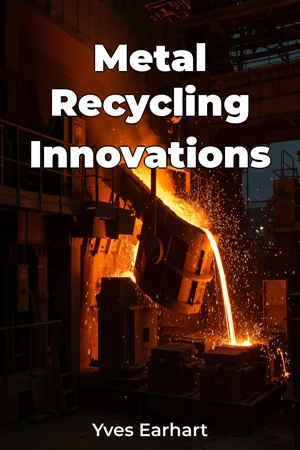
In an era defined by resource scarcity and environmental consciousness, can we afford to overlook the vast potential locked within our discarded metals? "Metal Recycling Innovations" delves into the transformative power of modern recycling techniques, demonstrating how strategic reprocessing can drastically reduce waste and conserve energy, forging a path toward a more sustainable future. This book explores two critical areas: advanced metal separation technologies and energy-efficient smelting processes. These topics are crucial because the growing demand for metals, coupled with the environmental impact of traditional mining, necessitates innovative recycling solutions. Without them, we face depleted resources, increased pollution, and a heavier carbon footprint. Historically, metal recycling has been hampered by inefficient separation methods and energy-intensive refining. Early recycling efforts often resulted in significant material loss and pollution. However, recent advancements in sensor-based sorting, hydrometallurgy, and plasma smelting are revolutionizing the field. A basic understanding of metallurgy and materials science would be beneficial for readers, though technical concepts are explained clearly. The central argument of "Metal Recycling Innovations" is that implementing cutting-edge recycling technologies is not merely an environmentally sound practice but a vital economic imperative. These innovations reduce reliance on primary ore extraction, lower production costs, and create valuable secondary resources. The book’s argument is delivered through a multi-faceted approach. First, the book introduces the fundamental principles of metal recycling and the limitations of traditional methods. Second, it explores the technological breakthroughs in metal separation, focusing on techniques like eddy current separation, X-ray fluorescence, and laser-induced breakdown spectroscopy. Third, energy-efficient smelting methods are examined, including the use of microwave and plasma technologies to reduce energy consumption and emissions. Finally, the book culminates in a discussion of the economic and environmental benefits of these innovations, highlighting case studies and practical applications. The evidence presented is drawn from peer-reviewed scientific research, industry reports, and data collected from recycling facilities implementing these technologies. The book also utilizes life cycle assessments to quantify the environmental impact of different recycling processes. The book connects to several interdisciplinary fields, including environmental science, materials engineering, and economics. The connection with environmental science highlights the ecological benefits of reducing mining and waste. The link with materials engineering focuses on optimizing the properties of recycled metals. The connection with economics examines the market dynamics and cost-effectiveness of recycling technologies. This book offers a unique perspective by integrating technical details with economic and environmental considerations. It does not merely describe the technologies but also analyzes their economic feasibility and environmental impact. The writing style is technical, yet accessible, aiming to bridge the gap between scientific research and practical application. The target audience includes engineers, scientists, policymakers, and business professionals involved in the metal industry and waste management. It would also be valuable for students and researchers in environmental science and materials engineering. The appeal lies in its comprehensive coverage of the latest technological advancements and its practical insights into implementing sustainable recycling practices. As a non-fiction work in the environmental and technology genres, the book adheres to the conventions of presenting factual information, supported by data and analysis. The book aims to provide a comprehensive overview of modern metal recycling technologies, focusing primarily on separation and smelting processes. It does not cover all aspects of waste management or circular economy models in detail. The information in this book can be applied practically by readers through informed decision-making regarding technology investments, policy development, and process optimization in recycling facilities. It also provides insights for consumers and businesses looking to reduce their environmental footprint through responsible metal recycling practices. While metal recycling is generally considered beneficial, debates exist regarding the economic viability of certain technologies and the potential for “downcycling,” where recycled materials are of lower quality than the original. The book addresses these controversies by presenting a balanced view of the challenges and opportunities in the field.
In an era defined by resource scarcity and environmental consciousness, can we afford to overlook the vast potential locked within our discarded metals? "Metal Recycling Innovations" delves into the transformative power of modern recycling techniques, demonstrating how strategic reprocessing can drastically reduce waste and conserve energy, forging a path toward a more sustainable future. This book explores two critical areas: advanced metal separation technologies and energy-efficient smelting processes. These topics are crucial because the growing demand for metals, coupled with the environmental impact of traditional mining, necessitates innovative recycling solutions. Without them, we face depleted resources, increased pollution, and a heavier carbon footprint. Historically, metal recycling has been hampered by inefficient separation methods and energy-intensive refining. Early recycling efforts often resulted in significant material loss and pollution. However, recent advancements in sensor-based sorting, hydrometallurgy, and plasma smelting are revolutionizing the field. A basic understanding of metallurgy and materials science would be beneficial for readers, though technical concepts are explained clearly. The central argument of "Metal Recycling Innovations" is that implementing cutting-edge recycling technologies is not merely an environmentally sound practice but a vital economic imperative. These innovations reduce reliance on primary ore extraction, lower production costs, and create valuable secondary resources. The book’s argument is delivered through a multi-faceted approach. First, the book introduces the fundamental principles of metal recycling and the limitations of traditional methods. Second, it explores the technological breakthroughs in metal separation, focusing on techniques like eddy current separation, X-ray fluorescence, and laser-induced breakdown spectroscopy. Third, energy-efficient smelting methods are examined, including the use of microwave and plasma technologies to reduce energy consumption and emissions. Finally, the book culminates in a discussion of the economic and environmental benefits of these innovations, highlighting case studies and practical applications. The evidence presented is drawn from peer-reviewed scientific research, industry reports, and data collected from recycling facilities implementing these technologies. The book also utilizes life cycle assessments to quantify the environmental impact of different recycling processes. The book connects to several interdisciplinary fields, including environmental science, materials engineering, and economics. The connection with environmental science highlights the ecological benefits of reducing mining and waste. The link with materials engineering focuses on optimizing the properties of recycled metals. The connection with economics examines the market dynamics and cost-effectiveness of recycling technologies. This book offers a unique perspective by integrating technical details with economic and environmental considerations. It does not merely describe the technologies but also analyzes their economic feasibility and environmental impact. The writing style is technical, yet accessible, aiming to bridge the gap between scientific research and practical application. The target audience includes engineers, scientists, policymakers, and business professionals involved in the metal industry and waste management. It would also be valuable for students and researchers in environmental science and materials engineering. The appeal lies in its comprehensive coverage of the latest technological advancements and its practical insights into implementing sustainable recycling practices. As a non-fiction work in the environmental and technology genres, the book adheres to the conventions of presenting factual information, supported by data and analysis. The book aims to provide a comprehensive overview of modern metal recycling technologies, focusing primarily on separation and smelting processes. It does not cover all aspects of waste management or circular economy models in detail. The information in this book can be applied practically by readers through informed decision-making regarding technology investments, policy development, and process optimization in recycling facilities. It also provides insights for consumers and businesses looking to reduce their environmental footprint through responsible metal recycling practices. While metal recycling is generally considered beneficial, debates exist regarding the economic viability of certain technologies and the potential for “downcycling,” where recycled materials are of lower quality than the original. The book addresses these controversies by presenting a balanced view of the challenges and opportunities in the field.
"Metal Recycling Innovations" explores cutting-edge technologies transforming metal recycling, crucial for reducing waste and conserving resources in an era of increasing demand. The book highlights the potential of advanced metal separation technologies, like sensor-based sorting, and energy-efficient smelting processes, such as plasma smelting, to revolutionize the industry. These innovations not only decrease reliance on primary ore extraction but also lower production costs, creating valuable secondary resources. The book uniquely integrates technical details with economic and environmental considerations, analyzing the feasibility and impact of various recycling methods. It begins by introducing fundamental principles and limitations of traditional approaches, progressing to explore technological breakthroughs in metal separation and energy-efficient smelting. Ultimately, it discusses the economic and environmental benefits, supported by case studies and practical applications, making it a valuable resource for professionals and researchers alike.
Book Details
ISBN
9788233971663
Publisher
Publifye AS
Your Licenses
You don't own any licenses for this book
Purchase a license below to unlock this book and download the EPUB.
Purchase License
Select a tier to unlock this book
Need bulk licensing?
Contact us for enterprise agreements.