
About This Book
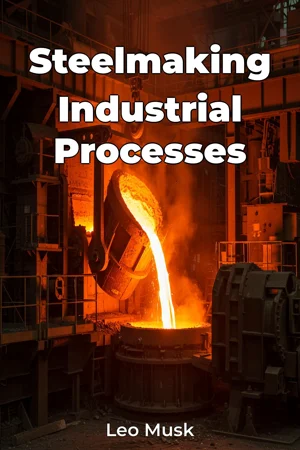
In the crucible of modern industry, steel reigns supreme. But how is this fundamental material, so integral to our infrastructure and technology, actually produced? "Steelmaking Industrial Processes" delves into the core methodologies that transform raw materials into the versatile alloys that underpin our world, emphasizing efficiency and innovation in every stage. This book explores two primary production routes: the classical blast furnace-basic oxygen furnace (BF-BOF) route and the increasingly important direct reduction-electric arc furnace (DR-EAF) route. Understanding these processes is crucial for metallurgists, engineers, business managers, and anyone involved in the manufacturing or construction sectors. The future of steel production hinges on optimizing these methods to meet rising global demand while minimizing environmental impact. The historical context of steelmaking will be examined. From its early beginnings in small-scale forges to the massive integrated steel plants of the 20th century, steel production has undergone radical transformations. We will cover landmark inventions like the Bessemer process and their impact on the scale and efficiency of steel output. Readers will gain an appreciation for the scientific principles of thermodynamics, kinetics, and materials science that underpin each process. This book argues that the continued advancement of steelmaking depends on a dual focus: improving the energy efficiency and environmental performance of existing BF-BOF infrastructure, and accelerating the adoption and refinement of DR-EAF technologies using sustainable energy sources. This argument is critical as the industry faces increasing pressure to reduce its carbon footprint and embrace circular economy principles. The book is structured into distinct sections. First, it introduces the fundamental concepts of iron and steelmaking, covering raw material preparation, chemical reactions, and process control basics. The subsequent chapters detail the BF-BOF route, examining each step from iron ore sintering and coke production to hot metal desulfurization and basic oxygen steelmaking. A parallel section focuses on the DR-EAF route, exploring various direct reduction technologies, electric arc furnace operation, and steel refining techniques. Finally, it addresses advanced steelmaking processes, innovative technologies like near-net-shape casting, and the future trends shaping the industry. The arguments presented are substantiated with data drawn from both academic research and industrial practice. Process flow diagrams, mass and energy balances, and case studies from leading steel plants worldwide will be incorporated. We will analyze key performance indicators (KPIs) such as energy consumption, yield, and emissions to evaluate the efficiency of different methods. "Steelmaking Industrial Processes" connects to various fields. It intersects with materials science in its discussion of alloy design and property control. There are overlaps with chemical engineering in the analysis of reaction kinetics and process optimization. It also links to business management through the exploration of cost-effectiveness, supply chain management, and sustainability strategies within the steel industry. A prominent feature of this book lies in its integrated systems perspective. Rather than treating individual processes in isolation, it examines their interdependencies and highlights opportunities for synergistic improvements. The book also stresses the importance of data-driven decision-making, promoting the use of modeling and simulation tools to optimize steelmaking operations. The tone is technical yet accessible. Complex concepts are explained clearly and concisely, with a focus on practical applications. Extensive use of diagrams, graphs, and tables will enhance the reader's understanding. The primary audience includes undergraduate and graduate students in metallurgy, materials science, and engineering. Practicing engineers and managers in the steel industry will also find this a valuable resource for staying abreast of the latest technological advancements and best practices. Moreover, professionals in related industries, such as automotive, construction, and energy, will benefit from a deeper understanding of steel production processes. As a non-fiction work within the 'Management, Business Management, Technology' genres, this book provides a systematic and comprehensive overview of steelmaking technologies, adhering to the conventions of clarity, accuracy, and objectivity expected in these areas. The scope encompasses the major industrial steelmaking routes currently in use globally. While the book will touch on emerging technologies, its primary emphasis is on established processes with demonstrated commercial viability. The information can be directly applied by engineers to improve the efficiency and reduce the environmental impact of existing steel plants. Managers can use the insights to make informed decisions about technology investments and strategic planning. Students can leverage the knowledge to prepare for careers in the steel industry or related fields. The book will also address some controversies. Discussions on the optimal balance between BF-BOF and DR-EAF production, the role of carbon capture technologies, and the economic viability of hydrogen-based steelmaking will be featured.
In the crucible of modern industry, steel reigns supreme. But how is this fundamental material, so integral to our infrastructure and technology, actually produced? "Steelmaking Industrial Processes" delves into the core methodologies that transform raw materials into the versatile alloys that underpin our world, emphasizing efficiency and innovation in every stage. This book explores two primary production routes: the classical blast furnace-basic oxygen furnace (BF-BOF) route and the increasingly important direct reduction-electric arc furnace (DR-EAF) route. Understanding these processes is crucial for metallurgists, engineers, business managers, and anyone involved in the manufacturing or construction sectors. The future of steel production hinges on optimizing these methods to meet rising global demand while minimizing environmental impact. The historical context of steelmaking will be examined. From its early beginnings in small-scale forges to the massive integrated steel plants of the 20th century, steel production has undergone radical transformations. We will cover landmark inventions like the Bessemer process and their impact on the scale and efficiency of steel output. Readers will gain an appreciation for the scientific principles of thermodynamics, kinetics, and materials science that underpin each process. This book argues that the continued advancement of steelmaking depends on a dual focus: improving the energy efficiency and environmental performance of existing BF-BOF infrastructure, and accelerating the adoption and refinement of DR-EAF technologies using sustainable energy sources. This argument is critical as the industry faces increasing pressure to reduce its carbon footprint and embrace circular economy principles. The book is structured into distinct sections. First, it introduces the fundamental concepts of iron and steelmaking, covering raw material preparation, chemical reactions, and process control basics. The subsequent chapters detail the BF-BOF route, examining each step from iron ore sintering and coke production to hot metal desulfurization and basic oxygen steelmaking. A parallel section focuses on the DR-EAF route, exploring various direct reduction technologies, electric arc furnace operation, and steel refining techniques. Finally, it addresses advanced steelmaking processes, innovative technologies like near-net-shape casting, and the future trends shaping the industry. The arguments presented are substantiated with data drawn from both academic research and industrial practice. Process flow diagrams, mass and energy balances, and case studies from leading steel plants worldwide will be incorporated. We will analyze key performance indicators (KPIs) such as energy consumption, yield, and emissions to evaluate the efficiency of different methods. "Steelmaking Industrial Processes" connects to various fields. It intersects with materials science in its discussion of alloy design and property control. There are overlaps with chemical engineering in the analysis of reaction kinetics and process optimization. It also links to business management through the exploration of cost-effectiveness, supply chain management, and sustainability strategies within the steel industry. A prominent feature of this book lies in its integrated systems perspective. Rather than treating individual processes in isolation, it examines their interdependencies and highlights opportunities for synergistic improvements. The book also stresses the importance of data-driven decision-making, promoting the use of modeling and simulation tools to optimize steelmaking operations. The tone is technical yet accessible. Complex concepts are explained clearly and concisely, with a focus on practical applications. Extensive use of diagrams, graphs, and tables will enhance the reader's understanding. The primary audience includes undergraduate and graduate students in metallurgy, materials science, and engineering. Practicing engineers and managers in the steel industry will also find this a valuable resource for staying abreast of the latest technological advancements and best practices. Moreover, professionals in related industries, such as automotive, construction, and energy, will benefit from a deeper understanding of steel production processes. As a non-fiction work within the 'Management, Business Management, Technology' genres, this book provides a systematic and comprehensive overview of steelmaking technologies, adhering to the conventions of clarity, accuracy, and objectivity expected in these areas. The scope encompasses the major industrial steelmaking routes currently in use globally. While the book will touch on emerging technologies, its primary emphasis is on established processes with demonstrated commercial viability. The information can be directly applied by engineers to improve the efficiency and reduce the environmental impact of existing steel plants. Managers can use the insights to make informed decisions about technology investments and strategic planning. Students can leverage the knowledge to prepare for careers in the steel industry or related fields. The book will also address some controversies. Discussions on the optimal balance between BF-BOF and DR-EAF production, the role of carbon capture technologies, and the economic viability of hydrogen-based steelmaking will be featured.
"Steelmaking Industrial Processes" offers a comprehensive exploration of how raw materials are transformed into the steel that underpins modern infrastructure. It focuses on two primary steel production routes: the traditional blast furnace-basic oxygen furnace (BF-BOF) and the increasingly vital direct reduction-electric arc furnace (DR-EAF). Understanding these processes is vital for metallurgists, engineers, and business managers. The book highlights how optimizing these methods is crucial for meeting global demands while minimizing environmental impact. It emphasizes the importance of energy efficiency and process optimization in steel production. The book delves into the historical context of steelmaking, from early forges to modern integrated plants, showcasing landmark inventions like the Bessemer process. It also examines the scientific principles—thermodynamics, kinetics, and materials science—that underpin each process. The arguments are supported by data from academic research and industrial practice, with process flow diagrams and case studies from leading steel plants. This integrated systems perspective examines the interdependencies of individual processes. Structured to introduce fundamental concepts before detailing each production route, the book addresses advanced steelmaking processes and innovative technologies. It connects to materials science, chemical engineering, and business management, providing a systematic overview of steelmaking technologies. Ultimately, "Steelmaking Industrial Processes" equips readers with the knowledge to improve efficiency, reduce environmental impact, and make informed decisions about technology investments in the steel industry.
Book Details
ISBN
9788233971649
Publisher
Publifye AS
Your Licenses
You don't own any licenses for this book
Purchase a license below to unlock this book and download the EPUB.
Purchase License
Select a tier to unlock this book
Need bulk licensing?
Contact us for enterprise agreements.