
About This Book
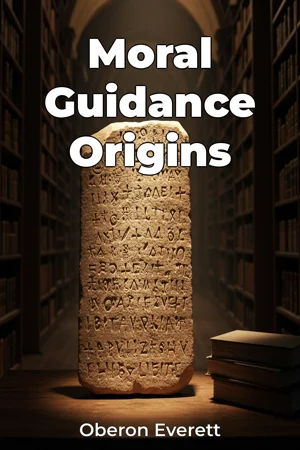
Where did our most cherished ethical principles truly originate? This book, "Moral Guidance Origins," delves into the surprisingly complex factual histories behind well-known ethical sayings and moral pronouncements, tracing their development from often obscure beginnings to their widespread acceptance. Rather than simply accepting these principles at face value, we embark on a journey through history, religion, and philosophy to understand the often-nuanced contexts from which they emerged. Two key topics are central to this investigation: the evolution of specific ethical statements across cultures and time periods, and the role of influential figures and texts in shaping our moral landscape. Understanding how these principles evolved is vital because it allows us to analyze their contemporary relevance with greater discernment. Examining the contributions of key individuals and foundational texts reveals the layers of interpretation and adaptation that have shaped our understanding of right and wrong. These investigations will help in understanding that ethics are not static decrees, but instead are actively shaped by humans. To fully appreciate the origins of ethical sayings, it is necessary to consider the historical and social contexts in which they arose. This book explores the prevalent belief systems, societal structures, and political climates that influenced the formulation and dissemination of moral ideas. We examine ancient legal codes, philosophical treatises, and religious scriptures to uncover the roots of these ethical principles. No specific prior knowledge is needed because each topic is covered from the ground up. The central argument of "Moral Guidance Origins" is that many widely accepted ethical sayings have origins that are far more intricate and historically contingent than commonly understood. By meticulously examining the factual beginnings of these principles, we aim to foster a more critical and informed engagement with ethics. This argument is important because it challenges us to move beyond rote acceptance of moral pronouncements and to consider the historical, cultural, and philosophical factors that have shaped them. The book unfolds in a structured manner. First, we introduce the main concepts of ethical analysis and historical investigation. The book then develops its ideas through focused examinations of 2-3 major categories of ethical pronouncements: those derived from religious texts, those originating in philosophical discourse, and those emerging from legal or political codes. Each section explores specific examples, tracing their origins and transformations. The study culminates in a discussion of the implications for contemporary ethical debates, emphasizing the importance of historical awareness in navigating complex moral issues. We also explore the practical application of understanding these origins, aiding in nuanced decision-making. "Moral Guidance Origins" relies on a wide array of evidence, including textual analysis of primary source documents, comparative studies of different ethical traditions, and historical research into the social and political contexts of moral development. Respected academic compilations of philosophical, religious, and legal texts are used as primary data sources. The book draws connections between religion, philosophy, and history. By examining the intersection of these fields, we gain a more comprehensive understanding of the complex factors that have shaped our moral beliefs. Furthermore, the book's analysis has implications for the field of sociology, particularly in understanding how social norms and values are formed and transmitted. The book's method could be used to explore other sayings outside of ethics. This book takes a unique approach by prioritizing factual investigation and historical context over prescriptive moralizing. By focusing on the origins of ethical sayings, we aim to provide readers with a deeper understanding of the complexities and nuances of moral thought. The tone of the book is academic but accessible, aiming to engage a broad audience interested in ethics, history, and philosophy. While rigorously researched, the writing style is designed to be clear and engaging, avoiding jargon and technical language where possible. The target audience includes students of philosophy, religion, and history, as well as general readers interested in the origins of moral ideas. This book would be valuable to anyone seeking a deeper understanding of the historical and cultural factors that have shaped our ethical landscape. As a work of non-fiction, "Moral Guidance Origins" adheres to the conventions of scholarly research, providing thorough citations and engaging with existing literature on ethics and history. The scope of the book is broad, encompassing a wide range of ethical sayings from different cultures and time periods. However, it is also limited by its focus on factual origins, rather than contemporary ethical debates. The book does not attempt to provide definitive answers to complex moral questions but instead seeks to illuminate the historical context in which these questions have arisen. Understanding the origins of ethical sayings can have practical applications in various fields, including law, politics, and education. By providing a deeper understanding of the historical and cultural context of ethical principles, this book can help readers navigate complex moral issues with greater awareness and insight. The field of ethics is rife with ongoing debates about the nature of morality, the role of reason and emotion in ethical decision-making, and the relationship between ethics and culture. "Moral Guidance Origins" addresses these debates indirectly by providing a historical perspective on the development of ethical ideas.
Where did our most cherished ethical principles truly originate? This book, "Moral Guidance Origins," delves into the surprisingly complex factual histories behind well-known ethical sayings and moral pronouncements, tracing their development from often obscure beginnings to their widespread acceptance. Rather than simply accepting these principles at face value, we embark on a journey through history, religion, and philosophy to understand the often-nuanced contexts from which they emerged. Two key topics are central to this investigation: the evolution of specific ethical statements across cultures and time periods, and the role of influential figures and texts in shaping our moral landscape. Understanding how these principles evolved is vital because it allows us to analyze their contemporary relevance with greater discernment. Examining the contributions of key individuals and foundational texts reveals the layers of interpretation and adaptation that have shaped our understanding of right and wrong. These investigations will help in understanding that ethics are not static decrees, but instead are actively shaped by humans. To fully appreciate the origins of ethical sayings, it is necessary to consider the historical and social contexts in which they arose. This book explores the prevalent belief systems, societal structures, and political climates that influenced the formulation and dissemination of moral ideas. We examine ancient legal codes, philosophical treatises, and religious scriptures to uncover the roots of these ethical principles. No specific prior knowledge is needed because each topic is covered from the ground up. The central argument of "Moral Guidance Origins" is that many widely accepted ethical sayings have origins that are far more intricate and historically contingent than commonly understood. By meticulously examining the factual beginnings of these principles, we aim to foster a more critical and informed engagement with ethics. This argument is important because it challenges us to move beyond rote acceptance of moral pronouncements and to consider the historical, cultural, and philosophical factors that have shaped them. The book unfolds in a structured manner. First, we introduce the main concepts of ethical analysis and historical investigation. The book then develops its ideas through focused examinations of 2-3 major categories of ethical pronouncements: those derived from religious texts, those originating in philosophical discourse, and those emerging from legal or political codes. Each section explores specific examples, tracing their origins and transformations. The study culminates in a discussion of the implications for contemporary ethical debates, emphasizing the importance of historical awareness in navigating complex moral issues. We also explore the practical application of understanding these origins, aiding in nuanced decision-making. "Moral Guidance Origins" relies on a wide array of evidence, including textual analysis of primary source documents, comparative studies of different ethical traditions, and historical research into the social and political contexts of moral development. Respected academic compilations of philosophical, religious, and legal texts are used as primary data sources. The book draws connections between religion, philosophy, and history. By examining the intersection of these fields, we gain a more comprehensive understanding of the complex factors that have shaped our moral beliefs. Furthermore, the book's analysis has implications for the field of sociology, particularly in understanding how social norms and values are formed and transmitted. The book's method could be used to explore other sayings outside of ethics. This book takes a unique approach by prioritizing factual investigation and historical context over prescriptive moralizing. By focusing on the origins of ethical sayings, we aim to provide readers with a deeper understanding of the complexities and nuances of moral thought. The tone of the book is academic but accessible, aiming to engage a broad audience interested in ethics, history, and philosophy. While rigorously researched, the writing style is designed to be clear and engaging, avoiding jargon and technical language where possible. The target audience includes students of philosophy, religion, and history, as well as general readers interested in the origins of moral ideas. This book would be valuable to anyone seeking a deeper understanding of the historical and cultural factors that have shaped our ethical landscape. As a work of non-fiction, "Moral Guidance Origins" adheres to the conventions of scholarly research, providing thorough citations and engaging with existing literature on ethics and history. The scope of the book is broad, encompassing a wide range of ethical sayings from different cultures and time periods. However, it is also limited by its focus on factual origins, rather than contemporary ethical debates. The book does not attempt to provide definitive answers to complex moral questions but instead seeks to illuminate the historical context in which these questions have arisen. Understanding the origins of ethical sayings can have practical applications in various fields, including law, politics, and education. By providing a deeper understanding of the historical and cultural context of ethical principles, this book can help readers navigate complex moral issues with greater awareness and insight. The field of ethics is rife with ongoing debates about the nature of morality, the role of reason and emotion in ethical decision-making, and the relationship between ethics and culture. "Moral Guidance Origins" addresses these debates indirectly by providing a historical perspective on the development of ethical ideas.
"Moral Guidance Origins" explores the fascinating and often complex histories behind widely accepted ethical principles. Rather than taking moral pronouncements at face value, this book delves into their origins, revealing the historical, religious, and philosophical contexts that shaped them. The text argues that understanding these origins is crucial for a more informed engagement with ethics, challenging the rote acceptance of moral sayings. Did you know that many ethical statements have evolved significantly across cultures and time? Also, influential figures and texts have played a vital role in shaping our moral landscape, often adding layers of interpretation to existing principles. The book progresses by first introducing the main concepts of ethical analysis and historical investigation. It then examines major categories of ethical pronouncements, including those from religious texts, philosophical discourse, and legal codes, tracing their origins and transformations. This approach, prioritizing factual investigation over moralizing, sets this book apart, offering readers a deeper understanding of moral thought. By understanding the origins of ethics, we can better navigate contemporary moral issues.
Book Details
ISBN
9788233971588
Publisher
Publifye AS
Your Licenses
You don't own any licenses for this book
Purchase a license below to unlock this book and download the EPUB.
Purchase License
Select a tier to unlock this book
Need bulk licensing?
Contact us for enterprise agreements.