
About This Book
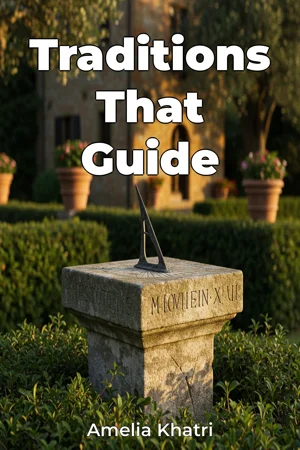
Are the moral compasses of past generations still relevant in our complex modern world? "Traditions That Guide" argues affirmatively, exploring the enduring value of traditional maxims verified through historical records. This book serves as a moral guidebook, carefully examining the historical and philosophical roots of time-honored principles and demonstrating their continuing applicability. Two key topics drive this exploration: the identification and interpretation of traditional maxims, and the evaluation of their practical impact throughout history. The significance of these topics lies in their potential to provide a stable foundation for ethical decision-making in a rapidly changing society. The erosion of traditional values has left many adrift, searching for guidance. This book offers a structured approach to understanding and utilizing the wisdom of the past. Understanding the historical context in which these maxims arose is crucial. The book delves into various eras, analyzing social structures, political landscapes, and prominent philosophical schools of thought that shaped the development and acceptance of these moral principles. Readers will benefit from a foundational understanding of ancient philosophies like Stoicism and Confucianism, as well as major historical events that tested and refined these maxims. The central argument posits that while societal structures evolve, fundamental human nature remains relatively constant. Therefore, maxims proven effective in guiding behavior and fostering social harmony across diverse historical periods retain their value today. The importance of this argument stems from its potential to bridge the gap between tradition and modernity, offering practical guidance in navigating contemporary moral dilemmas. The book unfolds in a logical structure. First, it introduces the concept of traditional maxims, differentiating them from mere platitudes and establishing criteria for their verification through historical evidence. Then, it dedicates chapters to exploring specific maxims, such as "Honesty is the best policy," "Treat others as you would like to be treated," and "Moderation in all things." Each maxim is analyzed through a historical lens, examining instances where adherence to or violation of the principle led to specific outcomes. The book then culminates by demonstrating how these maxims can be applied to contemporary challenges in areas such as business ethics, personal relationships, and civic engagement. Evidence presented includes case studies drawn from historical records, biographical accounts of individuals who exemplified these maxims, and analyses of philosophical texts that articulate and defend these principles. The research relies on primary source materials where possible, supplemented by secondary scholarship that provides context and interpretation. "Traditions That Guide" bridges Philosophy and History, but also touches upon sociology by examining the impact of maxims on social structures, and political science by exploring their role in governance. These interdisciplinary connections enrich the analysis and demonstrate the pervasive influence of traditional maxims. What distinguishes this book is its rigorous approach to verifying maxims through historical evidence. It avoids sentimental appeals to tradition, instead providing a fact-based analysis of their real-world consequences. The tone is professional yet accessible, striving for clarity and avoiding jargon. While grounded in scholarly research, the writing is intended for a broad audience interested in practical ethics and historical wisdom. The target audience includes students of philosophy, history, and ethics, as well as professionals seeking to enhance their moral decision-making skills, and general readers interested in exploring the enduring relevance of traditional values. It appeals to those who seek a grounded, evidence-based approach to ethical guidance. As a work of non-fiction, this book adheres to principles of accuracy, objectivity, and transparency. All sources are clearly cited, and arguments are supported by verifiable evidence. The scope of the book is intentionally limited to maxims that have demonstrated a consistent positive impact across various historical periods and cultures. It does not attempt to provide a comprehensive overview of all traditional beliefs, but focuses on those with a proven track record. The information presented can be directly applied to enhance ethical awareness and decision-making in everyday life, fostering a more virtuous character and contributing to a more harmonious society. Finally, the book acknowledges ongoing debates regarding the interpretation and application of certain maxims in specific contexts. It presents different perspectives and encourages readers to engage in critical thinking, recognizing that the application of traditional wisdom requires careful consideration of the particular circumstances.
Are the moral compasses of past generations still relevant in our complex modern world? "Traditions That Guide" argues affirmatively, exploring the enduring value of traditional maxims verified through historical records. This book serves as a moral guidebook, carefully examining the historical and philosophical roots of time-honored principles and demonstrating their continuing applicability. Two key topics drive this exploration: the identification and interpretation of traditional maxims, and the evaluation of their practical impact throughout history. The significance of these topics lies in their potential to provide a stable foundation for ethical decision-making in a rapidly changing society. The erosion of traditional values has left many adrift, searching for guidance. This book offers a structured approach to understanding and utilizing the wisdom of the past. Understanding the historical context in which these maxims arose is crucial. The book delves into various eras, analyzing social structures, political landscapes, and prominent philosophical schools of thought that shaped the development and acceptance of these moral principles. Readers will benefit from a foundational understanding of ancient philosophies like Stoicism and Confucianism, as well as major historical events that tested and refined these maxims. The central argument posits that while societal structures evolve, fundamental human nature remains relatively constant. Therefore, maxims proven effective in guiding behavior and fostering social harmony across diverse historical periods retain their value today. The importance of this argument stems from its potential to bridge the gap between tradition and modernity, offering practical guidance in navigating contemporary moral dilemmas. The book unfolds in a logical structure. First, it introduces the concept of traditional maxims, differentiating them from mere platitudes and establishing criteria for their verification through historical evidence. Then, it dedicates chapters to exploring specific maxims, such as "Honesty is the best policy," "Treat others as you would like to be treated," and "Moderation in all things." Each maxim is analyzed through a historical lens, examining instances where adherence to or violation of the principle led to specific outcomes. The book then culminates by demonstrating how these maxims can be applied to contemporary challenges in areas such as business ethics, personal relationships, and civic engagement. Evidence presented includes case studies drawn from historical records, biographical accounts of individuals who exemplified these maxims, and analyses of philosophical texts that articulate and defend these principles. The research relies on primary source materials where possible, supplemented by secondary scholarship that provides context and interpretation. "Traditions That Guide" bridges Philosophy and History, but also touches upon sociology by examining the impact of maxims on social structures, and political science by exploring their role in governance. These interdisciplinary connections enrich the analysis and demonstrate the pervasive influence of traditional maxims. What distinguishes this book is its rigorous approach to verifying maxims through historical evidence. It avoids sentimental appeals to tradition, instead providing a fact-based analysis of their real-world consequences. The tone is professional yet accessible, striving for clarity and avoiding jargon. While grounded in scholarly research, the writing is intended for a broad audience interested in practical ethics and historical wisdom. The target audience includes students of philosophy, history, and ethics, as well as professionals seeking to enhance their moral decision-making skills, and general readers interested in exploring the enduring relevance of traditional values. It appeals to those who seek a grounded, evidence-based approach to ethical guidance. As a work of non-fiction, this book adheres to principles of accuracy, objectivity, and transparency. All sources are clearly cited, and arguments are supported by verifiable evidence. The scope of the book is intentionally limited to maxims that have demonstrated a consistent positive impact across various historical periods and cultures. It does not attempt to provide a comprehensive overview of all traditional beliefs, but focuses on those with a proven track record. The information presented can be directly applied to enhance ethical awareness and decision-making in everyday life, fostering a more virtuous character and contributing to a more harmonious society. Finally, the book acknowledges ongoing debates regarding the interpretation and application of certain maxims in specific contexts. It presents different perspectives and encourages readers to engage in critical thinking, recognizing that the application of traditional wisdom requires careful consideration of the particular circumstances.
"Traditions That Guide" explores the enduring relevance of traditional maxims in our modern world by examining their historical and philosophical roots. Serving as a moral guidebook, the book argues that principles such as "Honesty is the best policy" and "Treat others as you would like to be treated," verified through historical records, offer a stable foundation for ethical decision-making. It delves into ancient philosophies like Stoicism and Confucianism, highlighting how these maxims shaped societies and influenced individual behavior across diverse eras. The book uniquely bridges tradition and modernity by analyzing the practical impact of these maxims throughout history, avoiding sentimental appeals and providing a fact-based analysis of their real-world consequences. Each maxim is explored through a historical lens, examining instances where adherence or violation led to specific outcomes. Chapters progress logically, first introducing the concept of traditional maxims and then demonstrating their application to contemporary challenges in areas such as business ethics and personal relationships.
Book Details
ISBN
9788233971489
Publisher
Publifye AS
Your Licenses
You don't own any licenses for this book
Purchase a license below to unlock this book and download the EPUB.
Purchase License
Select a tier to unlock this book
Need bulk licensing?
Contact us for enterprise agreements.