
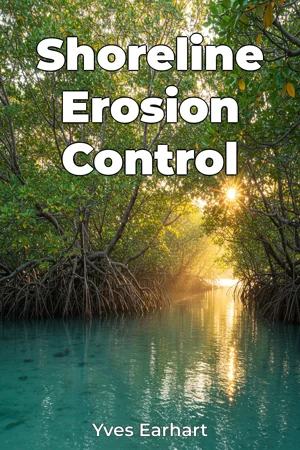
About This Book
Can we effectively harness the power of nature to combat the relentless forces eroding our coastlines? "Shoreline Erosion Control" delves into the natural processes that defend our beaches and barrier islands, offering a comprehensive understanding of how these ecosystems can be leveraged for sustainable coastal management. This book addresses the critical need for effective erosion control strategies in the face of rising sea levels and increased storm frequency by focusing on environmentally sound, nature-based solutions. Two key themes dominate this exploration: the inherent protective abilities of natural tidal barriers, and the methods by which beaches and barrier islands naturally mitigate erosion. Understanding the complex interplay of tides, sediment transport, and vegetation, the book shows how these components act as dynamic systems that constantly adapt and rebuild. These topics are important because conventional hard engineering solutions often disrupt natural processes, leading to unintended consequences and further ecological damage. Throughout history, coastal communities have struggled with shoreline erosion. The increasing intensity of storms coupled with human development along coastlines has exacerbated these problems. The book presumes a basic understanding of coastal geography and ecological principles but provides clear explanations of relevant scientific concepts. The central argument of "Shoreline Erosion Control" posits that a deep understanding of natural coastal processes is essential for developing effective and sustainable erosion control strategies. By working with nature, rather than against it, we can create resilient coastlines that protect both property and the environment. The book begins by introducing the fundamental principles of coastal geomorphology and the dynamics of wave action and sediment transport. It then systematically explores the role of tidal barriers such as salt marshes and mangrove forests in dissipating wave energy and stabilizing shorelines. The following sections detail the processes by which beaches and barrier islands naturally respond to erosion, including dune formation, overwash, and landward migration. The book culminates by integrating these natural processes into practical guidelines for coastal management, emphasizing the importance of adaptive strategies that allow shorelines to evolve naturally. The evidence presented comprises a synthesis of field observations, laboratory experiments, and numerical modeling studies. Special attention is given to long-term data sets that document shoreline changes over decades, providing empirical evidence of the effectiveness of natural erosion control mechanisms. The book also draws upon case studies from diverse coastal environments around the world, showcasing successful examples of nature-based solutions. "Shoreline Erosion Control" connects to several other areas of study including: climate science, through its discussion of sea-level rise impacts; ecological engineering, through its emphasis on designing with nature; and public policy, through the need for informed coastal zone management regulations. These interdisciplinary links reinforce the book's central argument that erosion control requires a holistic approach that integrates scientific understanding with practical management strategies. The book distinguishes itself by providing a balanced assessment of both the benefits and limitations of natural erosion control techniques. It recognizes that hard engineering solutions may be appropriate in certain circumstances, but advocates for prioritizing nature-based approaches whenever feasible. Written in a professional, educational and clear style, "Shoreline Erosion Control" targets coastal managers, environmental consultants, engineers, policymakers, and students in the fields of environmental science, earth sciences, and geography. It will appeal to anyone seeking practical and sustainable solutions to the challenges of shoreline erosion. As a work within the 'Environment, Earth Sciences, and Geography' genres, the book adheres to standards of scientific accuracy, objectivity, and evidence-based reasoning. The scope of the book is limited to natural erosion control techniques applicable to sandy coastlines and barrier islands. It does not delve into the specifics of hard engineering structures or address erosion problems in rocky or cliff-lined coasts. The information within this book can be directly applied to coastal management planning, project design, and regulatory decision-making. It provides practical guidance on how to assess coastal vulnerability, identify opportunities for natural erosion control, and implement adaptive management strategies. While the effectiveness of natural erosion control techniques is generally accepted, there are ongoing debates about the optimal methods for implementing these strategies, particularly in the face of accelerated sea-level rise and increasing storm intensity. The book addresses these debates by presenting a range of perspectives and highlighting the uncertainties associated with predicting future shoreline changes.
Can we effectively harness the power of nature to combat the relentless forces eroding our coastlines? "Shoreline Erosion Control" delves into the natural processes that defend our beaches and barrier islands, offering a comprehensive understanding of how these ecosystems can be leveraged for sustainable coastal management. This book addresses the critical need for effective erosion control strategies in the face of rising sea levels and increased storm frequency by focusing on environmentally sound, nature-based solutions. Two key themes dominate this exploration: the inherent protective abilities of natural tidal barriers, and the methods by which beaches and barrier islands naturally mitigate erosion. Understanding the complex interplay of tides, sediment transport, and vegetation, the book shows how these components act as dynamic systems that constantly adapt and rebuild. These topics are important because conventional hard engineering solutions often disrupt natural processes, leading to unintended consequences and further ecological damage. Throughout history, coastal communities have struggled with shoreline erosion. The increasing intensity of storms coupled with human development along coastlines has exacerbated these problems. The book presumes a basic understanding of coastal geography and ecological principles but provides clear explanations of relevant scientific concepts. The central argument of "Shoreline Erosion Control" posits that a deep understanding of natural coastal processes is essential for developing effective and sustainable erosion control strategies. By working with nature, rather than against it, we can create resilient coastlines that protect both property and the environment. The book begins by introducing the fundamental principles of coastal geomorphology and the dynamics of wave action and sediment transport. It then systematically explores the role of tidal barriers such as salt marshes and mangrove forests in dissipating wave energy and stabilizing shorelines. The following sections detail the processes by which beaches and barrier islands naturally respond to erosion, including dune formation, overwash, and landward migration. The book culminates by integrating these natural processes into practical guidelines for coastal management, emphasizing the importance of adaptive strategies that allow shorelines to evolve naturally. The evidence presented comprises a synthesis of field observations, laboratory experiments, and numerical modeling studies. Special attention is given to long-term data sets that document shoreline changes over decades, providing empirical evidence of the effectiveness of natural erosion control mechanisms. The book also draws upon case studies from diverse coastal environments around the world, showcasing successful examples of nature-based solutions. "Shoreline Erosion Control" connects to several other areas of study including: climate science, through its discussion of sea-level rise impacts; ecological engineering, through its emphasis on designing with nature; and public policy, through the need for informed coastal zone management regulations. These interdisciplinary links reinforce the book's central argument that erosion control requires a holistic approach that integrates scientific understanding with practical management strategies. The book distinguishes itself by providing a balanced assessment of both the benefits and limitations of natural erosion control techniques. It recognizes that hard engineering solutions may be appropriate in certain circumstances, but advocates for prioritizing nature-based approaches whenever feasible. Written in a professional, educational and clear style, "Shoreline Erosion Control" targets coastal managers, environmental consultants, engineers, policymakers, and students in the fields of environmental science, earth sciences, and geography. It will appeal to anyone seeking practical and sustainable solutions to the challenges of shoreline erosion. As a work within the 'Environment, Earth Sciences, and Geography' genres, the book adheres to standards of scientific accuracy, objectivity, and evidence-based reasoning. The scope of the book is limited to natural erosion control techniques applicable to sandy coastlines and barrier islands. It does not delve into the specifics of hard engineering structures or address erosion problems in rocky or cliff-lined coasts. The information within this book can be directly applied to coastal management planning, project design, and regulatory decision-making. It provides practical guidance on how to assess coastal vulnerability, identify opportunities for natural erosion control, and implement adaptive management strategies. While the effectiveness of natural erosion control techniques is generally accepted, there are ongoing debates about the optimal methods for implementing these strategies, particularly in the face of accelerated sea-level rise and increasing storm intensity. The book addresses these debates by presenting a range of perspectives and highlighting the uncertainties associated with predicting future shoreline changes.
"Shoreline Erosion Control" explores nature-based solutions for coastal erosion, emphasizing how understanding natural processes is crucial for effective coastal management. The book highlights the protective roles of tidal barriers like salt marshes, which dissipate wave energy, and the natural ability of barrier islands to adapt through dune formation and sediment transport. Conventional methods often disrupt these natural defenses, leading to further ecological damage. The book details how beaches and barrier islands respond to erosion, showcasing successful cases of nature-based solutions worldwide, and presents a balanced view of natural and hard engineering approaches. It begins with coastal geomorphology principles, progresses through tidal barrier functions, and concludes with practical coastal management guidelines. This work provides valuable insights for coastal managers, environmental consultants, and students in environmental science, earth sciences, and geography by integrating field observations, lab experiments, and long-term data to show how to work with nature, creating resilient coastlines that protect both property and the environment.
Book Details
ISBN
9788233971397
Publisher
Publifye AS
Your Licenses
You don't own any licenses for this book
Purchase a license below to unlock this book and download the EPUB.
Purchase License
Select a tier to unlock this book
Need bulk licensing?
Contact us for enterprise agreements.