
About This Book
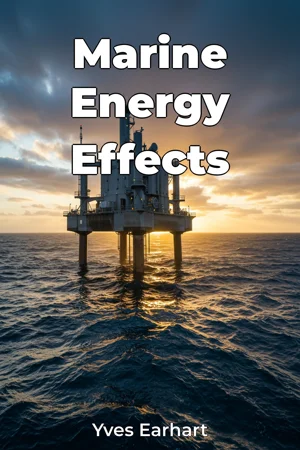
Can the relentless power of our oceans become a cornerstone of a sustainable energy future? "Marine Energy Effects" explores that very question, delving into the potential of tidal and wave energy as viable renewable resources capable of reshaping our energy landscape. This book addresses the critical need for cleaner energy solutions amid growing environmental concerns and dwindling fossil fuel reserves. We examine the scientific principles behind marine energy, the technological advancements driving its development, and the environmental considerations crucial to its responsible implementation. The book's central argument posits that while marine energy offers substantial promise, a comprehensive understanding of its potential environmental impacts, coupled with strategic technological innovation and policy frameworks, is essential for realizing its long-term viability. It highlights the importance of balancing energy production with the preservation of marine ecosystems. "Marine Energy Effects" is structured to provide a thorough exploration of this complex field, encompassing a) an introduction to the fundamental physics of tides and waves and their energy potential, b) an in-depth analysis of existing and emerging technologies for harnessing this energy, including tidal turbines, wave energy converters, and oscillating water columns, c) a detailed assessment of the ecological effects of marine energy installations, covering impacts on marine habitats, species behavior, and water quality, and d) a discussion of the socio-economic factors, policy considerations, and future prospects for the marine energy sector. The evidence presented draws from a wide array of sources, including scientific research papers, engineering reports, environmental impact assessments, and case studies of marine energy projects around the world. The analysis incorporates field data, numerical modeling results, and experimental findings to provide a robust and evidence-based evaluation of the technology's potential and limitations. The book connects interdisciplinary fields, linking oceanography, mechanical engineering, environmental science, and public policy. This interdisciplinary approach allows for a holistic understanding of the challenges and opportunities associated with marine energy development. By examining the interplay between these fields, the book provides valuable insights for scientists, engineers, policymakers, and anyone interested in sustainable energy solutions. One unique aspect of "Marine Energy Effects" is its emphasis on adaptive management strategies. Recognizing the inherent uncertainties associated with emerging technologies and complex ecosystems, the book advocates for a flexible, iterative approach to marine energy development that allows for continuous monitoring, evaluation, and adjustment based on observed impacts. Written in a clear and accessible style, the book is intended for a broad audience, including students, researchers, industry professionals, policymakers, and anyone with an interest in renewable energy and environmental sustainability. It provides a comprehensive overview of the field without assuming prior expertise, making it a valuable resource for both newcomers and experienced professionals. The genre expectations are aligned with environmental and science books and focus on factual reporting and analysis. The scope of the book is intentionally limited to tidal and wave energy, excluding other forms of marine energy such as ocean thermal energy conversion (OTEC) and salinity gradient power, as well as offshore wind. This focused approach allows for a more in-depth examination of the specific challenges and opportunities associated with these two promising technologies. The information presented in "Marine Energy Effects" has numerous real-world applications, including informing policy decisions related to marine energy development, guiding the design and deployment of marine energy devices, and supporting environmental impact assessments of marine energy projects. It also provides valuable insights for investors and entrepreneurs seeking to capitalize on the growing market for renewable energy technologies. The book addresses ongoing debates within the marine energy field, such as the relative merits of different technology designs, the appropriate level of environmental monitoring, and the optimal regulatory frameworks for promoting sustainable development. By presenting a balanced and nuanced perspective on these controversies, the book aims to foster informed discussion and collaboration among stakeholders.
Can the relentless power of our oceans become a cornerstone of a sustainable energy future? "Marine Energy Effects" explores that very question, delving into the potential of tidal and wave energy as viable renewable resources capable of reshaping our energy landscape. This book addresses the critical need for cleaner energy solutions amid growing environmental concerns and dwindling fossil fuel reserves. We examine the scientific principles behind marine energy, the technological advancements driving its development, and the environmental considerations crucial to its responsible implementation. The book's central argument posits that while marine energy offers substantial promise, a comprehensive understanding of its potential environmental impacts, coupled with strategic technological innovation and policy frameworks, is essential for realizing its long-term viability. It highlights the importance of balancing energy production with the preservation of marine ecosystems. "Marine Energy Effects" is structured to provide a thorough exploration of this complex field, encompassing a) an introduction to the fundamental physics of tides and waves and their energy potential, b) an in-depth analysis of existing and emerging technologies for harnessing this energy, including tidal turbines, wave energy converters, and oscillating water columns, c) a detailed assessment of the ecological effects of marine energy installations, covering impacts on marine habitats, species behavior, and water quality, and d) a discussion of the socio-economic factors, policy considerations, and future prospects for the marine energy sector. The evidence presented draws from a wide array of sources, including scientific research papers, engineering reports, environmental impact assessments, and case studies of marine energy projects around the world. The analysis incorporates field data, numerical modeling results, and experimental findings to provide a robust and evidence-based evaluation of the technology's potential and limitations. The book connects interdisciplinary fields, linking oceanography, mechanical engineering, environmental science, and public policy. This interdisciplinary approach allows for a holistic understanding of the challenges and opportunities associated with marine energy development. By examining the interplay between these fields, the book provides valuable insights for scientists, engineers, policymakers, and anyone interested in sustainable energy solutions. One unique aspect of "Marine Energy Effects" is its emphasis on adaptive management strategies. Recognizing the inherent uncertainties associated with emerging technologies and complex ecosystems, the book advocates for a flexible, iterative approach to marine energy development that allows for continuous monitoring, evaluation, and adjustment based on observed impacts. Written in a clear and accessible style, the book is intended for a broad audience, including students, researchers, industry professionals, policymakers, and anyone with an interest in renewable energy and environmental sustainability. It provides a comprehensive overview of the field without assuming prior expertise, making it a valuable resource for both newcomers and experienced professionals. The genre expectations are aligned with environmental and science books and focus on factual reporting and analysis. The scope of the book is intentionally limited to tidal and wave energy, excluding other forms of marine energy such as ocean thermal energy conversion (OTEC) and salinity gradient power, as well as offshore wind. This focused approach allows for a more in-depth examination of the specific challenges and opportunities associated with these two promising technologies. The information presented in "Marine Energy Effects" has numerous real-world applications, including informing policy decisions related to marine energy development, guiding the design and deployment of marine energy devices, and supporting environmental impact assessments of marine energy projects. It also provides valuable insights for investors and entrepreneurs seeking to capitalize on the growing market for renewable energy technologies. The book addresses ongoing debates within the marine energy field, such as the relative merits of different technology designs, the appropriate level of environmental monitoring, and the optimal regulatory frameworks for promoting sustainable development. By presenting a balanced and nuanced perspective on these controversies, the book aims to foster informed discussion and collaboration among stakeholders.
"Marine Energy Effects" explores the potential of tidal and wave energy as key renewable resources. Amid environmental concerns and dwindling fossil fuels, this book investigates the science, technology, and environmental considerations necessary for responsible implementation. The book argues that understanding environmental impacts, alongside technological innovation and policy frameworks, is crucial for the long-term viability of marine energy. One intriguing fact is that marine energy has the potential to reshape our energy landscape. The book progresses from the physics of tides and waves to analyzing technologies like tidal turbines and wave energy converters. It assesses ecological effects on marine habitats and water quality, followed by a discussion of socio-economic factors and policy. A unique aspect is its emphasis on adaptive management, allowing for continuous monitoring and adjustment based on observed impacts. The book highlights the importance of balancing energy production with the preservation of marine ecosystems. The approach is interdisciplinary, linking oceanography, mechanical engineering, environmental science, and public policy to provide a holistic understanding. It addresses ongoing debates within the marine energy field, aiming to foster informed discussion and collaboration among stakeholders in the renewable energy sector.
Book Details
ISBN
9788233971328
Publisher
Publifye AS
Your Licenses
You don't own any licenses for this book
Purchase a license below to unlock this book and download the EPUB.
Purchase License
Select a tier to unlock this book
Need bulk licensing?
Contact us for enterprise agreements.