
About This Book
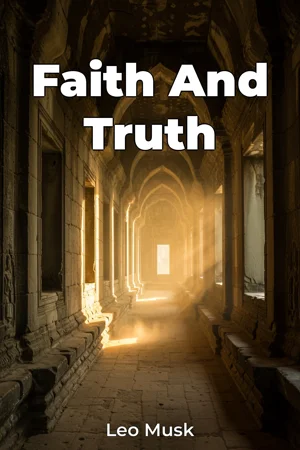
What constitutes truth within religious frameworks, and how do these conceptions interact with the broader pursuit of knowledge? *Faith and Truth* delves into the complex relationship between faith, reason, and truth across diverse religious traditions, examining the foundations upon which doctrinal claims are made and the ensuing debates that shape religious understanding. This exploration is vital, as it unveils the inner workings of belief systems and their impact on individual lives and societal structures. Within these systems, truth is not always a simple concept; it can be multifaceted and understood differently depending on religious affiliation, interpretation, and historical context. This book navigates the historical and philosophical landscapes that have molded religious thought, providing context to the ongoing discourse. Beginning with an examination of the epistemological underpinnings of faith-based knowledge, it explores how different traditions validate their claims. The central argument revolves around the idea that while faith and reason are often portrayed as opposing forces, they represent distinct yet interconnected modes of understanding reality. It proposes that a deeper appreciation of their interplay is crucial for fostering interreligious dialogue and promoting a more nuanced worldview. The book is structured to systematically explore these themes. Part one introduces fundamental concepts of truth, faith, and reason within various religious contexts, investigating foundational texts and influential thinkers. Part two develops a comparative analysis of doctrinal claims, focusing on creation narratives, moral codes, and eschatological beliefs across several religions. Part three culminates in an evaluation of the social and ethical implications of these differing truth claims, examining how they impact issues such as religious pluralism, social justice, and individual identity. To substantiate its arguments, the book draws upon a wide array of sources, including theological treatises, philosophical analyses, historical documents, and sociological studies. It incorporates textual exegesis, comparative theology, and empirical research to provide a comprehensive and multi-faceted perspective. *Faith and Truth* bridges the gap between philosophy, religion, and sociology, offering insights into the nature of belief, the construction of meaning, and the dynamics of social interaction. It invites readers to re-evaluate their own assumptions about truth and knowledge, fostering a deeper understanding of the diverse perspectives that shape our world. This book adopts an academic, yet accessible, style, aiming to engage both scholars and general readers interested in the intersection of faith and reason. It is particularly relevant for students of religious studies, philosophy, theology, and anyone seeking to understand the role of faith in contemporary society. The scope is broad, encompassing major world religions and their diverse interpretations of truth. While acknowledging the vastness of the subject, the book intentionally focuses on key aspects of doctrinal claims and their implications, recognizing the limitations inherent in any attempt to provide an exhaustive account. The ideas presented have real-world applications for anyone seeking to engage in interfaith dialogue, resolve conflicts rooted in religious differences, or cultivate a more tolerant and understanding worldview. It also explores the controversies surrounding topics like religious freedom, the separation of church and state, and the challenges of reconciling scientific and religious perspectives. The aim is to provide a framework for constructive engagement with these complex issues, promoting critical thinking and informed decision-making.
What constitutes truth within religious frameworks, and how do these conceptions interact with the broader pursuit of knowledge? *Faith and Truth* delves into the complex relationship between faith, reason, and truth across diverse religious traditions, examining the foundations upon which doctrinal claims are made and the ensuing debates that shape religious understanding. This exploration is vital, as it unveils the inner workings of belief systems and their impact on individual lives and societal structures. Within these systems, truth is not always a simple concept; it can be multifaceted and understood differently depending on religious affiliation, interpretation, and historical context. This book navigates the historical and philosophical landscapes that have molded religious thought, providing context to the ongoing discourse. Beginning with an examination of the epistemological underpinnings of faith-based knowledge, it explores how different traditions validate their claims. The central argument revolves around the idea that while faith and reason are often portrayed as opposing forces, they represent distinct yet interconnected modes of understanding reality. It proposes that a deeper appreciation of their interplay is crucial for fostering interreligious dialogue and promoting a more nuanced worldview. The book is structured to systematically explore these themes. Part one introduces fundamental concepts of truth, faith, and reason within various religious contexts, investigating foundational texts and influential thinkers. Part two develops a comparative analysis of doctrinal claims, focusing on creation narratives, moral codes, and eschatological beliefs across several religions. Part three culminates in an evaluation of the social and ethical implications of these differing truth claims, examining how they impact issues such as religious pluralism, social justice, and individual identity. To substantiate its arguments, the book draws upon a wide array of sources, including theological treatises, philosophical analyses, historical documents, and sociological studies. It incorporates textual exegesis, comparative theology, and empirical research to provide a comprehensive and multi-faceted perspective. *Faith and Truth* bridges the gap between philosophy, religion, and sociology, offering insights into the nature of belief, the construction of meaning, and the dynamics of social interaction. It invites readers to re-evaluate their own assumptions about truth and knowledge, fostering a deeper understanding of the diverse perspectives that shape our world. This book adopts an academic, yet accessible, style, aiming to engage both scholars and general readers interested in the intersection of faith and reason. It is particularly relevant for students of religious studies, philosophy, theology, and anyone seeking to understand the role of faith in contemporary society. The scope is broad, encompassing major world religions and their diverse interpretations of truth. While acknowledging the vastness of the subject, the book intentionally focuses on key aspects of doctrinal claims and their implications, recognizing the limitations inherent in any attempt to provide an exhaustive account. The ideas presented have real-world applications for anyone seeking to engage in interfaith dialogue, resolve conflicts rooted in religious differences, or cultivate a more tolerant and understanding worldview. It also explores the controversies surrounding topics like religious freedom, the separation of church and state, and the challenges of reconciling scientific and religious perspectives. The aim is to provide a framework for constructive engagement with these complex issues, promoting critical thinking and informed decision-making.
"Faith and Truth" explores the intricate relationship between faith, reason, and truth across various religions. It delves into how different traditions validate their doctrinal claims, revealing the inner workings of belief systems and their impact. The book highlights that truth within these systems isn't always straightforward, varying by religious affiliation and historical context. It also addresses the common portrayal of faith and reason as opposing forces, suggesting instead that they are interconnected modes of understanding reality. The book systematically examines these themes, beginning with the epistemological foundations of faith-based knowledge. It offers a comparative analysis of doctrinal claims related to creation, moral codes, and eschatology. Ultimately, it evaluates the social and ethical implications of differing truth claims, impacting religious pluralism and social justice. By drawing upon theological treatises, philosophical analyses, and historical documents, "Faith and Truth" bridges philosophy, religion, and sociology.
Book Details
ISBN
9788233971175
Publisher
Publifye AS
Your Licenses
You don't own any licenses for this book
Purchase a license below to unlock this book and download the EPUB.
Purchase License
Select a tier to unlock this book
Need bulk licensing?
Contact us for enterprise agreements.