
About This Book
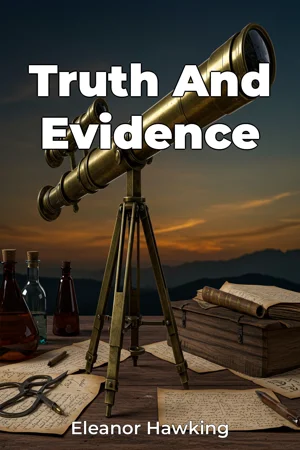
How do we know what we know? This book, "Truth And Evidence," delves into the fundamental role evidence plays in shaping our understanding of reality across diverse fields, from scientific inquiry to philosophical reasoning. Understanding the nature and limitations of evidence is not merely an academic exercise; it is crucial for informed decision-making, critical thinking, and navigating the complexities of the modern world. We explore the core concepts of evidence, truth, and their complex interrelationship, with a focus on how these concepts manifest in practical and theoretical contexts. The book tackles several key topics. First, we examine the different types of evidence—empirical, anecdotal, statistical, and testimonial—analyzing their strengths and weaknesses. Second, we explore the philosophical challenges in establishing truth, differentiating between subjective belief, objective fact, and the role of interpretation. Third, we analyze the methodologies used to evaluate evidence in various disciplines, focusing on the scientific method, legal reasoning, and historical analysis. These topics are vital because they provide a framework for understanding how knowledge is constructed and validated, which is increasingly relevant in an era of misinformation and rapidly evolving information landscapes. We ground our exploration in the historical context of philosophical and scientific thought, tracing the evolution of evidentiary standards from ancient Greece to modern times. While no specific prerequisite knowledge is required, a general familiarity with basic scientific principles and logical reasoning will enhance the reader's understanding. The central argument of "Truth And Evidence" posits that a robust understanding of evidence is indispensable for navigating the complexities of our information-saturated world, and for fostering rational discourse. The book emphasizes that while evidence is essential for establishing facts, its interpretation is always subject to contextual factors, potential biases, and the limitations of human perception. The book is structured to guide the reader through a logical progression of ideas. We begin by introducing the fundamental concepts of evidence and truth, exploring their definitions and interrelationships. The subsequent sections develop these ideas, focusing on the evaluation of evidence in scientific contexts, legal settings, and historical analysis. We address common fallacies and biases that can distort the interpretation of data. These sections offer detailed case studies and practical examples to illustrate the theoretical concepts. The culmination of the argument focuses on the practical implications of understanding evidence, discussing how it can be applied to improve decision-making, evaluate claims, and promote critical thinking. The evidence presented throughout the book draws from a wide range of sources, including peer-reviewed scientific studies, legal case precedents, historical documents, and philosophical treatises. We incorporate statistical data and empirical findings to support our arguments, and we critically analyze the methodologies used to gather and interpret this data. We make extensive use of examples from real-world scenarios to illustrate the practical relevance of our theoretical discussions. "Truth And Evidence" connects to various interdisciplinary fields, including epistemology (the study of knowledge), philosophy of science, and legal theory. The discussion also has direct relevance to fields like journalism, public policy, and education. By drawing on insights from these disciplines, the book offers a more comprehensive and nuanced understanding of the role of evidence in shaping our understanding of reality. Our approach is unique in its integration of philosophical and scientific perspectives, offering a balanced and nuanced analysis of the challenges and complexities of establishing truth. The book adopts a tone that is both academic and accessible, making it suitable for a broad audience. The target audience includes students, researchers, professionals, and anyone interested in improving their critical thinking skills and understanding the nature of evidence. The book is valuable to them because it provides a comprehensive framework for evaluating claims, making informed decisions, and navigating the complexities of the modern world. As a work of non-fiction in the genres of philosophy and science, the book adheres to the conventions of clear and rigorous argumentation, supported by evidence and logical reasoning. The scope of the book is broad, covering a wide range of topics related to evidence and truth, but it is intentionally limited to a focus on theoretical and practical understanding, rather than providing specific instructions for conducting research in particular fields. The information in the book can be applied practically by readers to improve their critical thinking skills, evaluate claims, make informed decisions, and engage in rational discourse. The book acknowledges and addresses ongoing debates in the field, such as the nature of scientific objectivity, the role of interpretation in legal reasoning, and the challenges of establishing historical truth. These debates underscore the complexities of the topic and highlight the need for a nuanced and critical approach to understanding evidence.
How do we know what we know? This book, "Truth And Evidence," delves into the fundamental role evidence plays in shaping our understanding of reality across diverse fields, from scientific inquiry to philosophical reasoning. Understanding the nature and limitations of evidence is not merely an academic exercise; it is crucial for informed decision-making, critical thinking, and navigating the complexities of the modern world. We explore the core concepts of evidence, truth, and their complex interrelationship, with a focus on how these concepts manifest in practical and theoretical contexts. The book tackles several key topics. First, we examine the different types of evidence—empirical, anecdotal, statistical, and testimonial—analyzing their strengths and weaknesses. Second, we explore the philosophical challenges in establishing truth, differentiating between subjective belief, objective fact, and the role of interpretation. Third, we analyze the methodologies used to evaluate evidence in various disciplines, focusing on the scientific method, legal reasoning, and historical analysis. These topics are vital because they provide a framework for understanding how knowledge is constructed and validated, which is increasingly relevant in an era of misinformation and rapidly evolving information landscapes. We ground our exploration in the historical context of philosophical and scientific thought, tracing the evolution of evidentiary standards from ancient Greece to modern times. While no specific prerequisite knowledge is required, a general familiarity with basic scientific principles and logical reasoning will enhance the reader's understanding. The central argument of "Truth And Evidence" posits that a robust understanding of evidence is indispensable for navigating the complexities of our information-saturated world, and for fostering rational discourse. The book emphasizes that while evidence is essential for establishing facts, its interpretation is always subject to contextual factors, potential biases, and the limitations of human perception. The book is structured to guide the reader through a logical progression of ideas. We begin by introducing the fundamental concepts of evidence and truth, exploring their definitions and interrelationships. The subsequent sections develop these ideas, focusing on the evaluation of evidence in scientific contexts, legal settings, and historical analysis. We address common fallacies and biases that can distort the interpretation of data. These sections offer detailed case studies and practical examples to illustrate the theoretical concepts. The culmination of the argument focuses on the practical implications of understanding evidence, discussing how it can be applied to improve decision-making, evaluate claims, and promote critical thinking. The evidence presented throughout the book draws from a wide range of sources, including peer-reviewed scientific studies, legal case precedents, historical documents, and philosophical treatises. We incorporate statistical data and empirical findings to support our arguments, and we critically analyze the methodologies used to gather and interpret this data. We make extensive use of examples from real-world scenarios to illustrate the practical relevance of our theoretical discussions. "Truth And Evidence" connects to various interdisciplinary fields, including epistemology (the study of knowledge), philosophy of science, and legal theory. The discussion also has direct relevance to fields like journalism, public policy, and education. By drawing on insights from these disciplines, the book offers a more comprehensive and nuanced understanding of the role of evidence in shaping our understanding of reality. Our approach is unique in its integration of philosophical and scientific perspectives, offering a balanced and nuanced analysis of the challenges and complexities of establishing truth. The book adopts a tone that is both academic and accessible, making it suitable for a broad audience. The target audience includes students, researchers, professionals, and anyone interested in improving their critical thinking skills and understanding the nature of evidence. The book is valuable to them because it provides a comprehensive framework for evaluating claims, making informed decisions, and navigating the complexities of the modern world. As a work of non-fiction in the genres of philosophy and science, the book adheres to the conventions of clear and rigorous argumentation, supported by evidence and logical reasoning. The scope of the book is broad, covering a wide range of topics related to evidence and truth, but it is intentionally limited to a focus on theoretical and practical understanding, rather than providing specific instructions for conducting research in particular fields. The information in the book can be applied practically by readers to improve their critical thinking skills, evaluate claims, make informed decisions, and engage in rational discourse. The book acknowledges and addresses ongoing debates in the field, such as the nature of scientific objectivity, the role of interpretation in legal reasoning, and the challenges of establishing historical truth. These debates underscore the complexities of the topic and highlight the need for a nuanced and critical approach to understanding evidence.
"Truth And Evidence" explores how evidence shapes our understanding of reality across science and philosophy. It investigates the nature of evidence, its limitations, and its crucial role in critical thinking and decision-making. The book uniquely integrates philosophical and scientific perspectives to offer a balanced analysis, emphasizing that while evidence is essential for establishing facts, its interpretation is subject to biases. Did you know that statistical evidence, while powerful, can be misleading if not properly contextualized? The book also examines how evidentiary standards have evolved from ancient Greece to modern times. The book progresses logically, starting with fundamental concepts of evidence and truth. It then delves into evaluating evidence in scientific, legal, and historical contexts, addressing common fallacies and biases. Real-world case studies illustrate theoretical concepts, showing how understanding evidence can improve decision-making and promote critical thinking. The book addresses debates such as the nature of scientific objectivity and challenges in establishing historical truth, making it valuable for anyone seeking to navigate our information-saturated world.
Book Details
ISBN
9788233971144
Publisher
Publifye AS
Your Licenses
You don't own any licenses for this book
Purchase a license below to unlock this book and download the EPUB.
Purchase License
Select a tier to unlock this book
Need bulk licensing?
Contact us for enterprise agreements.