
About This Book
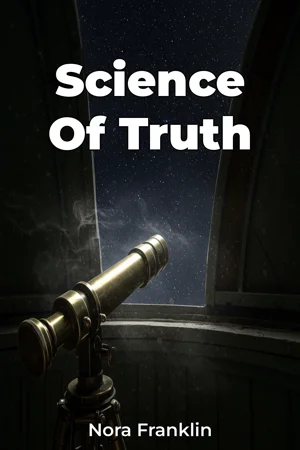
In a world saturated with information, how do we distinguish fact from fiction? "Science Of Truth" embarks on a philosophical and scientific exploration of the methods by which we ascertain factual accuracy, emphasizing the pivotal role of scientific methodologies and peer-reviewed research in this pursuit. This book delves into the core principles that underpin our understanding of truth, examining how science provides a systematic framework for evaluating claims and constructing reliable knowledge. We begin by dissecting the scientific method, a process often idealized yet rarely scrutinized in its practical application. We explore the importance of empirical observation, hypothesis formulation, experimentation, and rigorous analysis. Central to this discussion is the concept of falsifiability, the idea that a scientific statement must be capable of being proven wrong; otherwise, it remains outside the realm of scientific inquiry. These topics are important because they form the bedrock of reliable knowledge in numerous fields and help readers understand the strengths and limitations of scientific claims. Expanding on this foundation, the book examines the peer-review process, a cornerstone of modern science. We look at its history, its mechanics, and, most importantly, its imperfections. While peer review is designed to filter out flawed research and ensure the quality of published findings, it is not infallible. The book addresses criticisms of the process, including biases, limitations in detecting fraud, and the potential for stifling innovative ideas that challenge prevailing paradigms. Understanding these dynamics is crucial for critically evaluating scientific literature. Our central argument posits that while science offers the most robust method for determining factual accuracy, it is not without its limitations and requires thoughtful application. The book’s structure includes, first, an introduction to scientific epistemology and its historical development. Second, we dedicate chapters to examining key scientific concepts, such as statistical significance, reproducibility, and the role of models in understanding complex phenomena. Third, we examine the limitations of scientific inquiry with respect to the observer effect, cognitive biases and the boundaries of knowledge, areas where philosophical inquiry enhances and informs scientific work. And finally, we discuss real-world implications of understanding how science determines truth, including applications in public policy, medicine, and everyday decision-making. The evidence presented throughout the book includes analyses of landmark scientific studies, discussions of statistical methods, and critical evaluations of peer-reviewed literature. We draw on diverse data sources, including meta-analyses, replication studies, and case studies of scientific controversies. "Science Of Truth" forges connections to diverse areas of study, including epistemology (the study of knowledge), sociology of science (examining the social context of scientific inquiry), and ethics (considering the moral implications of scientific research and its applications). These interdisciplinary connections enrich the book's argument, providing a multidimensional perspective on the pursuit of truth. A unique aspect of the book is its balanced perspective: it avoids both naive scientism (the belief that science can solve all problems) and unwarranted skepticism (the rejection of scientific findings without justification). Its approach is academic, yet strives for accessibility, rendering complex concepts understandable to a broad audience. The target audience includes students and researchers in science, philosophy, and related fields, as well as anyone seeking a deeper understanding of how we determine what is true. It would be valuable to readers because, in an era characterized by misinformation and skepticism towards expertise, a nuanced understanding of scientific methodology is more critical than ever. In line with the conventions of the philosophy and science genres, the book emphasizes logical reasoning, empirical evidence, and clear argumentation. Although broad, its scope is intentionally limited to those methods which can be empirically assessed and replicated, setting aside other modes of knowledge acquisition. The information presented can be applied to help readers critically evaluate information encountered in everyday life, make more informed decisions based on evidence, and participate more effectively in public discourse on scientific issues. The book sheds light on ongoing debates about the nature of scientific evidence, including discussions about reproducibility of research findings, the influence of funding sources on research outcomes, and the role of expert opinion in policy decisions.
In a world saturated with information, how do we distinguish fact from fiction? "Science Of Truth" embarks on a philosophical and scientific exploration of the methods by which we ascertain factual accuracy, emphasizing the pivotal role of scientific methodologies and peer-reviewed research in this pursuit. This book delves into the core principles that underpin our understanding of truth, examining how science provides a systematic framework for evaluating claims and constructing reliable knowledge. We begin by dissecting the scientific method, a process often idealized yet rarely scrutinized in its practical application. We explore the importance of empirical observation, hypothesis formulation, experimentation, and rigorous analysis. Central to this discussion is the concept of falsifiability, the idea that a scientific statement must be capable of being proven wrong; otherwise, it remains outside the realm of scientific inquiry. These topics are important because they form the bedrock of reliable knowledge in numerous fields and help readers understand the strengths and limitations of scientific claims. Expanding on this foundation, the book examines the peer-review process, a cornerstone of modern science. We look at its history, its mechanics, and, most importantly, its imperfections. While peer review is designed to filter out flawed research and ensure the quality of published findings, it is not infallible. The book addresses criticisms of the process, including biases, limitations in detecting fraud, and the potential for stifling innovative ideas that challenge prevailing paradigms. Understanding these dynamics is crucial for critically evaluating scientific literature. Our central argument posits that while science offers the most robust method for determining factual accuracy, it is not without its limitations and requires thoughtful application. The book’s structure includes, first, an introduction to scientific epistemology and its historical development. Second, we dedicate chapters to examining key scientific concepts, such as statistical significance, reproducibility, and the role of models in understanding complex phenomena. Third, we examine the limitations of scientific inquiry with respect to the observer effect, cognitive biases and the boundaries of knowledge, areas where philosophical inquiry enhances and informs scientific work. And finally, we discuss real-world implications of understanding how science determines truth, including applications in public policy, medicine, and everyday decision-making. The evidence presented throughout the book includes analyses of landmark scientific studies, discussions of statistical methods, and critical evaluations of peer-reviewed literature. We draw on diverse data sources, including meta-analyses, replication studies, and case studies of scientific controversies. "Science Of Truth" forges connections to diverse areas of study, including epistemology (the study of knowledge), sociology of science (examining the social context of scientific inquiry), and ethics (considering the moral implications of scientific research and its applications). These interdisciplinary connections enrich the book's argument, providing a multidimensional perspective on the pursuit of truth. A unique aspect of the book is its balanced perspective: it avoids both naive scientism (the belief that science can solve all problems) and unwarranted skepticism (the rejection of scientific findings without justification). Its approach is academic, yet strives for accessibility, rendering complex concepts understandable to a broad audience. The target audience includes students and researchers in science, philosophy, and related fields, as well as anyone seeking a deeper understanding of how we determine what is true. It would be valuable to readers because, in an era characterized by misinformation and skepticism towards expertise, a nuanced understanding of scientific methodology is more critical than ever. In line with the conventions of the philosophy and science genres, the book emphasizes logical reasoning, empirical evidence, and clear argumentation. Although broad, its scope is intentionally limited to those methods which can be empirically assessed and replicated, setting aside other modes of knowledge acquisition. The information presented can be applied to help readers critically evaluate information encountered in everyday life, make more informed decisions based on evidence, and participate more effectively in public discourse on scientific issues. The book sheds light on ongoing debates about the nature of scientific evidence, including discussions about reproducibility of research findings, the influence of funding sources on research outcomes, and the role of expert opinion in policy decisions.
"Science Of Truth" explores how we determine factual accuracy in an age of rampant misinformation, emphasizing the scientific method and peer review. It examines the core principles of science as a systematic framework for evaluating claims. The book begins by dissecting the scientific method, highlighting the importance of empirical observation and falsifiability—the idea that scientific statements must be testable. It then examines the peer-review process, a cornerstone of science, acknowledging its imperfections and biases while recognizing its role in filtering flawed research. The book progresses from an introduction to scientific epistemology to an examination of key concepts like statistical significance and reproducibility. It also confronts the limitations of scientific inquiry, such as cognitive biases, where philosophical inquiry enhances scientific work. By drawing on diverse data sources, the book connects to epistemology, sociology of science, and ethics, providing a multi-dimensional perspective. It argues that while science is the most robust method for determining factual accuracy, it requires thoughtful application. This book is unique in its balanced perspective, avoiding both naive scientism and unwarranted skepticism, and offering an accessible approach to complex concepts. It is valuable for students, researchers, and anyone seeking a deeper understanding of how we ascertain truth, especially given ongoing debates about reproducibility and the influence of funding on research. Readers can apply the information to critically evaluate information, make informed decisions, and participate effectively in scientific discourse.
Book Details
ISBN
9788233971137
Publisher
Publifye AS
Your Licenses
You don't own any licenses for this book
Purchase a license below to unlock this book and download the EPUB.
Purchase License
Select a tier to unlock this book
Need bulk licensing?
Contact us for enterprise agreements.