
About This Book
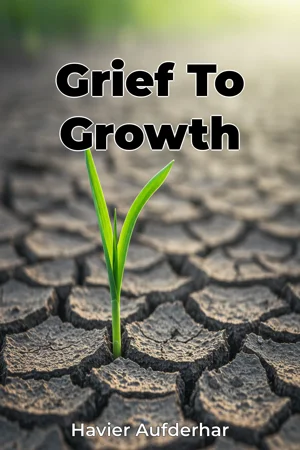
Can grief be a catalyst for profound personal growth? This book, "Grief to Growth," explores the transformative potential of bereavement, moving beyond conventional understandings of grief as a purely negative experience to reveal its capacity to foster resilience, meaning, and a deeper understanding of self. We delve into the psychological transitions individuals undergo following loss, focusing on evidence-based strategies for coping and emotional regulation techniques that facilitate growth. The core of our exploration rests on two fundamental concepts: first, the dynamic and individual nature of grief, acknowledging that there is no single "right" way to grieve; and second, the possibility of post-traumatic growth (PTG) following bereavement. Understanding these concepts is crucial because they challenge the notion that recovery from grief is solely about returning to a pre-loss state. Instead, it emphasizes the potential for positive psychological change and the development of new strengths. Considerable research into bereavement recovery forms the foundation of this book. We present longitudinal studies that track individuals over time, illustrating the diverse paths they navigate through grief. This research moves beyond cross-sectional studies, which offer only a snapshot in time, to provide a more nuanced understanding of the grieving process. We analyze data from studies employing validated grief measurement scales and qualitative interviews, ensuring a comprehensive and rigorous approach. The central argument of "Grief to Growth" is that while grief is undeniably painful, it can also be a powerful catalyst for personal development. By understanding the psychological mechanisms underlying grief and actively engaging in evidence-based coping strategies, individuals can navigate bereavement in a way that fosters resilience, meaning, and a renewed appreciation for life. This argument challenges the traditional medical model of grief, which often focuses on symptom reduction and restoring pre-loss functioning. Instead, we advocate for a growth-oriented approach that acknowledges the potential for positive change. The book unfolds in a structured manner. We begin by introducing the core concepts of grief and post-traumatic growth, providing a historical context for understanding evolving perspectives on bereavement. We then delve into specific coping strategies, such as cognitive restructuring, emotional regulation techniques, and mindfulness practices, exploring their effectiveness in facilitating growth. Subsequent chapters examine the role of social support, meaning-making, and self-compassion in the grieving process. The book culminates in a practical guide to fostering post-traumatic growth, offering actionable steps and exercises that readers can implement in their own lives. Our analysis also connects to related fields of psychology, such as positive psychology, trauma studies, and resilience research. By integrating insights from these disciplines, we offer a more holistic and nuanced understanding of the grieving process. Further, we address the limitations of current research and identify areas for future investigation. While we draw upon a wide range of studies, we acknowledge the limitations of generalizing findings across diverse cultural contexts and demographic groups. "Grief to Growth" is written in an accessible and engaging style, designed for a broad audience, including individuals who are grieving, their loved ones, and mental health professionals. The book's content is grounded in research but presented in a way that is both informative and emotionally resonant. We aim to provide readers with a roadmap for navigating grief, not just as a process of healing, but as an opportunity for profound personal transformation. We acknowledge existing debates surrounding the concept of post-traumatic growth and present a balanced perspective that considers both the potential benefits and the challenges of this phenomenon. The ultimate goal is to empower readers to harness the transformative power of grief and emerge from loss with renewed strength, purpose, and meaning.
Can grief be a catalyst for profound personal growth? This book, "Grief to Growth," explores the transformative potential of bereavement, moving beyond conventional understandings of grief as a purely negative experience to reveal its capacity to foster resilience, meaning, and a deeper understanding of self. We delve into the psychological transitions individuals undergo following loss, focusing on evidence-based strategies for coping and emotional regulation techniques that facilitate growth. The core of our exploration rests on two fundamental concepts: first, the dynamic and individual nature of grief, acknowledging that there is no single "right" way to grieve; and second, the possibility of post-traumatic growth (PTG) following bereavement. Understanding these concepts is crucial because they challenge the notion that recovery from grief is solely about returning to a pre-loss state. Instead, it emphasizes the potential for positive psychological change and the development of new strengths. Considerable research into bereavement recovery forms the foundation of this book. We present longitudinal studies that track individuals over time, illustrating the diverse paths they navigate through grief. This research moves beyond cross-sectional studies, which offer only a snapshot in time, to provide a more nuanced understanding of the grieving process. We analyze data from studies employing validated grief measurement scales and qualitative interviews, ensuring a comprehensive and rigorous approach. The central argument of "Grief to Growth" is that while grief is undeniably painful, it can also be a powerful catalyst for personal development. By understanding the psychological mechanisms underlying grief and actively engaging in evidence-based coping strategies, individuals can navigate bereavement in a way that fosters resilience, meaning, and a renewed appreciation for life. This argument challenges the traditional medical model of grief, which often focuses on symptom reduction and restoring pre-loss functioning. Instead, we advocate for a growth-oriented approach that acknowledges the potential for positive change. The book unfolds in a structured manner. We begin by introducing the core concepts of grief and post-traumatic growth, providing a historical context for understanding evolving perspectives on bereavement. We then delve into specific coping strategies, such as cognitive restructuring, emotional regulation techniques, and mindfulness practices, exploring their effectiveness in facilitating growth. Subsequent chapters examine the role of social support, meaning-making, and self-compassion in the grieving process. The book culminates in a practical guide to fostering post-traumatic growth, offering actionable steps and exercises that readers can implement in their own lives. Our analysis also connects to related fields of psychology, such as positive psychology, trauma studies, and resilience research. By integrating insights from these disciplines, we offer a more holistic and nuanced understanding of the grieving process. Further, we address the limitations of current research and identify areas for future investigation. While we draw upon a wide range of studies, we acknowledge the limitations of generalizing findings across diverse cultural contexts and demographic groups. "Grief to Growth" is written in an accessible and engaging style, designed for a broad audience, including individuals who are grieving, their loved ones, and mental health professionals. The book's content is grounded in research but presented in a way that is both informative and emotionally resonant. We aim to provide readers with a roadmap for navigating grief, not just as a process of healing, but as an opportunity for profound personal transformation. We acknowledge existing debates surrounding the concept of post-traumatic growth and present a balanced perspective that considers both the potential benefits and the challenges of this phenomenon. The ultimate goal is to empower readers to harness the transformative power of grief and emerge from loss with renewed strength, purpose, and meaning.
"Grief to Growth" explores the unexpected potential for personal growth arising from bereavement. Challenging conventional views of grief as solely negative, the book highlights how loss can foster resilience and a deeper understanding of oneself. It emphasizes that there isn't a single "right" way to grieve, and introduces post-traumatic growth (PTG) as a possible outcome. Instead of focusing on returning to a pre-loss state, the book reveals how individuals can experience positive psychological change and develop new strengths, supported by longitudinal studies that provide a nuanced look at the grieving process. The book presents evidence-based strategies for coping and emotional regulation, such as cognitive restructuring and mindfulness. It also stresses the importance of social support and self-compassion in navigating bereavement. "Grief to Growth" offers practical guidance for fostering post-traumatic growth, presenting actionable steps and exercises. The book moves from introducing core concepts of grief and PTG, to exploring coping strategies, and finally culminating in a practical guide for personal transformation. The book differentiates itself by advocating for a growth-oriented approach, challenging the traditional medical model that focuses on symptom reduction. By integrating insights from positive psychology and trauma studies, "Grief to Growth" provides a roadmap for harnessing the transformative power of grief, empowering readers to emerge with renewed strength and meaning.
Book Details
ISBN
9788233970963
Publisher
Publifye AS
Your Licenses
You don't own any licenses for this book
Purchase a license below to unlock this book and download the EPUB.
Purchase License
Select a tier to unlock this book
Need bulk licensing?
Contact us for enterprise agreements.