
About This Book
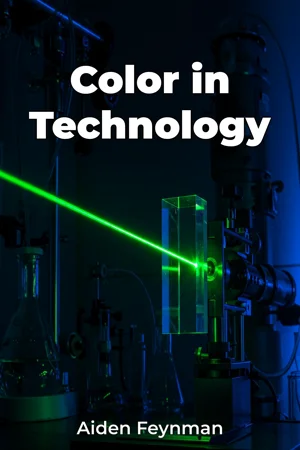
Have you ever stopped to consider the intricate science behind the vibrant images displayed on your smartphone, television, or even the sophisticated laser projections at a concert? "Color in Technology" delves into the fascinating world of how digital screens, LED lights, and laser technology harness the power of color to create the visual experiences we often take for granted. This book explores the fundamental principles underpinning these technologies and their innovative applications across various fields. This book examines the physics of light and color, the engineering of display technologies, and the creative applications that leverage these advancements. Understanding these topics is crucial because color profoundly influences how we perceive information, interact with technology, and experience the world around us. From medical imaging to artistic expression, the precise control and manipulation of color have revolutionized countless industries. Historically, the development of color technology has been a long and complex journey, from early experiments with light and prisms to the sophisticated materials science and engineering that underpin modern displays. The concepts of additive and subtractive color mixing form the foundation, alongside an understanding of the electromagnetic spectrum and human color perception. Basic knowledge of physics and optics would aid comprehension, but the book is structured to guide readers through these principles. The central argument of "Color in Technology" is that the innovative application of color principles in digital screens, LED lights, and laser technology represents a significant advancement in how we communicate, create, and interact with the world. This ability to precisely control and manipulate color has unlocked new possibilities in various fields, improving efficiency, accuracy, and aesthetic appeal. The book is structured as follows: Part one introduces the science of color, outlining the physics of light, the human visual system, and color perception models. Part two examines digital screens, exploring different display technologies like LCD, OLED, and plasma, with detailed explanations of how each technology generates color. Part three focuses on LED lighting, discussing the science behind LEDs, their color rendering capabilities, and their applications in diverse settings, from homes to large-scale architectural installations. Part four investigates laser technology, covering the principles of laser light, laser color generation techniques, and their application in fields such as laser projection, medical treatments, and industrial manufacturing. Finally, the book culminates by exploring the future of color technology, including emerging trends and potential applications. The evidence presented will be supported by scientific studies, engineering specifications, and case studies from various industries. Data from material science research, optical measurements, and human perception studies will be cited to substantiate claims and provide a comprehensive understanding of the subject matter. This book connects to various fields, including physics, engineering, and art. The physics of light and color provides the theoretical foundation, while engineering focuses on the practical implementation of these principles in technological devices. The connection to art and design highlights the aesthetic and communicative aspects of color, demonstrating its impact on visual perception and emotional response. Furthermore, the book also touches on aspects of psychology, specifically how the human brain interprets color. "Color in Technology" takes a unique approach by integrating the scientific, engineering, and artistic aspects of color technology, offering a comprehensive and accessible perspective. It explores not only the technical details but also the broader implications and applications of these technologies in shaping our world. The writing style is professional yet accessible, aiming to communicate complex scientific and engineering concepts in a clear and engaging manner. Technical jargon is explained thoroughly, making the book suitable for readers with varying levels of scientific background. The target audience includes students, engineers, designers, and anyone interested in the science and technology behind digital displays, LED lighting, and lasers. This book offers valuable insights into the principles, applications, and future of color technology. As a work of non-fiction in the science and technology genre, "Color in Technology" aims to be informative, accurate, and evidence-based. It adheres to the conventions of scientific writing by providing clear explanations, supporting claims with data, and citing sources appropriately. The scope of the book is limited to the core technologies of digital screens, LED lighting, and lasers, with a focus on color generation and manipulation. It does not delve into other aspects of these technologies, such as power consumption or manufacturing processes, unless they are directly relevant to the topic of color. The information in this book can be applied to understand and evaluate different display technologies, design energy-efficient lighting systems, and explore innovative applications of lasers. It provides a practical foundation for making informed decisions about technology choices and developing new solutions. While the underlying principles of color science are well-established, there are ongoing debates regarding the optimal color rendering and accuracy of different display and lighting technologies. The book addresses some of these controversies by presenting different perspectives and evaluating the available evidence.
Have you ever stopped to consider the intricate science behind the vibrant images displayed on your smartphone, television, or even the sophisticated laser projections at a concert? "Color in Technology" delves into the fascinating world of how digital screens, LED lights, and laser technology harness the power of color to create the visual experiences we often take for granted. This book explores the fundamental principles underpinning these technologies and their innovative applications across various fields. This book examines the physics of light and color, the engineering of display technologies, and the creative applications that leverage these advancements. Understanding these topics is crucial because color profoundly influences how we perceive information, interact with technology, and experience the world around us. From medical imaging to artistic expression, the precise control and manipulation of color have revolutionized countless industries. Historically, the development of color technology has been a long and complex journey, from early experiments with light and prisms to the sophisticated materials science and engineering that underpin modern displays. The concepts of additive and subtractive color mixing form the foundation, alongside an understanding of the electromagnetic spectrum and human color perception. Basic knowledge of physics and optics would aid comprehension, but the book is structured to guide readers through these principles. The central argument of "Color in Technology" is that the innovative application of color principles in digital screens, LED lights, and laser technology represents a significant advancement in how we communicate, create, and interact with the world. This ability to precisely control and manipulate color has unlocked new possibilities in various fields, improving efficiency, accuracy, and aesthetic appeal. The book is structured as follows: Part one introduces the science of color, outlining the physics of light, the human visual system, and color perception models. Part two examines digital screens, exploring different display technologies like LCD, OLED, and plasma, with detailed explanations of how each technology generates color. Part three focuses on LED lighting, discussing the science behind LEDs, their color rendering capabilities, and their applications in diverse settings, from homes to large-scale architectural installations. Part four investigates laser technology, covering the principles of laser light, laser color generation techniques, and their application in fields such as laser projection, medical treatments, and industrial manufacturing. Finally, the book culminates by exploring the future of color technology, including emerging trends and potential applications. The evidence presented will be supported by scientific studies, engineering specifications, and case studies from various industries. Data from material science research, optical measurements, and human perception studies will be cited to substantiate claims and provide a comprehensive understanding of the subject matter. This book connects to various fields, including physics, engineering, and art. The physics of light and color provides the theoretical foundation, while engineering focuses on the practical implementation of these principles in technological devices. The connection to art and design highlights the aesthetic and communicative aspects of color, demonstrating its impact on visual perception and emotional response. Furthermore, the book also touches on aspects of psychology, specifically how the human brain interprets color. "Color in Technology" takes a unique approach by integrating the scientific, engineering, and artistic aspects of color technology, offering a comprehensive and accessible perspective. It explores not only the technical details but also the broader implications and applications of these technologies in shaping our world. The writing style is professional yet accessible, aiming to communicate complex scientific and engineering concepts in a clear and engaging manner. Technical jargon is explained thoroughly, making the book suitable for readers with varying levels of scientific background. The target audience includes students, engineers, designers, and anyone interested in the science and technology behind digital displays, LED lighting, and lasers. This book offers valuable insights into the principles, applications, and future of color technology. As a work of non-fiction in the science and technology genre, "Color in Technology" aims to be informative, accurate, and evidence-based. It adheres to the conventions of scientific writing by providing clear explanations, supporting claims with data, and citing sources appropriately. The scope of the book is limited to the core technologies of digital screens, LED lighting, and lasers, with a focus on color generation and manipulation. It does not delve into other aspects of these technologies, such as power consumption or manufacturing processes, unless they are directly relevant to the topic of color. The information in this book can be applied to understand and evaluate different display technologies, design energy-efficient lighting systems, and explore innovative applications of lasers. It provides a practical foundation for making informed decisions about technology choices and developing new solutions. While the underlying principles of color science are well-established, there are ongoing debates regarding the optimal color rendering and accuracy of different display and lighting technologies. The book addresses some of these controversies by presenting different perspectives and evaluating the available evidence.
"Color in Technology" explores the science behind how digital screens, LED lighting, and laser technology create the vibrant visual experiences we often take for granted. Delving into the physics of light, optical engineering, and materials science, the book reveals how additive and subtractive color mixing principles are harnessed in display technologies. One intriguing fact highlighted is how precise color control has revolutionized fields from medical imaging to artistic expression, improving both efficiency and aesthetic appeal. The book uniquely integrates the scientific, engineering, and artistic aspects of color technology, offering a comprehensive yet accessible perspective. It begins by outlining the physics of light and human color perception, then progresses to examining digital screens and LED lighting, before investigating laser technology. Each section provides detailed explanations and examples, suitable for readers interested in the technology behind our everyday visual world.
Book Details
ISBN
9788233970840
Publisher
Publifye AS
Your Licenses
You don't own any licenses for this book
Purchase a license below to unlock this book and download the EPUB.
Purchase License
Select a tier to unlock this book
Need bulk licensing?
Contact us for enterprise agreements.