
About This Book
Why is the world so colorful? The answer lies in the intricate science of dyes and pigments, substances that have not only beautified our surroundings but have also indelibly shaped human history, industry, and even scientific progress. "Dyes and Pigments" delves into this fascinating realm, exploring the chemical composition, historical significance, and transformative impact of these coloring agents. This book aims to illuminate the pivotal role dyes and pigments have played in shaping our world, from ancient artistry to modern technology. This book examines three key areas: the fundamental science of dyes and pigments, distinguishing between their chemical structures and application methods; the historical journey of these substances, tracing their evolution from natural sources to synthetic production; and the revolutionary impact dyes and pigments have had on various industries, including textiles, art, medicine, and technology. The importance of these topics stems from their profound influence on human culture, economic development, and scientific advancement. Understanding the science, history, and industrial applications of dyes and pigments provides a unique lens through which to view the evolution of human civilization. Historically, the discovery and trade of natural dyes like Tyrian purple and indigo fueled economies and shaped trade routes. The advent of synthetic dyes in the 19th century, pioneered by chemists like William Henry Perkin, sparked an industrial revolution, transforming textile manufacturing and leading to new explorations in chemistry. Readers will benefit from a basic understanding of chemistry, particularly organic chemistry, to fully grasp the molecular structures and reactions discussed; however, efforts are made to explain these concepts accessibly. The central argument of "Dyes and Pigments" is that the development and application of dyes and pigments represent a crucial intersection of scientific innovation, artistic expression, and industrial progress. This argument is significant because it challenges us to recognize the profound influence of seemingly simple substances on the course of human events. It is easy to take for granted, but color has always been a vital part of our existence. The book is structured to provide a comprehensive understanding of dyes and pigments. It begins with an introduction to the chemical principles, differentiating between dyes (soluble coloring agents) and pigments (insoluble coloring agents), along with an explanation of color theory. The subsequent sections explore the history of natural dyes, their sources (plants, animals, minerals), and their cultural significance. The emergence of synthetic dyes, including their chemical synthesis and industrial production, is then examined in detail. The book then looks at the impact of these substances on the textile industry, art, medicine (e.g., staining techniques in microscopy and dyes in medical imaging), printing, and other fields. In conclusion, the book discusses modern challenges and innovations, such as sustainable dye production and the development of new pigments for advanced technologies. The book draws upon a wide range of sources, including scientific literature, historical records, archaeological findings, and patent documents. Chemical analyses of dyes and pigments from historical artifacts are presented as key evidence, alongside case studies of industrial revolutions sparked by dye innovations. "Dyes and Pigments" connects to several other fields of study, including chemistry (organic and inorganic), history (economic and cultural), art history, materials science, and environmental science. It offers a unique perspective by integrating the scientific, historical, and artistic dimensions of color, explaining the underlying chemistry but always in the context of the human experience. The book adopts a tone that is both informative and engaging, blending scientific rigor with captivating historical anecdotes. The writing style will be accessible to a broad audience, avoiding excessive jargon while maintaining scientific accuracy. The target audience includes students of chemistry, history, art history, and textile design, as well as general readers with an interest in the history of science and technology. The book will be valuable to anyone seeking a deeper understanding of the science behind color and its impact on human civilization. Fulfilling expectations for the science and history genres, it emphasizes factual accuracy, analytical depth, and clear presentation of evidence. The scope of the book covers the major classes of dyes and pigments, their historical development, and their key industrial applications. It does not delve into the highly specialized field of digital color reproduction or advanced nanomaterials, allowing for a sharper focus on chemical and historical themes. Readers will learn how to identify different types of dyes and pigments, understand their chemical properties, and appreciate their historical and cultural significance. This knowledge can be applied in various fields, from art conservation to textile design to understanding the environmental impact of dye production. While the advent of synthetic dyes greatly benefited society, it also created environmental problems to solve and it generated debate among artisans who preferred the older methods. These complex issues and contrasting views are addressed.
Why is the world so colorful? The answer lies in the intricate science of dyes and pigments, substances that have not only beautified our surroundings but have also indelibly shaped human history, industry, and even scientific progress. "Dyes and Pigments" delves into this fascinating realm, exploring the chemical composition, historical significance, and transformative impact of these coloring agents. This book aims to illuminate the pivotal role dyes and pigments have played in shaping our world, from ancient artistry to modern technology. This book examines three key areas: the fundamental science of dyes and pigments, distinguishing between their chemical structures and application methods; the historical journey of these substances, tracing their evolution from natural sources to synthetic production; and the revolutionary impact dyes and pigments have had on various industries, including textiles, art, medicine, and technology. The importance of these topics stems from their profound influence on human culture, economic development, and scientific advancement. Understanding the science, history, and industrial applications of dyes and pigments provides a unique lens through which to view the evolution of human civilization. Historically, the discovery and trade of natural dyes like Tyrian purple and indigo fueled economies and shaped trade routes. The advent of synthetic dyes in the 19th century, pioneered by chemists like William Henry Perkin, sparked an industrial revolution, transforming textile manufacturing and leading to new explorations in chemistry. Readers will benefit from a basic understanding of chemistry, particularly organic chemistry, to fully grasp the molecular structures and reactions discussed; however, efforts are made to explain these concepts accessibly. The central argument of "Dyes and Pigments" is that the development and application of dyes and pigments represent a crucial intersection of scientific innovation, artistic expression, and industrial progress. This argument is significant because it challenges us to recognize the profound influence of seemingly simple substances on the course of human events. It is easy to take for granted, but color has always been a vital part of our existence. The book is structured to provide a comprehensive understanding of dyes and pigments. It begins with an introduction to the chemical principles, differentiating between dyes (soluble coloring agents) and pigments (insoluble coloring agents), along with an explanation of color theory. The subsequent sections explore the history of natural dyes, their sources (plants, animals, minerals), and their cultural significance. The emergence of synthetic dyes, including their chemical synthesis and industrial production, is then examined in detail. The book then looks at the impact of these substances on the textile industry, art, medicine (e.g., staining techniques in microscopy and dyes in medical imaging), printing, and other fields. In conclusion, the book discusses modern challenges and innovations, such as sustainable dye production and the development of new pigments for advanced technologies. The book draws upon a wide range of sources, including scientific literature, historical records, archaeological findings, and patent documents. Chemical analyses of dyes and pigments from historical artifacts are presented as key evidence, alongside case studies of industrial revolutions sparked by dye innovations. "Dyes and Pigments" connects to several other fields of study, including chemistry (organic and inorganic), history (economic and cultural), art history, materials science, and environmental science. It offers a unique perspective by integrating the scientific, historical, and artistic dimensions of color, explaining the underlying chemistry but always in the context of the human experience. The book adopts a tone that is both informative and engaging, blending scientific rigor with captivating historical anecdotes. The writing style will be accessible to a broad audience, avoiding excessive jargon while maintaining scientific accuracy. The target audience includes students of chemistry, history, art history, and textile design, as well as general readers with an interest in the history of science and technology. The book will be valuable to anyone seeking a deeper understanding of the science behind color and its impact on human civilization. Fulfilling expectations for the science and history genres, it emphasizes factual accuracy, analytical depth, and clear presentation of evidence. The scope of the book covers the major classes of dyes and pigments, their historical development, and their key industrial applications. It does not delve into the highly specialized field of digital color reproduction or advanced nanomaterials, allowing for a sharper focus on chemical and historical themes. Readers will learn how to identify different types of dyes and pigments, understand their chemical properties, and appreciate their historical and cultural significance. This knowledge can be applied in various fields, from art conservation to textile design to understanding the environmental impact of dye production. While the advent of synthetic dyes greatly benefited society, it also created environmental problems to solve and it generated debate among artisans who preferred the older methods. These complex issues and contrasting views are addressed.
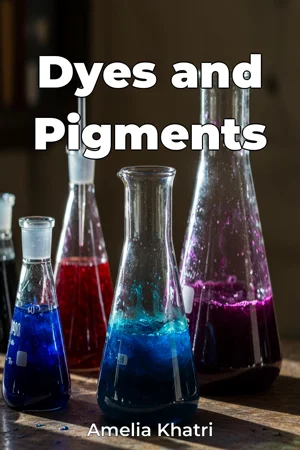
"Dyes and Pigments" explores the captivating story of color, revealing how dyes and pigments have shaped human history, industry, and scientific progress. It examines the fundamental science behind these coloring agents, distinguishing between dyes (soluble) and pigments (insoluble) and explaining their chemical structures. The book uncovers intriguing facts, such as how the trade of natural dyes like Tyrian purple fueled ancient economies and how the discovery of synthetic dyes ignited an industrial revolution. The book traces the historical journey of dyes and pigments from natural sources to synthetic production, highlighting their revolutionary impact on industries like textiles, art, and medicine. It begins with an introduction to the chemical principles of color, then explores the history of natural dyes, the emergence of synthetic dyes, and their impact on various fields. By integrating scientific, historical, and artistic dimensions, "Dyes and Pigments" offers a unique perspective on how color has profoundly influenced human civilization.
Book Details
ISBN
9788233970826
Publisher
Publifye AS
Your Licenses
You don't own any licenses for this book
Purchase a license below to unlock this book and download the EPUB.
Purchase License
Select a tier to unlock this book
Need bulk licensing?
Contact us for enterprise agreements.