
About This Book
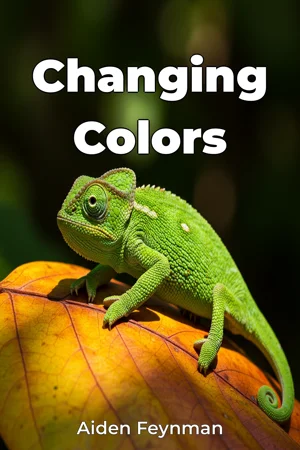
Have you ever wondered how a chameleon flawlessly blends into its surroundings or why autumn leaves transform into a vibrant tapestry of reds and oranges? "Changing Colors" delves into the captivating science behind color change in the natural world, exploring the diverse mechanisms that drive these transformations and their profound implications for survival, adaptation, and the very fabric of our ecosystems. This book addresses two key interwoven topics: adaptive coloration and seasonal color shifts. Adaptive coloration, encompassing camouflage, mimicry, and signaling, demonstrates how animals manipulate color for survival. Seasonal color shifts, most notably observed in autumn foliage and some animal species, reveal how environmental cues trigger dramatic changes in pigmentation. The significance of these topics lies in their illustration of the intricate interplay between organisms and their environment, highlighting evolutionary strategies fine-tuned over millennia. Understanding these processes is crucial for comprehending ecological dynamics and the impact of environmental change on species survival. "Changing Colors" provides a foundational understanding of the pigments responsible for coloration, including melanins, carotenoids, and anthocyanins. We explore the cellular mechanisms that control pigment production, distribution, and modification, setting the stage for understanding how these processes are manipulated in various organisms. The central argument of this book is that color change is not merely a superficial phenomenon, but a fundamental adaptation driven by evolutionary pressures and environmental cues. This argument is vital because it challenges the perception of color as a static trait, revealing its dynamic role in shaping ecological interactions and species survival. The book unfolds as follows: * Introduction: We begin by introducing the core concepts of color change, providing a broad overview of its occurrence across the animal and plant kingdoms. * Adaptive Coloration: We dedicate several chapters to exploring adaptive coloration strategies. These chapters examine camouflage techniques, mimicry, and warning coloration, supported by examples from diverse species. * Understanding Seasonal Color Shifts: Another section focuses on seasonal color shifts, dissecting the physiological and environmental factors that regulate these transformations. Specific chapters will cover: * Autumn Foliage: A detailed examination of the biochemical processes behind the changing colors of autumn leaves. * Animal Color Change: Investigation of how photoperiod and temperature influence seasonal molting and color changes in various animal species. * Environmental Impacts: We address the implications of climate change and habitat degradation on color change processes, highlighting the potential consequences for species survival. * Applications: We discuss the practical applications of understanding color change, including biomimicry, conservation efforts, and the development of new materials. The evidence presented is drawn from a wide array of sources, including peer-reviewed scientific literature, field studies, and laboratory experiments. We showcase data from diverse organisms, accompanied by detailed illustrations and photographs. The methodology emphasizes comparative analysis, examining similarities and differences in color change mechanisms across different taxonomic groups. The study of color change intersects with several other fields, including: * Ecology: Color change plays a crucial role in predator-prey relationships, competition, and mate selection, influencing population dynamics and community structure. * Evolutionary Biology: Color change exemplifies adaptation and natural selection, providing insights into the mechanisms that drive evolutionary change. * Materials Science: The principles of color change in nature can inspire the development of novel materials with tunable optical properties. This book adopts a fact-based and analytical tone, aiming to provide a comprehensive and accessible overview of the science behind color change. The writing style is clear and concise, avoiding jargon and technical terms where possible. The target audience includes students, educators, naturalists, and anyone with an interest in the natural world. This book will be valuable to readers seeking a scientifically grounded understanding of a fascinating aspect of biology. The scope of "Changing Colors" encompasses a broad range of color change phenomena, from microscopic organisms to macroscopic plants and animals. While the focus lies on the underlying mechanisms and ecological significance of color change, the book acknowledges the vastness of the topic and sets a limit to exploring every instance of color change in the world. The principles discussed in "Changing Colors" have real-world applications in various fields. By understanding the mechanisms of camouflage, for instance, we can develop improved camouflage technologies for military and civilian use. Similarly, insights into the biochemical pathways that control pigment production can lead to new strategies for managing plant diseases and enhancing crop yields. The book also encourages readers to observe and appreciate the natural world around them, fostering environmental awareness and stewardship.
Have you ever wondered how a chameleon flawlessly blends into its surroundings or why autumn leaves transform into a vibrant tapestry of reds and oranges? "Changing Colors" delves into the captivating science behind color change in the natural world, exploring the diverse mechanisms that drive these transformations and their profound implications for survival, adaptation, and the very fabric of our ecosystems. This book addresses two key interwoven topics: adaptive coloration and seasonal color shifts. Adaptive coloration, encompassing camouflage, mimicry, and signaling, demonstrates how animals manipulate color for survival. Seasonal color shifts, most notably observed in autumn foliage and some animal species, reveal how environmental cues trigger dramatic changes in pigmentation. The significance of these topics lies in their illustration of the intricate interplay between organisms and their environment, highlighting evolutionary strategies fine-tuned over millennia. Understanding these processes is crucial for comprehending ecological dynamics and the impact of environmental change on species survival. "Changing Colors" provides a foundational understanding of the pigments responsible for coloration, including melanins, carotenoids, and anthocyanins. We explore the cellular mechanisms that control pigment production, distribution, and modification, setting the stage for understanding how these processes are manipulated in various organisms. The central argument of this book is that color change is not merely a superficial phenomenon, but a fundamental adaptation driven by evolutionary pressures and environmental cues. This argument is vital because it challenges the perception of color as a static trait, revealing its dynamic role in shaping ecological interactions and species survival. The book unfolds as follows: * Introduction: We begin by introducing the core concepts of color change, providing a broad overview of its occurrence across the animal and plant kingdoms. * Adaptive Coloration: We dedicate several chapters to exploring adaptive coloration strategies. These chapters examine camouflage techniques, mimicry, and warning coloration, supported by examples from diverse species. * Understanding Seasonal Color Shifts: Another section focuses on seasonal color shifts, dissecting the physiological and environmental factors that regulate these transformations. Specific chapters will cover: * Autumn Foliage: A detailed examination of the biochemical processes behind the changing colors of autumn leaves. * Animal Color Change: Investigation of how photoperiod and temperature influence seasonal molting and color changes in various animal species. * Environmental Impacts: We address the implications of climate change and habitat degradation on color change processes, highlighting the potential consequences for species survival. * Applications: We discuss the practical applications of understanding color change, including biomimicry, conservation efforts, and the development of new materials. The evidence presented is drawn from a wide array of sources, including peer-reviewed scientific literature, field studies, and laboratory experiments. We showcase data from diverse organisms, accompanied by detailed illustrations and photographs. The methodology emphasizes comparative analysis, examining similarities and differences in color change mechanisms across different taxonomic groups. The study of color change intersects with several other fields, including: * Ecology: Color change plays a crucial role in predator-prey relationships, competition, and mate selection, influencing population dynamics and community structure. * Evolutionary Biology: Color change exemplifies adaptation and natural selection, providing insights into the mechanisms that drive evolutionary change. * Materials Science: The principles of color change in nature can inspire the development of novel materials with tunable optical properties. This book adopts a fact-based and analytical tone, aiming to provide a comprehensive and accessible overview of the science behind color change. The writing style is clear and concise, avoiding jargon and technical terms where possible. The target audience includes students, educators, naturalists, and anyone with an interest in the natural world. This book will be valuable to readers seeking a scientifically grounded understanding of a fascinating aspect of biology. The scope of "Changing Colors" encompasses a broad range of color change phenomena, from microscopic organisms to macroscopic plants and animals. While the focus lies on the underlying mechanisms and ecological significance of color change, the book acknowledges the vastness of the topic and sets a limit to exploring every instance of color change in the world. The principles discussed in "Changing Colors" have real-world applications in various fields. By understanding the mechanisms of camouflage, for instance, we can develop improved camouflage technologies for military and civilian use. Similarly, insights into the biochemical pathways that control pigment production can lead to new strategies for managing plant diseases and enhancing crop yields. The book also encourages readers to observe and appreciate the natural world around them, fostering environmental awareness and stewardship.
"Changing Colors" explores the science behind color change in nature, revealing how adaptive coloration and seasonal shifts influence survival and ecosystems. The book examines how animals use camouflage, mimicry, and signaling for survival, highlighting evolutionary strategies honed over millennia. For instance, chameleons flawlessly blend into their surroundings, while other creatures use warning coloration. The study of color change also delves into seasonal transformations, such as the vibrant hues of autumn foliage. These shifts are driven by environmental cues and involve pigments like melanins, carotenoids, and anthocyanins. Understanding these processes is crucial for grasping ecological dynamics and the effects of environmental change, impacting fields from ecology and evolutionary biology to materials science. The book progresses from introducing core concepts to exploring adaptive strategies, seasonal shifts, environmental impacts, and practical applications, providing a comprehensive overview of this fascinating biological phenomenon.
Book Details
ISBN
9788233970758
Publisher
Publifye AS
Your Licenses
You don't own any licenses for this book
Purchase a license below to unlock this book and download the EPUB.
Purchase License
Select a tier to unlock this book
Need bulk licensing?
Contact us for enterprise agreements.