
About This Book
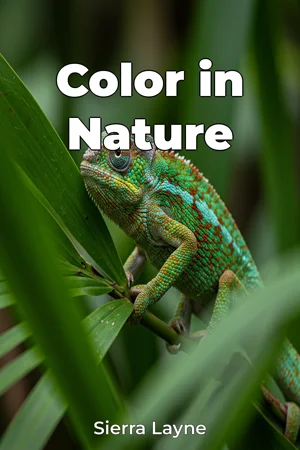
Have you ever stopped to wonder why a peacock flaunts its iridescent plumage, or how a chameleon manages to blend seamlessly into its surroundings? "Color in Nature" delves into the captivating world of color as it manifests across the biological spectrum, exploring its crucial roles in survival, communication, and the sheer aesthetic splendor of the natural world. This book examines the multifaceted significance of color in animals, plants, and landscapes, revealing the evolutionary and ecological forces that have shaped the vibrant palette of our planet. We will unpack the core themes surrounding the creation and perception of color. Firstly, we examine the biophysics and biochemistry of color production, detailing how pigments, structural colors, and bioluminescence generate the diverse hues we observe. Secondly, we explore the ecological roles of color, from camouflage and mimicry to warning signals and mate attraction. Finally, we discuss the evolutionary aspects, tracing the origins and diversification of coloration strategies across various taxa and environments. Understanding these topics is vital, as color provides a window into an organism's behavior, physiology, and evolutionary history, informing diverse fields from conservation biology to biomimicry. “Color in Nature” draws upon a wide range of scientific disciplines, including biology, ecology, chemistry, and evolutionary science. The content is structured to progressively build understanding, starting with the fundamental principles of color production and perception. The book then delves into specific examples of coloration in different organisms and ecosystems. We will explore the camouflage techniques of insects, the vibrant displays of birds, and the dynamic coloration of coral reefs, illustrating how color contributes to survival and reproductive success. One major section is devoted to plant coloration, detailing the roles of pigments in photosynthesis, pollination, and seed dispersal. Another section explores the coloration of landscapes, from the mineral hues of deserts to the seasonal shifts in forests, illustrating how color is intrinsically linked to geological processes and climatic conditions. The book culminates by considering the implications of color for conservation efforts, highlighting the need to protect biodiversity and preserve the aesthetic value of the natural world, while also discussing potential applications of biomimicry inspired by natural coloration. The central argument of the book is that color is not merely a superficial attribute but a fundamental aspect of life, shaped by evolutionary pressures and ecological interactions. Color serves as a powerful medium of communication, a means of defense, and a key driver of biodiversity. This perspective is important because it challenges anthropocentric views of color as purely aesthetic and illuminates the vital ecological and evolutionary consequences of coloration. The evidence presented to support these arguments draws from extensive fieldwork, laboratory experiments, and cutting-edge research in the field of color science. We will utilize data from diverse sources, including spectroscopic analyses of pigments, behavioral studies of animal communication, and phylogenetic analyses of coloration patterns. The book also integrates visual media, including photographs and illustrations, to vividly portray examples of coloration in nature. This book is not confined to the realm of biology. It also connects to fields such as art, psychology, and environmental science. The artistic use of color often mirrors natural patterns, while psychological studies reveal how color influences human perception and emotion. Environmental science is concerned with the impact of pollution and climate change on natural coloration, such as coral bleaching and forest decline. “Color in Nature” stands out due to its comprehensive approach, integrating diverse scientific disciplines and presenting a unified perspective on the significance of color in the natural world. Written in an accessible and engaging style, "Color in Nature" is designed for a broad audience, including students, nature enthusiasts, and anyone curious about the science behind the beauty of the natural world. It offers valuable insights for those interested in biology, ecology, conservation, and art, providing a comprehensive overview of the topic. The book aims for accuracy and clarity, adhering to the conventions of scientific writing while remaining accessible to non-specialists. The scope of the book is intentionally broad, covering a wide range of organisms and ecosystems. However, it focuses primarily on visible coloration and does not delve into the intricacies of ultraviolet or infrared vision. The information within the text can be applied to practical efforts in conservation, habitat restoration, and sustainable development. While the ecological and evolutionary significance of color is widely recognized, debates persist regarding the relative importance of different selective pressures and the role of chance in shaping coloration patterns. "Color in Nature" acknowledges these ongoing discussions and presents a balanced perspective, drawing upon a synthesis of diverse viewpoints.
Have you ever stopped to wonder why a peacock flaunts its iridescent plumage, or how a chameleon manages to blend seamlessly into its surroundings? "Color in Nature" delves into the captivating world of color as it manifests across the biological spectrum, exploring its crucial roles in survival, communication, and the sheer aesthetic splendor of the natural world. This book examines the multifaceted significance of color in animals, plants, and landscapes, revealing the evolutionary and ecological forces that have shaped the vibrant palette of our planet. We will unpack the core themes surrounding the creation and perception of color. Firstly, we examine the biophysics and biochemistry of color production, detailing how pigments, structural colors, and bioluminescence generate the diverse hues we observe. Secondly, we explore the ecological roles of color, from camouflage and mimicry to warning signals and mate attraction. Finally, we discuss the evolutionary aspects, tracing the origins and diversification of coloration strategies across various taxa and environments. Understanding these topics is vital, as color provides a window into an organism's behavior, physiology, and evolutionary history, informing diverse fields from conservation biology to biomimicry. “Color in Nature” draws upon a wide range of scientific disciplines, including biology, ecology, chemistry, and evolutionary science. The content is structured to progressively build understanding, starting with the fundamental principles of color production and perception. The book then delves into specific examples of coloration in different organisms and ecosystems. We will explore the camouflage techniques of insects, the vibrant displays of birds, and the dynamic coloration of coral reefs, illustrating how color contributes to survival and reproductive success. One major section is devoted to plant coloration, detailing the roles of pigments in photosynthesis, pollination, and seed dispersal. Another section explores the coloration of landscapes, from the mineral hues of deserts to the seasonal shifts in forests, illustrating how color is intrinsically linked to geological processes and climatic conditions. The book culminates by considering the implications of color for conservation efforts, highlighting the need to protect biodiversity and preserve the aesthetic value of the natural world, while also discussing potential applications of biomimicry inspired by natural coloration. The central argument of the book is that color is not merely a superficial attribute but a fundamental aspect of life, shaped by evolutionary pressures and ecological interactions. Color serves as a powerful medium of communication, a means of defense, and a key driver of biodiversity. This perspective is important because it challenges anthropocentric views of color as purely aesthetic and illuminates the vital ecological and evolutionary consequences of coloration. The evidence presented to support these arguments draws from extensive fieldwork, laboratory experiments, and cutting-edge research in the field of color science. We will utilize data from diverse sources, including spectroscopic analyses of pigments, behavioral studies of animal communication, and phylogenetic analyses of coloration patterns. The book also integrates visual media, including photographs and illustrations, to vividly portray examples of coloration in nature. This book is not confined to the realm of biology. It also connects to fields such as art, psychology, and environmental science. The artistic use of color often mirrors natural patterns, while psychological studies reveal how color influences human perception and emotion. Environmental science is concerned with the impact of pollution and climate change on natural coloration, such as coral bleaching and forest decline. “Color in Nature” stands out due to its comprehensive approach, integrating diverse scientific disciplines and presenting a unified perspective on the significance of color in the natural world. Written in an accessible and engaging style, "Color in Nature" is designed for a broad audience, including students, nature enthusiasts, and anyone curious about the science behind the beauty of the natural world. It offers valuable insights for those interested in biology, ecology, conservation, and art, providing a comprehensive overview of the topic. The book aims for accuracy and clarity, adhering to the conventions of scientific writing while remaining accessible to non-specialists. The scope of the book is intentionally broad, covering a wide range of organisms and ecosystems. However, it focuses primarily on visible coloration and does not delve into the intricacies of ultraviolet or infrared vision. The information within the text can be applied to practical efforts in conservation, habitat restoration, and sustainable development. While the ecological and evolutionary significance of color is widely recognized, debates persist regarding the relative importance of different selective pressures and the role of chance in shaping coloration patterns. "Color in Nature" acknowledges these ongoing discussions and presents a balanced perspective, drawing upon a synthesis of diverse viewpoints.
"Color in Nature" explores the vibrant world of natural coloration, revealing its profound influence on survival, communication, and the beauty of our planet. The book investigates how evolutionary pressures and ecological interactions have shaped the colors we see in animals, plants, and landscapes. Did you know that the bright colors of some insects serve as a warning to predators, signaling toxicity? Or that plants use color to attract specific pollinators, ensuring successful reproduction? The book begins by examining the biophysics and biochemistry of color production, detailing how pigments and structural colors are created. It progresses to explore the ecological roles of color, such as camouflage, mimicry, and mate attraction, showing how these strategies contribute to an organism's survival. A significant portion of the book is dedicated to plant coloration and the coloration of landscapes, illustrating the roles of pigments in photosynthesis, pollination, seed dispersal, and the links between color and geological or climatic conditions. The approach is comprehensive, drawing upon biology, ecology, chemistry, and evolutionary science. Ultimately, "Color in Nature" argues that color is not merely aesthetic but vital and functional. It serves as a medium for communication, a means of defense, and a key driver of biodiversity. The book concludes by considering the implications of color for conservation, emphasizing the need to protect biodiversity and find inspiration in nature's designs through biomimicry.
Book Details
ISBN
9788233970703
Publisher
Publifye AS
Your Licenses
You don't own any licenses for this book
Purchase a license below to unlock this book and download the EPUB.
Purchase License
Select a tier to unlock this book
Need bulk licensing?
Contact us for enterprise agreements.