
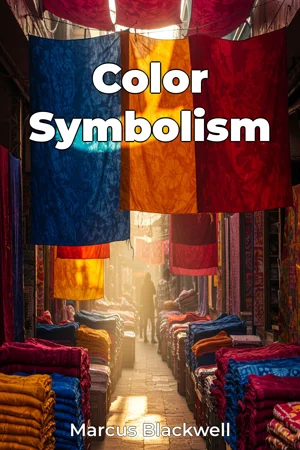
About This Book
Have you ever considered why brides traditionally wear white or why certain colors are associated with mourning in different parts of the world? "Color Symbolism" delves into the fascinating world of color and its diverse interpretations across cultures, traditions, and belief systems. This book explores how colors transcend mere aesthetics, acting as powerful symbols that shape our perceptions, influence our behaviors, and reflect the core values of societies throughout history. Two key concepts form the backbone of this exploration: firstly, the cultural relativity of color perception, and secondly, the enduring impact of historical events and religious doctrines on the meanings attributed to specific colors. Understanding these topics is crucial because it allows us to appreciate the richness and complexity of human cultural expression. Color symbolism is not arbitrary; it is deeply rooted in the historical, social, and environmental contexts from which it emerges. This book provides a thorough historical and social context, examining the evolution of color meanings from ancient civilizations to contemporary societies. No prior knowledge is required, as the book begins with a foundational discussion of color theory and perception before moving into specific cultural case studies. The central argument of "Color Symbolism" is that color is a dynamic and culturally constructed language. The meaning of a color is not inherent but assigned and constantly renegotiated by societies. Understanding this fluid nature of color symbolism is vital for fostering cross-cultural awareness and avoiding misinterpretations in an increasingly interconnected world. The book unfolds in a structured manner. It begins by introducing the fundamental concepts of color theory and the neuroscience of color perception. The subsequent major sections explore the symbolism of colors in specific cultural contexts, such as ancient Egypt, classical Greece and Rome, medieval Europe, and various indigenous cultures around the globe. Each section examines how historical events, religious beliefs, and social structures have shaped the meanings associated with different colors. The book culminates in a discussion of the globalization of color symbolism and its implications for art, design, and communication in the 21st century. The arguments presented in "Color Symbolism" are supported by a wide range of evidence, including historical texts, anthropological studies, archaeological findings, and analyses of art and material culture. Unique data sources include primary accounts from travelers, missionaries, and colonial administrators who documented the color practices of different societies. This book also draws connections to diverse fields such as anthropology, art history, religious studies, and semiotics. The anthropological perspective sheds light on the cultural variations in color symbolism, while art history provides insights into how artists have used color to convey specific meanings and emotions. Religious studies explores the role of color in ritual and iconography, and semiotics offers a framework for understanding color as a system of signs and symbols. "Color Symbolism" offers a unique perspective by challenging the assumption that color meanings are universal or instinctual. It emphasizes the importance of understanding the specific cultural context in which a color is used to avoid ethnocentric interpretations. The book adopts an analytical and informative approach, moving away from anecdotal accounts to provide a nuanced and evidence-based exploration of color symbolism. The intended audience includes students and scholars in fields such as art history, anthropology, cultural studies, and design, as well as anyone interested in learning about the cultural significance of color. This book is valuable because it provides a comprehensive overview of color symbolism across cultures and historical periods, offering insights into the complex interplay between color, culture, and human perception. As a work of non-fiction in the 'History World, Art, World History' genres, "Color Symbolism" provides verifiable information, well-researched data, and clear citations. The scope of the book is broad, covering a wide range of cultures and historical periods. However, it is intentionally limited to exploring the symbolic meanings of color, rather than focusing on the technical aspects of color production or perception. The information presented in this book has numerous real-world applications. It can be used by designers, marketers, and communicators to create culturally sensitive and effective visual materials. It can also be used by educators to promote cross-cultural understanding and by travelers to navigate unfamiliar cultural contexts. While there is general agreement that color symbolism varies across cultures, ongoing debates exist regarding the extent to which certain color associations may be influenced by universal psychological or physiological factors. "Color Symbolism" addresses these debates by presenting a balanced and nuanced perspective, acknowledging the role of both cultural and biological influences on color perception and meaning.
Have you ever considered why brides traditionally wear white or why certain colors are associated with mourning in different parts of the world? "Color Symbolism" delves into the fascinating world of color and its diverse interpretations across cultures, traditions, and belief systems. This book explores how colors transcend mere aesthetics, acting as powerful symbols that shape our perceptions, influence our behaviors, and reflect the core values of societies throughout history. Two key concepts form the backbone of this exploration: firstly, the cultural relativity of color perception, and secondly, the enduring impact of historical events and religious doctrines on the meanings attributed to specific colors. Understanding these topics is crucial because it allows us to appreciate the richness and complexity of human cultural expression. Color symbolism is not arbitrary; it is deeply rooted in the historical, social, and environmental contexts from which it emerges. This book provides a thorough historical and social context, examining the evolution of color meanings from ancient civilizations to contemporary societies. No prior knowledge is required, as the book begins with a foundational discussion of color theory and perception before moving into specific cultural case studies. The central argument of "Color Symbolism" is that color is a dynamic and culturally constructed language. The meaning of a color is not inherent but assigned and constantly renegotiated by societies. Understanding this fluid nature of color symbolism is vital for fostering cross-cultural awareness and avoiding misinterpretations in an increasingly interconnected world. The book unfolds in a structured manner. It begins by introducing the fundamental concepts of color theory and the neuroscience of color perception. The subsequent major sections explore the symbolism of colors in specific cultural contexts, such as ancient Egypt, classical Greece and Rome, medieval Europe, and various indigenous cultures around the globe. Each section examines how historical events, religious beliefs, and social structures have shaped the meanings associated with different colors. The book culminates in a discussion of the globalization of color symbolism and its implications for art, design, and communication in the 21st century. The arguments presented in "Color Symbolism" are supported by a wide range of evidence, including historical texts, anthropological studies, archaeological findings, and analyses of art and material culture. Unique data sources include primary accounts from travelers, missionaries, and colonial administrators who documented the color practices of different societies. This book also draws connections to diverse fields such as anthropology, art history, religious studies, and semiotics. The anthropological perspective sheds light on the cultural variations in color symbolism, while art history provides insights into how artists have used color to convey specific meanings and emotions. Religious studies explores the role of color in ritual and iconography, and semiotics offers a framework for understanding color as a system of signs and symbols. "Color Symbolism" offers a unique perspective by challenging the assumption that color meanings are universal or instinctual. It emphasizes the importance of understanding the specific cultural context in which a color is used to avoid ethnocentric interpretations. The book adopts an analytical and informative approach, moving away from anecdotal accounts to provide a nuanced and evidence-based exploration of color symbolism. The intended audience includes students and scholars in fields such as art history, anthropology, cultural studies, and design, as well as anyone interested in learning about the cultural significance of color. This book is valuable because it provides a comprehensive overview of color symbolism across cultures and historical periods, offering insights into the complex interplay between color, culture, and human perception. As a work of non-fiction in the 'History World, Art, World History' genres, "Color Symbolism" provides verifiable information, well-researched data, and clear citations. The scope of the book is broad, covering a wide range of cultures and historical periods. However, it is intentionally limited to exploring the symbolic meanings of color, rather than focusing on the technical aspects of color production or perception. The information presented in this book has numerous real-world applications. It can be used by designers, marketers, and communicators to create culturally sensitive and effective visual materials. It can also be used by educators to promote cross-cultural understanding and by travelers to navigate unfamiliar cultural contexts. While there is general agreement that color symbolism varies across cultures, ongoing debates exist regarding the extent to which certain color associations may be influenced by universal psychological or physiological factors. "Color Symbolism" addresses these debates by presenting a balanced and nuanced perspective, acknowledging the role of both cultural and biological influences on color perception and meaning.
"Color Symbolism" explores the captivating realm of color and its varied interpretations across cultures and history. It argues that color symbolism isn't arbitrary but deeply embedded in cultural and historical contexts, highlighting how our perception of color is shaped by societal values and historical events. For instance, the association of white with weddings and black with mourning isn't universal but culturally specific, reflecting distinct traditions and belief systems. The book examines how color meanings have evolved from ancient civilizations to contemporary societies, offering a comprehensive view of cultural studies and art history. It begins with the basics of color theory before diving into specific cultural case studies, such as color's role in ancient Egypt or medieval Europe. By challenging the notion that color meanings are universal, "Color Symbolism" offers a nuanced perspective, emphasizing the importance of understanding cultural contexts. This exploration progresses methodically, starting with color theory and neuroscience, then moving through cultural contexts like classical Greece and indigenous cultures. The book concludes by discussing the globalization of color symbolism and its effects on art, design, and communication. By blending world history with art, it offers a rich understanding of how color shapes our world.
Book Details
ISBN
9788233970680
Publisher
Publifye AS
Your Licenses
You don't own any licenses for this book
Purchase a license below to unlock this book and download the EPUB.
Purchase License
Select a tier to unlock this book
Need bulk licensing?
Contact us for enterprise agreements.