
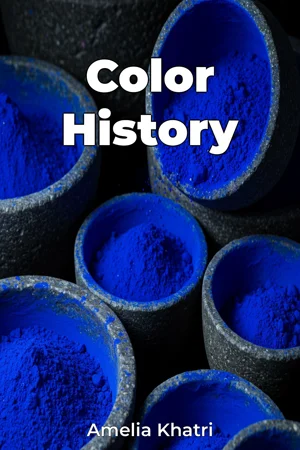
About This Book
Have you ever wondered how the colors that saturate our world came to be? "Color History" embarks on a journey through time, revealing the surprising and often fascinating stories behind the pigments and dyes that have shaped human civilization. This exploration will uncover the historical, social, and artistic significance of color, demonstrating how these hues have influenced everything from fashion and art to politics and scientific discovery. This book delves into three primary areas: the origins and evolution of color production, the cultural symbolism associated with different colors across various societies, and the impact of color on artistic expression and scientific understanding. These topics are important because they offer a unique lens through which to view human history. Colors are not merely aesthetic elements; they are powerful cultural codes that reflect our values, beliefs, and technological advancements. To fully appreciate the narrative, a basic understanding of art history and chemistry is helpful but not required, as the book provides necessary context and explanations along the way. From ancient natural dyes derived from plants and insects to the synthetic pigments created in modern laboratories, each chapter will trace the development of specific colors and their applications. The central argument of "Color History" is that the history of color is, in essence, a reflection of human innovation, cultural exchange, and social change. By examining the materials, techniques, and meanings associated with different colors, we gain a deeper understanding of the societies that created and used them. This argument is significant because it challenges the perception of color as a mere surface attribute and reveals its profound connections to human experience. The book is structured to provide a comprehensive overview of color history. It begins with an introduction to the fundamental concepts of color theory and the methods used to create pigments and dyes in the ancient world. The main body of the book then explores the historical development and cultural significance of specific colors, such as the revered purple derived from Tyrian snails, the vibrant blues created from lapis lazuli, and the revolutionary synthetic reds pioneered in the 19th century. Each section examines not only the technical processes involved in producing these colors, but also their social and cultural meanings in different historical contexts. The concluding chapters address the impact of color on modern art, design, and science, highlighting the ongoing evolution of our relationship with color. The evidence presented in "Color History" is drawn from a wide range of sources, including archaeological findings, historical texts, scientific analyses of pigments, and artistic masterpieces. Data is gathered from museum collections, historical archives, and scientific publications. This book also connects to other disciplines such as anthropology (cultural meanings of color), economics (trade in pigments and dyes), and environmental studies (sustainability of color production). These interdisciplinary connections enrich the book's analysis by providing a more holistic view of the subject. "Color History" adopts a narrative non-fiction approach, blending scholarly research with engaging storytelling. The tone is informative and accessible, aiming to engage the reader without compromising academic rigor. The intended audience includes art enthusiasts, history buffs, designers, and anyone curious about the hidden stories behind the colors that surround us. This book would be valuable to them because it offers a fresh perspective on familiar subjects, revealing the complex and fascinating history of color. As a work of non-fiction, this book emphasizes factual accuracy, clear sourcing, and rigorous analysis. While the book aims to be comprehensive, it acknowledges its limitations in covering every single color and cultural variation. Rather, it focuses on key examples and trends that illustrate the broader themes of color history. The information presented in this book has real-world applications for artists, designers, historians, and anyone interested in understanding the cultural and historical context of color. For example, a designer might use this knowledge to create more meaningful and culturally sensitive designs, while a historian might use it to interpret the symbolism of color in historical artifacts. While the book strives for objectivity, it acknowledges that the interpretation of color symbolism can be subjective and that there are ongoing debates about the precise meanings and uses of color in different historical and cultural contexts. "Color History" aims to provide a balanced and nuanced perspective on these debates, encouraging readers to engage critically with the material and draw their own conclusions.
Have you ever wondered how the colors that saturate our world came to be? "Color History" embarks on a journey through time, revealing the surprising and often fascinating stories behind the pigments and dyes that have shaped human civilization. This exploration will uncover the historical, social, and artistic significance of color, demonstrating how these hues have influenced everything from fashion and art to politics and scientific discovery. This book delves into three primary areas: the origins and evolution of color production, the cultural symbolism associated with different colors across various societies, and the impact of color on artistic expression and scientific understanding. These topics are important because they offer a unique lens through which to view human history. Colors are not merely aesthetic elements; they are powerful cultural codes that reflect our values, beliefs, and technological advancements. To fully appreciate the narrative, a basic understanding of art history and chemistry is helpful but not required, as the book provides necessary context and explanations along the way. From ancient natural dyes derived from plants and insects to the synthetic pigments created in modern laboratories, each chapter will trace the development of specific colors and their applications. The central argument of "Color History" is that the history of color is, in essence, a reflection of human innovation, cultural exchange, and social change. By examining the materials, techniques, and meanings associated with different colors, we gain a deeper understanding of the societies that created and used them. This argument is significant because it challenges the perception of color as a mere surface attribute and reveals its profound connections to human experience. The book is structured to provide a comprehensive overview of color history. It begins with an introduction to the fundamental concepts of color theory and the methods used to create pigments and dyes in the ancient world. The main body of the book then explores the historical development and cultural significance of specific colors, such as the revered purple derived from Tyrian snails, the vibrant blues created from lapis lazuli, and the revolutionary synthetic reds pioneered in the 19th century. Each section examines not only the technical processes involved in producing these colors, but also their social and cultural meanings in different historical contexts. The concluding chapters address the impact of color on modern art, design, and science, highlighting the ongoing evolution of our relationship with color. The evidence presented in "Color History" is drawn from a wide range of sources, including archaeological findings, historical texts, scientific analyses of pigments, and artistic masterpieces. Data is gathered from museum collections, historical archives, and scientific publications. This book also connects to other disciplines such as anthropology (cultural meanings of color), economics (trade in pigments and dyes), and environmental studies (sustainability of color production). These interdisciplinary connections enrich the book's analysis by providing a more holistic view of the subject. "Color History" adopts a narrative non-fiction approach, blending scholarly research with engaging storytelling. The tone is informative and accessible, aiming to engage the reader without compromising academic rigor. The intended audience includes art enthusiasts, history buffs, designers, and anyone curious about the hidden stories behind the colors that surround us. This book would be valuable to them because it offers a fresh perspective on familiar subjects, revealing the complex and fascinating history of color. As a work of non-fiction, this book emphasizes factual accuracy, clear sourcing, and rigorous analysis. While the book aims to be comprehensive, it acknowledges its limitations in covering every single color and cultural variation. Rather, it focuses on key examples and trends that illustrate the broader themes of color history. The information presented in this book has real-world applications for artists, designers, historians, and anyone interested in understanding the cultural and historical context of color. For example, a designer might use this knowledge to create more meaningful and culturally sensitive designs, while a historian might use it to interpret the symbolism of color in historical artifacts. While the book strives for objectivity, it acknowledges that the interpretation of color symbolism can be subjective and that there are ongoing debates about the precise meanings and uses of color in different historical and cultural contexts. "Color History" aims to provide a balanced and nuanced perspective on these debates, encouraging readers to engage critically with the material and draw their own conclusions.
"Color History" unveils the captivating stories behind the pigments and dyes that have shaped civilization, exploring color's historical, social, and artistic significance. It demonstrates how hues have influenced diverse aspects of human life, from fashion and art to politics and scientific discovery. For example, purple dye, once painstakingly derived from Tyrian snails, was so valued it became synonymous with royalty. The book also traces the development and cultural impact of synthetic reds, revolutionary pigments that transformed art and industry in the 19th century. The book examines the origins of color production, cultural symbolism, and color's impact on art and science. This historical narrative adopts a narrative non-fiction approach, blending scholarly research with engaging storytelling. Starting with the fundamentals of color theory and ancient production methods, the book progresses through specific colors and their historical development, examining both the technical processes and the cultural meanings in various contexts. It concludes by addressing the ongoing evolution of color in modern art, design, and science.
Book Details
ISBN
9788233970604
Publisher
Publifye AS
Your Licenses
You don't own any licenses for this book
Purchase a license below to unlock this book and download the EPUB.
Purchase License
Select a tier to unlock this book
Need bulk licensing?
Contact us for enterprise agreements.