
About This Book
Are chimpanzees simply advanced animals, or do they hold a mirror to our own intelligence, behavior, and evolutionary past? "Chimpanzee Facts" delves into the multifaceted world of chimpanzees, exploring their remarkable cognitive abilities, intricate tool use, and their exceptionally close genetic relationship to humans. Understanding chimpanzees is not merely an academic exercise; it provides critical insights into the origins of human intelligence, the development of complex social structures, and the very definition of what it means to be human. This book examines several key aspects of chimpanzee life. First, we explore their cognitive capabilities, moving beyond simple comparisons to examine the specific ways in which chimpanzee intelligence manifests. We analyze their problem-solving skills, memory, and capacity for learning, drawing on decades of research in both captive and wild chimpanzee populations. Second, we investigate their tool use, a behavior that has long fascinated scientists and the public alike. From termite fishing to nut cracking, we dissect the techniques chimpanzees employ, the cultural transmission of these skills, and the implications for understanding the evolution of technology. Finally, we confront the implications of the chimpanzee's close genetic relation to *Homo sapiens*. We review the genetic evidence and explore the ethical considerations that arise from our shared ancestry. "Chimpanzee Facts" argues that chimpanzees should not simply be viewed as another animal species, but as a crucial point of reference for understanding our own evolutionary journey. By carefully studying chimpanzees, we can gain invaluable insights into the development of intelligence, the origins of culture, and the interconnectedness of all life on Earth. The book begins by introducing the basic biology and taxonomy of chimpanzees, outlining their geographic distribution and social organization. It builds upon this foundation by discussing the methodologies used to study chimpanzees in the wild, from Jane Goodall's pioneering work to contemporary behavioral ecology. Subsequent chapters focus on specific aspects of chimpanzee cognition, such as their capacity for deception, communication, and self-awareness, supported by experimental data and observational studies. The book then turns to tool use, detailing the various tools chimpanzees employ, the learning processes involved, and the regional variations in tool-using techniques. The latter part of the book carefully reviews genetic research, clarifying the degree of genetic overlap between chimpanzees and humans and addressing the complex ethical questions that our shared ancestry raises. The book concludes by exploring the conservation challenges facing chimpanzees and the role that humans play in their survival. The research presented is drawn from a wide range of sources, including peer-reviewed scientific articles, field studies, and data from captive chimpanzee populations. The book also incorporates methodologies from various disciplines, including primatology, anthropology, psychology, and genetics. "Chimpanzee Facts" intersects with fields such as evolutionary biology, cognitive science, and animal ethics. Its examination of chimpanzee behavior provides valuable insights into the evolutionary origins of human behavior. Its analysis of chimpanzee cognition contributes to our understanding of the mind. Its discussion of the ethical implications of our relationship to chimpanzees raises profound questions about our responsibility to the natural world. This book offers a balanced and nuanced perspective on chimpanzees, avoiding anthropomorphism while still highlighting their remarkable abilities. It presents information in a clear and accessible manner, suitable for readers with a general interest in science, biology, nature, or animal behavior. The target audience includes students, researchers, conservationists, and anyone interested in primate behavior or evolutionary biology. The book will be valuable to those seeking a comprehensive overview of chimpanzee intelligence, behavior, and conservation status. As a non-fiction work, the information is presented in a logical and carefully referenced way. While the book aims to provide a broad overview of chimpanzee biology and behavior, it primarily focuses on *Pan troglodytes*. The book does not delve deeply into the specific behaviors of bonobos (*Pan paniscus*), although comparisons are made where relevant. The information presented in "Chimpanzee Facts" has numerous real-world applications. It can inform conservation efforts, improve the welfare of captive chimpanzees, and deepen our understanding of human evolution, therefore offering a better perspective on our species. The book addresses pertinent debates surrounding the interpretation of chimpanzee behavior, such as the extent to which chimpanzee behavior is culturally transmitted versus genetically determined.
Are chimpanzees simply advanced animals, or do they hold a mirror to our own intelligence, behavior, and evolutionary past? "Chimpanzee Facts" delves into the multifaceted world of chimpanzees, exploring their remarkable cognitive abilities, intricate tool use, and their exceptionally close genetic relationship to humans. Understanding chimpanzees is not merely an academic exercise; it provides critical insights into the origins of human intelligence, the development of complex social structures, and the very definition of what it means to be human. This book examines several key aspects of chimpanzee life. First, we explore their cognitive capabilities, moving beyond simple comparisons to examine the specific ways in which chimpanzee intelligence manifests. We analyze their problem-solving skills, memory, and capacity for learning, drawing on decades of research in both captive and wild chimpanzee populations. Second, we investigate their tool use, a behavior that has long fascinated scientists and the public alike. From termite fishing to nut cracking, we dissect the techniques chimpanzees employ, the cultural transmission of these skills, and the implications for understanding the evolution of technology. Finally, we confront the implications of the chimpanzee's close genetic relation to *Homo sapiens*. We review the genetic evidence and explore the ethical considerations that arise from our shared ancestry. "Chimpanzee Facts" argues that chimpanzees should not simply be viewed as another animal species, but as a crucial point of reference for understanding our own evolutionary journey. By carefully studying chimpanzees, we can gain invaluable insights into the development of intelligence, the origins of culture, and the interconnectedness of all life on Earth. The book begins by introducing the basic biology and taxonomy of chimpanzees, outlining their geographic distribution and social organization. It builds upon this foundation by discussing the methodologies used to study chimpanzees in the wild, from Jane Goodall's pioneering work to contemporary behavioral ecology. Subsequent chapters focus on specific aspects of chimpanzee cognition, such as their capacity for deception, communication, and self-awareness, supported by experimental data and observational studies. The book then turns to tool use, detailing the various tools chimpanzees employ, the learning processes involved, and the regional variations in tool-using techniques. The latter part of the book carefully reviews genetic research, clarifying the degree of genetic overlap between chimpanzees and humans and addressing the complex ethical questions that our shared ancestry raises. The book concludes by exploring the conservation challenges facing chimpanzees and the role that humans play in their survival. The research presented is drawn from a wide range of sources, including peer-reviewed scientific articles, field studies, and data from captive chimpanzee populations. The book also incorporates methodologies from various disciplines, including primatology, anthropology, psychology, and genetics. "Chimpanzee Facts" intersects with fields such as evolutionary biology, cognitive science, and animal ethics. Its examination of chimpanzee behavior provides valuable insights into the evolutionary origins of human behavior. Its analysis of chimpanzee cognition contributes to our understanding of the mind. Its discussion of the ethical implications of our relationship to chimpanzees raises profound questions about our responsibility to the natural world. This book offers a balanced and nuanced perspective on chimpanzees, avoiding anthropomorphism while still highlighting their remarkable abilities. It presents information in a clear and accessible manner, suitable for readers with a general interest in science, biology, nature, or animal behavior. The target audience includes students, researchers, conservationists, and anyone interested in primate behavior or evolutionary biology. The book will be valuable to those seeking a comprehensive overview of chimpanzee intelligence, behavior, and conservation status. As a non-fiction work, the information is presented in a logical and carefully referenced way. While the book aims to provide a broad overview of chimpanzee biology and behavior, it primarily focuses on *Pan troglodytes*. The book does not delve deeply into the specific behaviors of bonobos (*Pan paniscus*), although comparisons are made where relevant. The information presented in "Chimpanzee Facts" has numerous real-world applications. It can inform conservation efforts, improve the welfare of captive chimpanzees, and deepen our understanding of human evolution, therefore offering a better perspective on our species. The book addresses pertinent debates surrounding the interpretation of chimpanzee behavior, such as the extent to which chimpanzee behavior is culturally transmitted versus genetically determined.
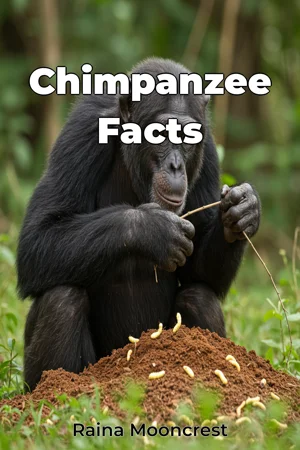
"Chimpanzee Facts" explores the fascinating world of chimpanzees, examining their intelligence, tool use, and genetic connection to humans. It delves into their cognitive abilities, showcasing problem-solving skills and memory, while also highlighting their complex tool-using behaviors like termite fishing and nut cracking, passed down through generations. This exploration offers critical insights into the origins of human intelligence, culture, and our place in nature. The book argues that understanding chimpanzees provides a crucial reference point for comprehending our own evolutionary journey. It begins by examining the basic biology and social structures of chimpanzees before diving into research methodologies and specific aspects of cognition, such as deception and communication. Progressing through tool use and genetic research, "Chimpanzee Facts" ultimately addresses the ethical considerations and conservation challenges surrounding these remarkable primates.
Book Details
ISBN
9788233970567
Publisher
Publifye AS
Your Licenses
You don't own any licenses for this book
Purchase a license below to unlock this book and download the EPUB.
Purchase License
Select a tier to unlock this book
Need bulk licensing?
Contact us for enterprise agreements.