
About This Book
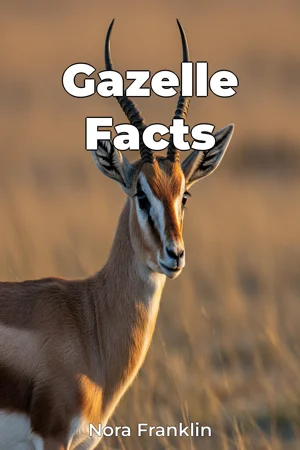
Have you ever wondered how a gazelle manages to evade a cheetah, one of the fastest land animals on Earth? "Gazelle Facts" explores this very question, along with the intricate lives of these fascinating creatures, their remarkable migrations across vast landscapes, and their unique adaptations that allow them to thrive in some of the harshest desert environments. This book delves into the world of gazelles, providing a comprehensive scientific overview suitable for both students and nature enthusiasts. This book's importance lies in its synthesis of current biological and ecological research on gazelles. We examine not only the mechanics of their speed and agility but also the evolutionary pressures that have shaped their behavior and physiology. Understanding gazelles provides a window into broader ecological principles, such as predator-prey dynamics and the impact of environmental change on animal populations. "Gazelle Facts" will present a detailed analysis of three key themes: predator avoidance strategies, migratory patterns, and desert adaptations. These themes are critical for understanding the gazelle's survival and ecological role. Examining these areas requires an understanding of basic biological concepts, such as natural selection, adaptation, and ecosystem dynamics, which will be explained clearly throughout the book. The central argument of this book is that the gazelle's success is not attributable to any single adaptation, but rather a complex interplay of behavioral, physiological, and ecological factors. By exploring these integrated aspects, we will demonstrate the delicate balance required for survival in challenging environments, highlighting the importance of conservation efforts to protect these iconic animals and their habitats. The book is structured to provide a logical progression of knowledge. Beginning with an introduction to the various gazelle species and their habitats, we then move into a detailed discussion of their physical and behavioral adaptations for avoiding predators. This section explores topics such as their exceptional eyesight, hearing, and alarm calling behavior, as well as their remarkable running capabilities. Secondly, the book navigates the complexities of gazelle migration, examining the causes and consequences of these journeys, including the influence of rainfall, vegetation availability, and resource competition. The third section focuses on the specific adaptations that enable gazelles to survive in arid and semi-arid environments. This includes their ability to conserve water, tolerate high temperatures, and efficiently utilize scarce food resources. The book culminates with a discussion of the current threats facing gazelles, such as habitat loss, poaching, and climate change, and explores potential conservation strategies. The evidence presented in this book is drawn from a wide range of scientific studies, including field observations, experimental research, and genetic analyses. We will cite peer-reviewed publications and reports from reputable organizations, ensuring that the information presented is accurate and up-to-date. The book connects to broader fields such as zoology, ecology, and conservation biology. Furthermore, it touches upon aspects of geography and climate science when discussing migration patterns and desert adaptations. This interdisciplinary approach enriches the understanding of gazelle biology. "Gazelle Facts" offers a unique perspective by integrating behavioral ecology with physiological adaptations, providing a holistic view of gazelle survival strategies. This distinguishes it from books that focus solely on one aspect or another. The tone is informative and accessible, aiming to engage readers without sacrificing scientific accuracy. The writing style is clear and concise, making complex topics understandable for a broad audience. This book is aimed at students, educators, wildlife enthusiasts, and anyone interested in learning more about these remarkable animals and the challenges they face. It is a valuable resource for anyone seeking a comprehensive and scientifically sound overview of gazelle biology. As a non-fiction work in the science and nature genres, "Gazelle Facts" adheres to the conventions of presenting factual information supported by evidence and presented in an objective manner. The scope of the book is limited to the biology and ecology of gazelles, with less emphasis on cultural or historical aspects. The book provides practical insights into conservation efforts and the importance of protecting gazelle habitats. While the book touches upon ongoing debates regarding optimal conservation strategies, it presents a balanced view of different perspectives.
Have you ever wondered how a gazelle manages to evade a cheetah, one of the fastest land animals on Earth? "Gazelle Facts" explores this very question, along with the intricate lives of these fascinating creatures, their remarkable migrations across vast landscapes, and their unique adaptations that allow them to thrive in some of the harshest desert environments. This book delves into the world of gazelles, providing a comprehensive scientific overview suitable for both students and nature enthusiasts. This book's importance lies in its synthesis of current biological and ecological research on gazelles. We examine not only the mechanics of their speed and agility but also the evolutionary pressures that have shaped their behavior and physiology. Understanding gazelles provides a window into broader ecological principles, such as predator-prey dynamics and the impact of environmental change on animal populations. "Gazelle Facts" will present a detailed analysis of three key themes: predator avoidance strategies, migratory patterns, and desert adaptations. These themes are critical for understanding the gazelle's survival and ecological role. Examining these areas requires an understanding of basic biological concepts, such as natural selection, adaptation, and ecosystem dynamics, which will be explained clearly throughout the book. The central argument of this book is that the gazelle's success is not attributable to any single adaptation, but rather a complex interplay of behavioral, physiological, and ecological factors. By exploring these integrated aspects, we will demonstrate the delicate balance required for survival in challenging environments, highlighting the importance of conservation efforts to protect these iconic animals and their habitats. The book is structured to provide a logical progression of knowledge. Beginning with an introduction to the various gazelle species and their habitats, we then move into a detailed discussion of their physical and behavioral adaptations for avoiding predators. This section explores topics such as their exceptional eyesight, hearing, and alarm calling behavior, as well as their remarkable running capabilities. Secondly, the book navigates the complexities of gazelle migration, examining the causes and consequences of these journeys, including the influence of rainfall, vegetation availability, and resource competition. The third section focuses on the specific adaptations that enable gazelles to survive in arid and semi-arid environments. This includes their ability to conserve water, tolerate high temperatures, and efficiently utilize scarce food resources. The book culminates with a discussion of the current threats facing gazelles, such as habitat loss, poaching, and climate change, and explores potential conservation strategies. The evidence presented in this book is drawn from a wide range of scientific studies, including field observations, experimental research, and genetic analyses. We will cite peer-reviewed publications and reports from reputable organizations, ensuring that the information presented is accurate and up-to-date. The book connects to broader fields such as zoology, ecology, and conservation biology. Furthermore, it touches upon aspects of geography and climate science when discussing migration patterns and desert adaptations. This interdisciplinary approach enriches the understanding of gazelle biology. "Gazelle Facts" offers a unique perspective by integrating behavioral ecology with physiological adaptations, providing a holistic view of gazelle survival strategies. This distinguishes it from books that focus solely on one aspect or another. The tone is informative and accessible, aiming to engage readers without sacrificing scientific accuracy. The writing style is clear and concise, making complex topics understandable for a broad audience. This book is aimed at students, educators, wildlife enthusiasts, and anyone interested in learning more about these remarkable animals and the challenges they face. It is a valuable resource for anyone seeking a comprehensive and scientifically sound overview of gazelle biology. As a non-fiction work in the science and nature genres, "Gazelle Facts" adheres to the conventions of presenting factual information supported by evidence and presented in an objective manner. The scope of the book is limited to the biology and ecology of gazelles, with less emphasis on cultural or historical aspects. The book provides practical insights into conservation efforts and the importance of protecting gazelle habitats. While the book touches upon ongoing debates regarding optimal conservation strategies, it presents a balanced view of different perspectives.
"Gazelle Facts" unveils the intricate world of gazelles, exploring their survival strategies and ecological roles through a scientific lens. This book examines how these creatures have adapted to thrive in diverse environments. It highlights their remarkable predator avoidance techniques, such as exceptional eyesight and alarm calling, which are essential for evading fast predators like cheetahs. The book also delves into gazelle migration patterns, driven by factors like rainfall and vegetation availability, revealing the complexities of their journeys across vast landscapes. The book progresses logically, starting with an overview of gazelle species and habitats. It then moves into an examination of their physical and behavioral adaptations, followed by an exploration of migration and desert survival. A key insight is the complex interplay of behavioral, physiological, and ecological factors that contribute to the gazelle's success. Their ability to conserve water and tolerate high temperatures are crucial desert adaptations. Ultimately, "Gazelle Facts" emphasizes the importance of conservation efforts to protect these iconic animals from threats like habitat loss and climate change. By integrating behavioral ecology with physiological adaptations, this book provides a holistic view, making it a valuable resource for anyone interested in wildlife, biology, and nature.
Book Details
ISBN
9788233970550
Publisher
Publifye AS
Your Licenses
You don't own any licenses for this book
Purchase a license below to unlock this book and download the EPUB.
Purchase License
Select a tier to unlock this book
Need bulk licensing?
Contact us for enterprise agreements.