
About This Book
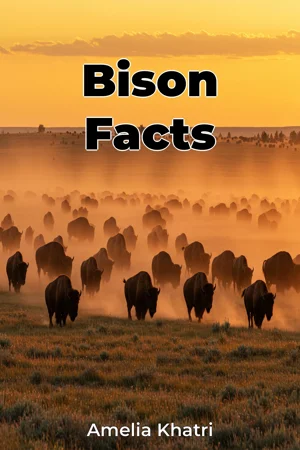
Imagine a landscape teeming with millions of bison, their thunderous hooves shaping the very contours of the land. This book, "Bison Facts," delves into the multi-faceted story of these iconic creatures: their pivotal role in shaping North American history and ecosystems, their sheer physical power and unique biological adaptations, and their remarkable journey back from the brink of extinction. These topics are critical to understanding the complexities of conservation, the interconnectedness of ecological systems, and the lasting impact of human actions on the natural world. Historically, bison were inextricably linked to the lives of Indigenous peoples, serving as a primary source of food, clothing, and shelter and playing a central role in their cultural and spiritual practices. Understanding this relationship is essential for appreciating the devastating consequences of the bison's near extermination and the cultural disruption it caused. Biologically, the bison's robust build, specialized digestive system, and herding behavior are key adaptations that allowed them to thrive in diverse environments. Studying these adaptations offers insights into evolutionary biology and the principles of ecological balance. Finally, the bison's remarkable comeback from fewer than 1,000 individuals to a population of hundreds of thousands serves as a powerful case study in conservation efforts, highlighting both successes and ongoing challenges. "Bison Facts" argues that the story of the bison is fundamentally a story of resilience, both for the animal itself and for the ecosystems and cultures that depend on it. The book meticulously examines the profound ecological and cultural consequences of the bison's decline and emphasizes the importance of continued conservation efforts to ensure their long-term survival. The book's structure is designed to sequentially unfold this story, first introducing the bison as a keystone species and a symbol of the American West. It then develops ideas chronologically, exploring their pre-Columbian abundance, the impact of European colonization and westward expansion, and the subsequent decimation of bison populations. Finally, it culminates with an examination of contemporary conservation strategies, ranging from large-scale habitat restoration to genetic management and the reintroduction of bison onto tribal lands. The concluding chapter offers practical insights into how readers can support bison conservation and promote responsible land management. The arguments presented are substantiated with a wealth of historical accounts, scientific data, and ecological studies. The book draws upon primary source materials, including explorer journals, government documents, and Indigenous oral histories, as well as extensive field research on bison behavior, genetics, and habitat use. Unique datasets, such as historical census records and population genetics studies, are used to provide a comprehensive and nuanced understanding of the bison's past, present, and future. The book's exploration of bison connects to diverse fields such as environmental history, wildlife management, and Indigenous studies. By examining the historical and ecological context of bison conservation, the book offers a compelling case for interdisciplinary approaches to addressing complex environmental challenges. Furthermore, "Bison Facts" offers a unique perspective by integrating Indigenous knowledge and perspectives into the narrative, challenging traditional conservation approaches and promoting more inclusive and equitable strategies. The tone is informative and accessible, aiming to engage a broad audience while maintaining scientific accuracy. This book is intended for anyone interested in North American history, wildlife conservation, or environmental science. It will be valuable to students, researchers, and general readers seeking a comprehensive and engaging overview of the bison's story. As a non-fiction work, "Bison Facts" adheres to rigorous standards of accuracy and objectivity, presenting information in a clear, concise, and evidence-based manner. While the book provides broad coverage of bison history and ecology, it intentionally limits its scope to North American bison, excluding discussion of other bison species or their global distribution. The information presented can be applied practically by readers interested in supporting bison conservation efforts, advocating for responsible land management policies, or simply learning more about this iconic species. The book also acknowledges ongoing debates surrounding bison management, such as the role of hunting in population control and the potential for conflicts between bison and livestock, presenting multiple perspectives and encouraging critical thinking.
Imagine a landscape teeming with millions of bison, their thunderous hooves shaping the very contours of the land. This book, "Bison Facts," delves into the multi-faceted story of these iconic creatures: their pivotal role in shaping North American history and ecosystems, their sheer physical power and unique biological adaptations, and their remarkable journey back from the brink of extinction. These topics are critical to understanding the complexities of conservation, the interconnectedness of ecological systems, and the lasting impact of human actions on the natural world. Historically, bison were inextricably linked to the lives of Indigenous peoples, serving as a primary source of food, clothing, and shelter and playing a central role in their cultural and spiritual practices. Understanding this relationship is essential for appreciating the devastating consequences of the bison's near extermination and the cultural disruption it caused. Biologically, the bison's robust build, specialized digestive system, and herding behavior are key adaptations that allowed them to thrive in diverse environments. Studying these adaptations offers insights into evolutionary biology and the principles of ecological balance. Finally, the bison's remarkable comeback from fewer than 1,000 individuals to a population of hundreds of thousands serves as a powerful case study in conservation efforts, highlighting both successes and ongoing challenges. "Bison Facts" argues that the story of the bison is fundamentally a story of resilience, both for the animal itself and for the ecosystems and cultures that depend on it. The book meticulously examines the profound ecological and cultural consequences of the bison's decline and emphasizes the importance of continued conservation efforts to ensure their long-term survival. The book's structure is designed to sequentially unfold this story, first introducing the bison as a keystone species and a symbol of the American West. It then develops ideas chronologically, exploring their pre-Columbian abundance, the impact of European colonization and westward expansion, and the subsequent decimation of bison populations. Finally, it culminates with an examination of contemporary conservation strategies, ranging from large-scale habitat restoration to genetic management and the reintroduction of bison onto tribal lands. The concluding chapter offers practical insights into how readers can support bison conservation and promote responsible land management. The arguments presented are substantiated with a wealth of historical accounts, scientific data, and ecological studies. The book draws upon primary source materials, including explorer journals, government documents, and Indigenous oral histories, as well as extensive field research on bison behavior, genetics, and habitat use. Unique datasets, such as historical census records and population genetics studies, are used to provide a comprehensive and nuanced understanding of the bison's past, present, and future. The book's exploration of bison connects to diverse fields such as environmental history, wildlife management, and Indigenous studies. By examining the historical and ecological context of bison conservation, the book offers a compelling case for interdisciplinary approaches to addressing complex environmental challenges. Furthermore, "Bison Facts" offers a unique perspective by integrating Indigenous knowledge and perspectives into the narrative, challenging traditional conservation approaches and promoting more inclusive and equitable strategies. The tone is informative and accessible, aiming to engage a broad audience while maintaining scientific accuracy. This book is intended for anyone interested in North American history, wildlife conservation, or environmental science. It will be valuable to students, researchers, and general readers seeking a comprehensive and engaging overview of the bison's story. As a non-fiction work, "Bison Facts" adheres to rigorous standards of accuracy and objectivity, presenting information in a clear, concise, and evidence-based manner. While the book provides broad coverage of bison history and ecology, it intentionally limits its scope to North American bison, excluding discussion of other bison species or their global distribution. The information presented can be applied practically by readers interested in supporting bison conservation efforts, advocating for responsible land management policies, or simply learning more about this iconic species. The book also acknowledges ongoing debates surrounding bison management, such as the role of hunting in population control and the potential for conflicts between bison and livestock, presenting multiple perspectives and encouraging critical thinking.
"Bison Facts" explores the captivating story of the North American bison, an animal central to both the history of the American West and the ecology of the Great Plains. From their critical role in the lives of Indigenous peoples, providing sustenance and cultural significance, to their near extinction due to westward expansion, the book charts the bison's dramatic trajectory. The book highlights the bison's unique adaptations, such as their robust build and specialized digestive systems, which allowed them to thrive in diverse environments, showcasing their ecological importance. The book meticulously delves into the bison's pre-Columbian abundance, their subsequent decline, and the conservation efforts that have facilitated their remarkable comeback. It examines the ecological and cultural consequences of their near extermination, emphasizing the ongoing challenges in ensuring their long-term survival. The book draws upon historical accounts, scientific data, and Indigenous oral histories to provide a nuanced understanding of the bison's past, present, and future. Progressing chronologically, "Bison Facts" first introduces the bison as a keystone species, then explores their historical abundance, the impact of colonization, and finally examines modern conservation strategies, including habitat restoration and genetic management. It connects various fields, such as environmental history and wildlife management, and offers practical insights into how readers can support bison conservation, promoting interdisciplinary approaches to complex environmental challenges.
Book Details
ISBN
9788233970543
Publisher
Publifye AS
Your Licenses
You don't own any licenses for this book
Purchase a license below to unlock this book and download the EPUB.
Purchase License
Select a tier to unlock this book
Need bulk licensing?
Contact us for enterprise agreements.