
About This Book
Have you ever wondered how an animal of such immense size not only endures but thrives in some of the planet's most challenging climates? "Moose Facts" delves into the fascinating world of these iconic creatures, exploring the biological adaptations, survival strategies, and ecological roles that define their existence. This book is significant because it addresses fundamental questions about wildlife adaptation and resilience in the face of environmental pressures, providing insights relevant to both scientific inquiry and conservation efforts. This exploration begins by establishing a foundational understanding of moose biology, behavior, and habitat. We will examine their evolutionary history, tracing their lineage and adaptations to various environmental niches. A central argument of "Moose Facts" is that the moose’s success as a species is a testament to its remarkable physiological and behavioral plasticity, allowing it to exploit resources and withstand environmental challenges that would overwhelm many other large mammals. The book follows a structured approach. First, an introduction to moose taxonomy, distribution, and physical characteristics sets the stage. Then, the text develops along three major thematic lines: 1. Winter Survival: This section details the specific adaptations that allow moose to survive harsh winters, including their specialized digestive systems for processing low-quality forage, their ability to reduce metabolic rates, and their behavioral strategies for conserving energy. We analyze the impact of snow depth, temperature fluctuations, and food availability on moose populations, drawing on long-term ecological studies. 2. Size and Physiology: Chapters here explore the physiological implications of the moose's massive size, discussing thermoregulation, locomotion, and nutritional requirements. We address how their large body size affects their interactions with predators and influences their foraging behavior. Biomechanical analyses of their skeletal and muscular systems are presented, offering insight into their strength and agility. 3. Aquatic Adaptations: The book examines the moose's surprising affinity for aquatic environments, detailing their swimming abilities, diving behavior, and use of aquatic plants as a food source. We present data from field observations and physiological studies to explain how moose can hold their breath for extended periods and navigate underwater with ease. We also consider the ecological role of moose in aquatic ecosystems. Supporting the arguments are diverse research data, including telemetry studies tracking moose movements, physiological measurements of metabolic rates and body temperatures, and nutritional analyses of their diet. The book also incorporates historical data on moose populations and distributions, providing a long-term perspective on their ecological dynamics. "Moose Facts" connects to several interdisciplinary fields. Ecology informs our understanding of the moose's role in its ecosystem, while zoology provides the basis for understanding its physiology and behavior. Additionally, climate science is crucial for assessing the impact of changing environmental conditions on moose populations. These interdisciplinary connections enrich the book's analysis and enhance its relevance to a broad audience. What sets this book apart is its comprehensive approach, integrating diverse data sources and perspectives to provide a holistic understanding of moose biology and ecology. The tone of the book is informative and accessible, balancing scientific rigor with engaging prose to appeal to a wide audience. The target audience includes wildlife enthusiasts, biology students, conservation professionals, and anyone interested in learning more about these impressive animals. "Moose Facts" offers valuable insights into the lives of moose and underscores the importance of conservation efforts to protect these iconic species. The scope of the book is intentionally focused on the North American moose (Alces alces americanus), with occasional references to other subspecies for comparative purposes. While the book covers a wide range of topics, it does not delve into the specific management strategies employed by different jurisdictions, focusing instead on the underlying biological and ecological principles. The information presented in "Moose Facts" can be applied in various real-world contexts, including wildlife management, habitat conservation, and environmental education. For example, understanding the moose's winter survival strategies can inform habitat management practices aimed at providing adequate forage and shelter. Ongoing debates about the impact of climate change on moose populations are also addressed, examining the potential consequences of altered snow conditions and vegetation patterns.
Have you ever wondered how an animal of such immense size not only endures but thrives in some of the planet's most challenging climates? "Moose Facts" delves into the fascinating world of these iconic creatures, exploring the biological adaptations, survival strategies, and ecological roles that define their existence. This book is significant because it addresses fundamental questions about wildlife adaptation and resilience in the face of environmental pressures, providing insights relevant to both scientific inquiry and conservation efforts. This exploration begins by establishing a foundational understanding of moose biology, behavior, and habitat. We will examine their evolutionary history, tracing their lineage and adaptations to various environmental niches. A central argument of "Moose Facts" is that the moose’s success as a species is a testament to its remarkable physiological and behavioral plasticity, allowing it to exploit resources and withstand environmental challenges that would overwhelm many other large mammals. The book follows a structured approach. First, an introduction to moose taxonomy, distribution, and physical characteristics sets the stage. Then, the text develops along three major thematic lines: 1. Winter Survival: This section details the specific adaptations that allow moose to survive harsh winters, including their specialized digestive systems for processing low-quality forage, their ability to reduce metabolic rates, and their behavioral strategies for conserving energy. We analyze the impact of snow depth, temperature fluctuations, and food availability on moose populations, drawing on long-term ecological studies. 2. Size and Physiology: Chapters here explore the physiological implications of the moose's massive size, discussing thermoregulation, locomotion, and nutritional requirements. We address how their large body size affects their interactions with predators and influences their foraging behavior. Biomechanical analyses of their skeletal and muscular systems are presented, offering insight into their strength and agility. 3. Aquatic Adaptations: The book examines the moose's surprising affinity for aquatic environments, detailing their swimming abilities, diving behavior, and use of aquatic plants as a food source. We present data from field observations and physiological studies to explain how moose can hold their breath for extended periods and navigate underwater with ease. We also consider the ecological role of moose in aquatic ecosystems. Supporting the arguments are diverse research data, including telemetry studies tracking moose movements, physiological measurements of metabolic rates and body temperatures, and nutritional analyses of their diet. The book also incorporates historical data on moose populations and distributions, providing a long-term perspective on their ecological dynamics. "Moose Facts" connects to several interdisciplinary fields. Ecology informs our understanding of the moose's role in its ecosystem, while zoology provides the basis for understanding its physiology and behavior. Additionally, climate science is crucial for assessing the impact of changing environmental conditions on moose populations. These interdisciplinary connections enrich the book's analysis and enhance its relevance to a broad audience. What sets this book apart is its comprehensive approach, integrating diverse data sources and perspectives to provide a holistic understanding of moose biology and ecology. The tone of the book is informative and accessible, balancing scientific rigor with engaging prose to appeal to a wide audience. The target audience includes wildlife enthusiasts, biology students, conservation professionals, and anyone interested in learning more about these impressive animals. "Moose Facts" offers valuable insights into the lives of moose and underscores the importance of conservation efforts to protect these iconic species. The scope of the book is intentionally focused on the North American moose (Alces alces americanus), with occasional references to other subspecies for comparative purposes. While the book covers a wide range of topics, it does not delve into the specific management strategies employed by different jurisdictions, focusing instead on the underlying biological and ecological principles. The information presented in "Moose Facts" can be applied in various real-world contexts, including wildlife management, habitat conservation, and environmental education. For example, understanding the moose's winter survival strategies can inform habitat management practices aimed at providing adequate forage and shelter. Ongoing debates about the impact of climate change on moose populations are also addressed, examining the potential consequences of altered snow conditions and vegetation patterns.
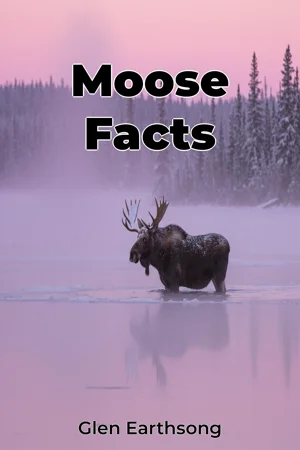
"Moose Facts" offers an in-depth exploration into the lives of moose, focusing on their remarkable adaptations and ecological significance. Delving into the biology, behavior, and habitat of these iconic creatures, the book highlights their resilience in challenging environments. One intriguing aspect covered is how moose have adapted to survive harsh winters, including their specialized digestive systems for low-quality forage. Another is their surprising affinity for aquatic environments, showcasing their diving abilities and use of aquatic plants as a food source. The book examines the physiological implications of the moose's massive size, discussing thermoregulation, locomotion, and nutritional requirements. It integrates diverse data sources, such as telemetry studies and physiological measurements, to provide a comprehensive understanding of moose biology and ecology. The approach is informative yet accessible, appealing to wildlife enthusiasts, biology students, and conservation professionals alike. The book progresses thematically, beginning with an introduction to moose taxonomy and physical characteristics. It then explores winter survival, the implications of their size and physiology, and their aquatic adaptations. By connecting ecology, zoology, and climate science, "Moose Facts" underscores the importance of conservation efforts to protect these impressive animals and their habitats.
Book Details
ISBN
9788233970536
Publisher
Publifye AS
Your Licenses
You don't own any licenses for this book
Purchase a license below to unlock this book and download the EPUB.
Purchase License
Select a tier to unlock this book
Need bulk licensing?
Contact us for enterprise agreements.