
About This Book
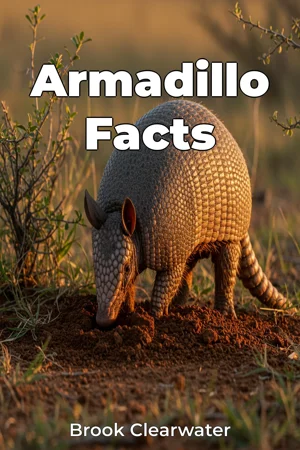
Have you ever wondered how an animal could be both heavily armored and an adept burrower, perfectly adapted to thrive in diverse environments? "Armadillo Facts" delves into the captivating world of these unique mammals, exploring their remarkable evolutionary history, biological intricacies, and ecological roles. This book provides a comprehensive overview of armadillos, focusing on their distinctive armored shell, their digging habits, and their multifaceted defense mechanisms. Each of these aspects contributes to the armadillo's survival and success in various habitats, making them a fascinating subject for scientific study and conservation efforts. This book aims to present a cohesive understanding of armadillos, arguing that their evolutionary adaptations showcase nature's ingenuity in balancing protection, mobility, and ecological function. We begin by establishing a foundation in mammalian biology and evolutionary history, ensuring that readers, regardless of their prior knowledge, can grasp the complexities of armadillo anatomy and behavior. The book is structured into three primary sections. First, we explore the armadillo’s most defining feature: its shell. This section details the shell's composition, development, and variations across different armadillo species. We examine the evolutionary pressures that led to this unique form of protection, drawing upon paleontological evidence and comparative anatomy. The second section focuses on the armadillo's digging prowess. We investigate the biomechanics of their digging, the ecological significance of their burrows, and the role these burrows play in thermoregulation and predator avoidance. This section also considers the impact of armadillo digging on soil ecology and plant distribution. The third section explores the array of defense mechanisms employed by armadillos, beyond their shells. We examine their behavioral responses to threats, including their ability to jump, wedge themselves into tight spaces, and even play dead. Furthermore, we investigate their physiological defenses, such as their immune systems and their resistance to certain diseases. The arguments presented in "Armadillo Facts" are supported by a wealth of scientific evidence, including peer-reviewed research articles, field studies, and anatomical data. We draw upon data from diverse sources, including museum collections, ecological surveys, and experimental studies of armadillo behavior. We use comparative analyses to highlight the unique features of armadillos relative to other mammals. This book connects to several interdisciplinary fields. First, evolutionary biology provides the overarching framework for understanding the origins and adaptations of armadillos. Second, ecology informs our understanding of their interactions with their environment and other species. Third, veterinary medicine provides insights into the health, diseases, and conservation challenges facing armadillo populations. "Armadillo Facts" offers a unique perspective by integrating diverse lines of evidence to provide a holistic understanding of armadillos. It avoids anthropomorphism and sensationalism, maintaining a focus on factual accuracy and scientific rigor. The tone is informative and accessible, designed to engage both students and general readers with an interest in natural history. The target audience includes students of biology, zoology, and ecology, as well as nature enthusiasts, conservationists, and anyone curious about the natural world. The book is valuable to them because it consolidates current scientific knowledge about armadillos into a single, accessible volume. This book adheres to the conventions of non-fiction science writing, emphasizing clarity, accuracy, and objectivity. The scope of this book is limited to the biological and ecological aspects of armadillos. While cultural or economic impacts involving armadillos are acknowledged, the book focuses on the animals themselves. The information in "Armadillo Facts" has several real-world applications. It can inform conservation strategies aimed at protecting armadillo populations and their habitats. It can also guide wildlife management practices designed to mitigate conflicts between humans and armadillos. There are ongoing debates regarding the role of armadillos in the transmission of certain diseases, such as leprosy. This book addresses these controversies by presenting the available scientific evidence in a balanced and objective manner. It clarifies the risks and uncertainties associated with these issues, promoting informed decision-making.
Have you ever wondered how an animal could be both heavily armored and an adept burrower, perfectly adapted to thrive in diverse environments? "Armadillo Facts" delves into the captivating world of these unique mammals, exploring their remarkable evolutionary history, biological intricacies, and ecological roles. This book provides a comprehensive overview of armadillos, focusing on their distinctive armored shell, their digging habits, and their multifaceted defense mechanisms. Each of these aspects contributes to the armadillo's survival and success in various habitats, making them a fascinating subject for scientific study and conservation efforts. This book aims to present a cohesive understanding of armadillos, arguing that their evolutionary adaptations showcase nature's ingenuity in balancing protection, mobility, and ecological function. We begin by establishing a foundation in mammalian biology and evolutionary history, ensuring that readers, regardless of their prior knowledge, can grasp the complexities of armadillo anatomy and behavior. The book is structured into three primary sections. First, we explore the armadillo’s most defining feature: its shell. This section details the shell's composition, development, and variations across different armadillo species. We examine the evolutionary pressures that led to this unique form of protection, drawing upon paleontological evidence and comparative anatomy. The second section focuses on the armadillo's digging prowess. We investigate the biomechanics of their digging, the ecological significance of their burrows, and the role these burrows play in thermoregulation and predator avoidance. This section also considers the impact of armadillo digging on soil ecology and plant distribution. The third section explores the array of defense mechanisms employed by armadillos, beyond their shells. We examine their behavioral responses to threats, including their ability to jump, wedge themselves into tight spaces, and even play dead. Furthermore, we investigate their physiological defenses, such as their immune systems and their resistance to certain diseases. The arguments presented in "Armadillo Facts" are supported by a wealth of scientific evidence, including peer-reviewed research articles, field studies, and anatomical data. We draw upon data from diverse sources, including museum collections, ecological surveys, and experimental studies of armadillo behavior. We use comparative analyses to highlight the unique features of armadillos relative to other mammals. This book connects to several interdisciplinary fields. First, evolutionary biology provides the overarching framework for understanding the origins and adaptations of armadillos. Second, ecology informs our understanding of their interactions with their environment and other species. Third, veterinary medicine provides insights into the health, diseases, and conservation challenges facing armadillo populations. "Armadillo Facts" offers a unique perspective by integrating diverse lines of evidence to provide a holistic understanding of armadillos. It avoids anthropomorphism and sensationalism, maintaining a focus on factual accuracy and scientific rigor. The tone is informative and accessible, designed to engage both students and general readers with an interest in natural history. The target audience includes students of biology, zoology, and ecology, as well as nature enthusiasts, conservationists, and anyone curious about the natural world. The book is valuable to them because it consolidates current scientific knowledge about armadillos into a single, accessible volume. This book adheres to the conventions of non-fiction science writing, emphasizing clarity, accuracy, and objectivity. The scope of this book is limited to the biological and ecological aspects of armadillos. While cultural or economic impacts involving armadillos are acknowledged, the book focuses on the animals themselves. The information in "Armadillo Facts" has several real-world applications. It can inform conservation strategies aimed at protecting armadillo populations and their habitats. It can also guide wildlife management practices designed to mitigate conflicts between humans and armadillos. There are ongoing debates regarding the role of armadillos in the transmission of certain diseases, such as leprosy. This book addresses these controversies by presenting the available scientific evidence in a balanced and objective manner. It clarifies the risks and uncertainties associated with these issues, promoting informed decision-making.
"Armadillo Facts" explores the intriguing world of armadillos, those armored mammals known for their unique evolutionary adaptations and ecological roles. The book delves into the marvels of their armored shell, a protective feature developed over millennia to defend against predators. It also examines their remarkable digging abilities, essential for creating burrows that serve as shelter, thermoregulatory havens, and safe spaces for raising young. These adaptations contribute significantly to their survival across diverse habitats. The book progresses systematically, first dissecting the armadillo’s shell composition and evolution. Next, it investigates the biomechanics and ecological importance of their burrowing behavior, including its impact on soil ecology. Finally, it explores various defense mechanisms, such as their surprising agility and behavioral responses to threats. This approach provides a comprehensive understanding of armadillos, supported by scientific evidence and comparative analyses, making it a valuable resource for students, researchers, and anyone fascinated by nature and wildlife.
Book Details
ISBN
9788233970512
Publisher
Publifye AS
Your Licenses
You don't own any licenses for this book
Purchase a license below to unlock this book and download the EPUB.
Purchase License
Select a tier to unlock this book
Need bulk licensing?
Contact us for enterprise agreements.