
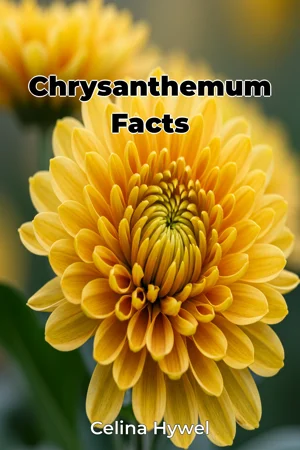
About This Book
Have you ever considered the profound stories hidden within the delicate petals of a chrysanthemum? "Chrysanthemum Facts" delves into the multifaceted world of this iconic flower, exploring its rich symbolism, significant cultural importance across diverse societies, and potential medicinal applications. This book is not merely a floral guide; it is an interdisciplinary examination of a plant that has woven its way into the fabric of human history and continues to hold promise for the future of medicine. The primary focus of this work centers on three key areas. First, we dissect the symbolism of chrysanthemums, tracing how different cultures have interpreted and assigned meaning to this flower, from emblems of royalty and longevity to symbols of mourning and remembrance. Second, we explore the cultural importance of chrysanthemums, investigating their presence in art, literature, festivals, and traditions worldwide, with an emphasis on their roles in East Asian cultures. Finally, we examine the emerging field of chrysanthemum-based medicinal applications, evaluating the scientific evidence supporting their use in treating various ailments. Understanding the chrysanthemum requires a basic familiarity with botany and plant taxonomy principles. We provide a concise overview of the flower's biological classification, morphology, and genetic diversity. We also address the historical context of its cultivation and subsequent spread across the globe from ancient cultivation in China. The central argument presented in "Chrysanthemum Facts" is that the chrysanthemum represents a nexus of human ingenuity, cultural expression, and scientific potential. Its story is a testament to our enduring fascination with the natural world and our ongoing quest to unlock its secrets for the benefit of humanity. The book follows a logical and well-structured progression. It begins with an introduction to the chrysanthemum family, its botanical characteristics, and its global distribution. Next, we delve into its symbolic meanings across different cultures and historical periods, drawing upon examples from art, literature, and religious practices. The subsequent section focuses on the plant's cultural significance, demonstrating its role in festivals, ceremonies, and everyday life, particularly in East Asian and European cultures. We then transition to a detailed examination of the medicinal properties attributed to chrysanthemums, reviewing both traditional uses and contemporary scientific research. The book culminates in a discussion of the plant's potential for future applications in medicine and horticulture, emphasizing the need for sustainable cultivation and responsible utilization. The evidence presented throughout this book is drawn from a variety of sources, including botanical studies, ethnobotanical surveys, historical records, and scientific research articles. We analyze and synthesize data from diverse fields to provide a comprehensive and evidence-based account of the chrysanthemum. We showcase the scientific methodology used for extracting and studying the relevant chemical compounds. "Chrysanthemum Facts" also makes connections to other fields of study. Its exploration of symbolism connects to art history, literature, and religious studies. Its discussion of cultural importance connects to anthropology and sociology. Finally, its examination of medicinal applications connects to pharmacology and medicine. The innovative viewpoint of this book lies in its comprehensive and interdisciplinary scope, bringing together diverse strands of knowledge to offer a holistic understanding of the chrysanthemum. The tone of "Chrysanthemum Facts" is informative and accessible, aiming to engage both general readers and specialists alike. The writing style is clear, concise, and objective, avoiding jargon and technical terms whenever possible. This book is aimed at a broad audience, including gardeners, botany enthusiasts, cultural historians, medical researchers, and anyone interested in learning more about the fascinating world of plants. It is particularly relevant to those seeking evidence-based information on the medicinal properties of chrysanthemums and their potential applications. As a work within the science, life sciences, biology, and medical general categories, "Chrysanthemum Facts" is committed to accuracy, objectivity, and scientific rigor. It adheres to the conventions of non-fiction writing, including providing clear citations for all sources. The scope of this book is limited to the genus *Chrysanthemum*, focusing primarily on the species and cultivars that have been most widely cultivated and studied. While we acknowledge the existence of other related genera, we do not delve into them in detail. The information presented in this book has numerous real-world applications. Gardeners can use it to select and cultivate chrysanthemum varieties that are best suited to their needs and preferences. Cultural historians can use it to understand the symbolic meanings and cultural significance of chrysanthemums in different societies. Medical researchers can use it as a starting point for investigating the potential medicinal properties of chrysanthemums. Finally, while scientific studies suggest that chrysanthemums possess medicinal properties, debates continue within the scientific community regarding the efficacy and safety of these applications. "Chrysanthemum Facts" addresses these controversies by presenting a balanced and evidence-based overview of the current state of knowledge.
Have you ever considered the profound stories hidden within the delicate petals of a chrysanthemum? "Chrysanthemum Facts" delves into the multifaceted world of this iconic flower, exploring its rich symbolism, significant cultural importance across diverse societies, and potential medicinal applications. This book is not merely a floral guide; it is an interdisciplinary examination of a plant that has woven its way into the fabric of human history and continues to hold promise for the future of medicine. The primary focus of this work centers on three key areas. First, we dissect the symbolism of chrysanthemums, tracing how different cultures have interpreted and assigned meaning to this flower, from emblems of royalty and longevity to symbols of mourning and remembrance. Second, we explore the cultural importance of chrysanthemums, investigating their presence in art, literature, festivals, and traditions worldwide, with an emphasis on their roles in East Asian cultures. Finally, we examine the emerging field of chrysanthemum-based medicinal applications, evaluating the scientific evidence supporting their use in treating various ailments. Understanding the chrysanthemum requires a basic familiarity with botany and plant taxonomy principles. We provide a concise overview of the flower's biological classification, morphology, and genetic diversity. We also address the historical context of its cultivation and subsequent spread across the globe from ancient cultivation in China. The central argument presented in "Chrysanthemum Facts" is that the chrysanthemum represents a nexus of human ingenuity, cultural expression, and scientific potential. Its story is a testament to our enduring fascination with the natural world and our ongoing quest to unlock its secrets for the benefit of humanity. The book follows a logical and well-structured progression. It begins with an introduction to the chrysanthemum family, its botanical characteristics, and its global distribution. Next, we delve into its symbolic meanings across different cultures and historical periods, drawing upon examples from art, literature, and religious practices. The subsequent section focuses on the plant's cultural significance, demonstrating its role in festivals, ceremonies, and everyday life, particularly in East Asian and European cultures. We then transition to a detailed examination of the medicinal properties attributed to chrysanthemums, reviewing both traditional uses and contemporary scientific research. The book culminates in a discussion of the plant's potential for future applications in medicine and horticulture, emphasizing the need for sustainable cultivation and responsible utilization. The evidence presented throughout this book is drawn from a variety of sources, including botanical studies, ethnobotanical surveys, historical records, and scientific research articles. We analyze and synthesize data from diverse fields to provide a comprehensive and evidence-based account of the chrysanthemum. We showcase the scientific methodology used for extracting and studying the relevant chemical compounds. "Chrysanthemum Facts" also makes connections to other fields of study. Its exploration of symbolism connects to art history, literature, and religious studies. Its discussion of cultural importance connects to anthropology and sociology. Finally, its examination of medicinal applications connects to pharmacology and medicine. The innovative viewpoint of this book lies in its comprehensive and interdisciplinary scope, bringing together diverse strands of knowledge to offer a holistic understanding of the chrysanthemum. The tone of "Chrysanthemum Facts" is informative and accessible, aiming to engage both general readers and specialists alike. The writing style is clear, concise, and objective, avoiding jargon and technical terms whenever possible. This book is aimed at a broad audience, including gardeners, botany enthusiasts, cultural historians, medical researchers, and anyone interested in learning more about the fascinating world of plants. It is particularly relevant to those seeking evidence-based information on the medicinal properties of chrysanthemums and their potential applications. As a work within the science, life sciences, biology, and medical general categories, "Chrysanthemum Facts" is committed to accuracy, objectivity, and scientific rigor. It adheres to the conventions of non-fiction writing, including providing clear citations for all sources. The scope of this book is limited to the genus *Chrysanthemum*, focusing primarily on the species and cultivars that have been most widely cultivated and studied. While we acknowledge the existence of other related genera, we do not delve into them in detail. The information presented in this book has numerous real-world applications. Gardeners can use it to select and cultivate chrysanthemum varieties that are best suited to their needs and preferences. Cultural historians can use it to understand the symbolic meanings and cultural significance of chrysanthemums in different societies. Medical researchers can use it as a starting point for investigating the potential medicinal properties of chrysanthemums. Finally, while scientific studies suggest that chrysanthemums possess medicinal properties, debates continue within the scientific community regarding the efficacy and safety of these applications. "Chrysanthemum Facts" addresses these controversies by presenting a balanced and evidence-based overview of the current state of knowledge.
"Chrysanthemum Facts" explores the captivating story of the chrysanthemum, revealing its significance beyond a simple flower. This interdisciplinary approach examines its rich symbolism, cultural importance, and potential medicinal applications. Did you know that in some cultures, chrysanthemums represent longevity, while in others, they symbolize grief? Or that preliminary research suggests they may hold compounds with medicinal properties? This book uncovers these fascinating aspects, making it valuable for anyone interested in Science, Life Sciences, Biology, or Medical General topics. The book begins with an introduction to the flower's botanical characteristics and global distribution, then progresses to its cultural and symbolic meanings across various societies, including its prominent role in East Asian traditions. The book details the medicinal properties attributed to Chrysanthemums, reviewing traditional uses and modern scientific research. Finally, the book presents information in an accessible style, drawing from botanical studies, historical records, and scientific research to provide a complete picture of this remarkable plant. Whether you're a gardener, cultural historian, or medical researcher, "Chrysanthemum Facts" offers a journey into the world of the chrysanthemum.
Book Details
ISBN
9788233970420
Publisher
Publifye AS
Your Licenses
You don't own any licenses for this book
Purchase a license below to unlock this book and download the EPUB.
Purchase License
Select a tier to unlock this book
Need bulk licensing?
Contact us for enterprise agreements.