
About This Book
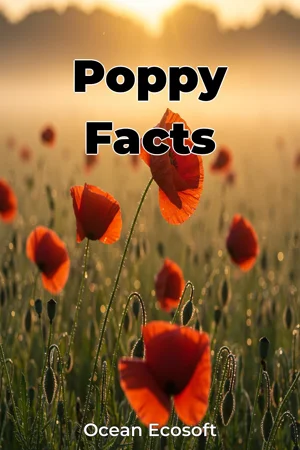
Have you ever wondered about the rich tapestry of history, science, and symbolism woven into the delicate petals of the poppy? "Poppy Facts" delves into this multifaceted flower, exploring its profound connection to remembrance, its valuable medicinal properties, and the science behind its diverse and vibrant colors. These aspects are relevant because they reveal the poppy's significance in human culture, health, and our understanding of the natural world. This book provides a comprehensive examination of the poppy, bridging historical narratives with contemporary scientific understanding. It unveils not only the poppy's storied past but also its continuing relevance in modern medicine and botanical research. Understanding the poppy requires knowledge across multiple domains, including botany, pharmacology, history, and cultural studies. "Poppy Facts" aims to coalesce these diverse areas of expertise into a single, accessible volume. The central argument of "Poppy Facts" is that this seemingly simple flower represents a complex intersection of human history, scientific advancement, and natural beauty. By exploring the poppy’s multifaceted nature, we gain insights into humanity's relationship with the natural world and our ongoing quest to understand and utilize its potential. The book is structured to guide the reader through a logical progression of understanding. First, we introduce the poppy family and its diverse species, highlighting key botanical characteristics. Second, we dedicate sections to the poppy's historical role as a symbol of remembrance, tracing its origins to the battlefields of World War I and its subsequent adoption as a global emblem of commemoration. This includes an analysis of the cultural and societal factors that cemented this association. Third, we investigate the poppy’s medicinal applications, examining the chemical compounds found within the plant and their impact on pain management and other therapeutic uses. This section provides a detailed overview of the scientific research supporting these applications, while also considering the associated risks and ethical implications. Finally, the book concludes with an examination of the genetic and environmental factors that determine the poppy's wide array of colors, offering insights into plant biology and adaptation. The evidence presented in "Poppy Facts" is drawn from diverse sources, including historical archives, botanical surveys, pharmacological studies, and genetic research. We reference primary source accounts, peer-reviewed scientific articles, and established botanical texts to support our claims. The book also incorporates original data analysis based on publicly available databases, providing a unique contribution to the existing body of knowledge. "Poppy Facts" inherently connects to various interdisciplinary fields. Its exploration of the poppy as a symbol of remembrance ties it to history and sociology, analyzing the ways in which societies construct and maintain collective memories. Its focus on medicinal uses links it to pharmacology and medicine, examining the chemical properties of the plant and their therapeutic applications. Furthermore, its investigation into the genetic basis of flower color connects it to genetics and evolutionary biology, shedding light on the mechanisms of adaptation and diversification in plant species. This book offers a unique perspective by integrating historical narratives with contemporary scientific research, providing a holistic understanding of the poppy. It is written in a clear and accessible style, suitable for both academic and general audiences interested in botany, history, and science. The target audience for "Poppy Facts" includes students of botany, history, and medicine, as well as general readers with an interest in natural history and cultural symbolism. The book offers valuable insights for anyone seeking a deeper understanding of this iconic flower. As a non-fiction work, "Poppy Facts" adheres to rigorous standards of accuracy and objectivity. All claims are supported by evidence, and sources are clearly cited. The book aims to present a balanced and nuanced perspective on the poppy, acknowledging its historical significance, scientific value, and potential risks. The scope of "Poppy Facts" is intentionally limited to the botanical, historical, and medicinal aspects of the poppy. While other areas, such as the poppy's role in art and literature, are acknowledged, they are not the primary focus of this book. The information presented in "Poppy Facts" has real-world applications in fields such as medicine, botany, and historical preservation. Understanding the poppy's medicinal properties can inform drug development and pain management strategies. Knowledge of its genetics can contribute to plant breeding and conservation efforts. Its historical significance can enhance our understanding of cultural memory and social identity. The book also addresses ongoing debates surrounding the cultivation and use of poppies, particularly concerning the production of opiates and the potential for addiction. It presents different perspectives on these issues, encouraging readers to critically evaluate the ethical and social implications of poppy cultivation and use.
Have you ever wondered about the rich tapestry of history, science, and symbolism woven into the delicate petals of the poppy? "Poppy Facts" delves into this multifaceted flower, exploring its profound connection to remembrance, its valuable medicinal properties, and the science behind its diverse and vibrant colors. These aspects are relevant because they reveal the poppy's significance in human culture, health, and our understanding of the natural world. This book provides a comprehensive examination of the poppy, bridging historical narratives with contemporary scientific understanding. It unveils not only the poppy's storied past but also its continuing relevance in modern medicine and botanical research. Understanding the poppy requires knowledge across multiple domains, including botany, pharmacology, history, and cultural studies. "Poppy Facts" aims to coalesce these diverse areas of expertise into a single, accessible volume. The central argument of "Poppy Facts" is that this seemingly simple flower represents a complex intersection of human history, scientific advancement, and natural beauty. By exploring the poppy’s multifaceted nature, we gain insights into humanity's relationship with the natural world and our ongoing quest to understand and utilize its potential. The book is structured to guide the reader through a logical progression of understanding. First, we introduce the poppy family and its diverse species, highlighting key botanical characteristics. Second, we dedicate sections to the poppy's historical role as a symbol of remembrance, tracing its origins to the battlefields of World War I and its subsequent adoption as a global emblem of commemoration. This includes an analysis of the cultural and societal factors that cemented this association. Third, we investigate the poppy’s medicinal applications, examining the chemical compounds found within the plant and their impact on pain management and other therapeutic uses. This section provides a detailed overview of the scientific research supporting these applications, while also considering the associated risks and ethical implications. Finally, the book concludes with an examination of the genetic and environmental factors that determine the poppy's wide array of colors, offering insights into plant biology and adaptation. The evidence presented in "Poppy Facts" is drawn from diverse sources, including historical archives, botanical surveys, pharmacological studies, and genetic research. We reference primary source accounts, peer-reviewed scientific articles, and established botanical texts to support our claims. The book also incorporates original data analysis based on publicly available databases, providing a unique contribution to the existing body of knowledge. "Poppy Facts" inherently connects to various interdisciplinary fields. Its exploration of the poppy as a symbol of remembrance ties it to history and sociology, analyzing the ways in which societies construct and maintain collective memories. Its focus on medicinal uses links it to pharmacology and medicine, examining the chemical properties of the plant and their therapeutic applications. Furthermore, its investigation into the genetic basis of flower color connects it to genetics and evolutionary biology, shedding light on the mechanisms of adaptation and diversification in plant species. This book offers a unique perspective by integrating historical narratives with contemporary scientific research, providing a holistic understanding of the poppy. It is written in a clear and accessible style, suitable for both academic and general audiences interested in botany, history, and science. The target audience for "Poppy Facts" includes students of botany, history, and medicine, as well as general readers with an interest in natural history and cultural symbolism. The book offers valuable insights for anyone seeking a deeper understanding of this iconic flower. As a non-fiction work, "Poppy Facts" adheres to rigorous standards of accuracy and objectivity. All claims are supported by evidence, and sources are clearly cited. The book aims to present a balanced and nuanced perspective on the poppy, acknowledging its historical significance, scientific value, and potential risks. The scope of "Poppy Facts" is intentionally limited to the botanical, historical, and medicinal aspects of the poppy. While other areas, such as the poppy's role in art and literature, are acknowledged, they are not the primary focus of this book. The information presented in "Poppy Facts" has real-world applications in fields such as medicine, botany, and historical preservation. Understanding the poppy's medicinal properties can inform drug development and pain management strategies. Knowledge of its genetics can contribute to plant breeding and conservation efforts. Its historical significance can enhance our understanding of cultural memory and social identity. The book also addresses ongoing debates surrounding the cultivation and use of poppies, particularly concerning the production of opiates and the potential for addiction. It presents different perspectives on these issues, encouraging readers to critically evaluate the ethical and social implications of poppy cultivation and use.
"Poppy Facts" explores the surprisingly rich history, cultural symbolism, and medicinal properties of the poppy. From its poignant role as a symbol of remembrance, particularly connected to World War I, to its importance in pain management due to compounds like opium, this flower's story intertwines with human history and scientific advancement. The book delves into the science behind the poppy's vibrant colors and unique adaptations, revealing insights into plant biology and genetics. This comprehensive examination bridges historical narratives with contemporary botanical research, offering a holistic understanding of the poppy. "Poppy Facts" progresses logically, starting with the poppy family's botanical characteristics, then exploring its historical role, medicinal applications, and finally, the genetic factors influencing its diverse colors. The book uniquely integrates these diverse areas, making it valuable for students and general readers interested in botany, history, and the intersection of science and nature.
Book Details
ISBN
9788233970390
Publisher
Publifye AS
Your Licenses
You don't own any licenses for this book
Purchase a license below to unlock this book and download the EPUB.
Purchase License
Select a tier to unlock this book
Need bulk licensing?
Contact us for enterprise agreements.