
About This Book
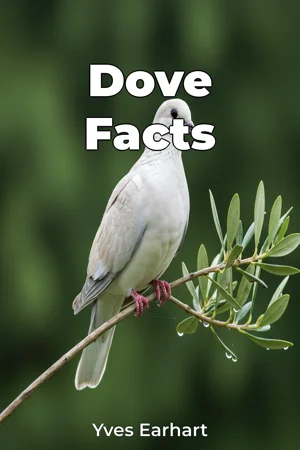
Why have doves captured the human imagination for millennia, symbolizing peace, hope, and even divine connection across diverse cultures? "Dove Facts" embarks on a comprehensive exploration of these birds, delving into their biology, behavior, and multifaceted roles in human history and symbolism. This book aims to provide a clear and scientifically grounded understanding of doves, moving beyond simplistic notions to reveal the intricate details of their lives and their impact on our world. We begin by examining the biological underpinnings of doves, focusing on their gentle nature and remarkable homing capabilities. The first section explores the physiological adaptations that contribute to their calm temperament, including their unique vocalizations and social behaviors. We'll dissect the science behind their soft cooing, revealing how these sounds facilitate communication and maintain social bonds within flocks. Furthermore, we will analyze the neurological structures involved in their homing abilities, exploring the complex interplay of magnetic reception, celestial navigation, and olfactory cues that allow these birds to navigate across vast distances with incredible precision. The second part of the book delves into the historical and cultural significance of doves. From ancient religious texts to modern-day peace movements, doves have consistently represented ideals of tranquility and reconciliation. We will trace the evolution of this symbolism, examining how different cultures have interpreted the dove's image and incorporated it into their art, literature, and spiritual practices. Specific examples include the dove's role in Christian iconography as a symbol of the Holy Spirit, as well as its use in secular contexts to advocate for peace and non-violence. This section will also address how human interactions, such as domestication for food and sport, have shaped dove populations and their behaviors. The third and final section focuses on the ecological role of doves and the challenges they face in a rapidly changing world. We will explore their contributions to seed dispersal and nutrient cycling within ecosystems. It also addresses the impact of habitat loss, climate change, and hunting on dove populations, offering insights into conservation efforts and strategies for promoting their long-term survival. The spread of invasive species and diseases will also be explored as potential threats to dove populations worldwide. Throughout "Dove Facts," we will present meticulous research gathered from scientific studies, field observations, and historical records. Data from ornithological databases, tracking studies, and comparative analyses will be used to support our claims, offering readers a rigorous and evidence-based account of dove biology and behavior. The book will also feature detailed illustrations, photographs, and maps to enhance understanding and engagement. "Dove Facts" connects to several interdisciplinary fields, including ornithology, cultural anthropology, and environmental science. By integrating perspectives from these disciplines, the book offers a holistic understanding of doves as both biological organisms and cultural symbols. This book is written for bird enthusiasts, students of biology and environmental science, and anyone interested in learning more about the natural world. It offers a comprehensive, accessible, and scientifically sound introduction to the fascinating world of doves. While focusing on the most relevant aspects of dove biology and their role in human culture and nature, the book acknowledges that there are always gaps in our understanding of the natural world. Further questions and study are always needed and welcomed. The book's practical applications extend to informing conservation efforts, promoting responsible birdwatching practices, and fostering a deeper appreciation for the natural world.
Why have doves captured the human imagination for millennia, symbolizing peace, hope, and even divine connection across diverse cultures? "Dove Facts" embarks on a comprehensive exploration of these birds, delving into their biology, behavior, and multifaceted roles in human history and symbolism. This book aims to provide a clear and scientifically grounded understanding of doves, moving beyond simplistic notions to reveal the intricate details of their lives and their impact on our world. We begin by examining the biological underpinnings of doves, focusing on their gentle nature and remarkable homing capabilities. The first section explores the physiological adaptations that contribute to their calm temperament, including their unique vocalizations and social behaviors. We'll dissect the science behind their soft cooing, revealing how these sounds facilitate communication and maintain social bonds within flocks. Furthermore, we will analyze the neurological structures involved in their homing abilities, exploring the complex interplay of magnetic reception, celestial navigation, and olfactory cues that allow these birds to navigate across vast distances with incredible precision. The second part of the book delves into the historical and cultural significance of doves. From ancient religious texts to modern-day peace movements, doves have consistently represented ideals of tranquility and reconciliation. We will trace the evolution of this symbolism, examining how different cultures have interpreted the dove's image and incorporated it into their art, literature, and spiritual practices. Specific examples include the dove's role in Christian iconography as a symbol of the Holy Spirit, as well as its use in secular contexts to advocate for peace and non-violence. This section will also address how human interactions, such as domestication for food and sport, have shaped dove populations and their behaviors. The third and final section focuses on the ecological role of doves and the challenges they face in a rapidly changing world. We will explore their contributions to seed dispersal and nutrient cycling within ecosystems. It also addresses the impact of habitat loss, climate change, and hunting on dove populations, offering insights into conservation efforts and strategies for promoting their long-term survival. The spread of invasive species and diseases will also be explored as potential threats to dove populations worldwide. Throughout "Dove Facts," we will present meticulous research gathered from scientific studies, field observations, and historical records. Data from ornithological databases, tracking studies, and comparative analyses will be used to support our claims, offering readers a rigorous and evidence-based account of dove biology and behavior. The book will also feature detailed illustrations, photographs, and maps to enhance understanding and engagement. "Dove Facts" connects to several interdisciplinary fields, including ornithology, cultural anthropology, and environmental science. By integrating perspectives from these disciplines, the book offers a holistic understanding of doves as both biological organisms and cultural symbols. This book is written for bird enthusiasts, students of biology and environmental science, and anyone interested in learning more about the natural world. It offers a comprehensive, accessible, and scientifically sound introduction to the fascinating world of doves. While focusing on the most relevant aspects of dove biology and their role in human culture and nature, the book acknowledges that there are always gaps in our understanding of the natural world. Further questions and study are always needed and welcomed. The book's practical applications extend to informing conservation efforts, promoting responsible birdwatching practices, and fostering a deeper appreciation for the natural world.
"Dove Facts" offers a comprehensive exploration into the world of doves, examining their biology, cultural significance, and ecological roles. This book delves into why doves have been perceived as symbols of peace and hope across cultures for millennia. Intriguingly, doves possess remarkable homing abilities, navigating vast distances using a combination of magnetic reception, celestial navigation, and olfactory cues. The book also highlights how their gentle nature is supported by physiological adaptations, including unique vocalizations that strengthen social bonds within flocks. The book progresses from exploring the biology of doves to their historical and cultural importance, and finally to their ecological role and conservation. Specific examples include the dove's representation of the Holy Spirit in Christian iconography, and its use in secular contexts to advocate for peace. The book emphasizes the importance of seed dispersal and nutrient cycling by doves in various ecosystems, while also addressing the threats they face due to habitat loss and climate change. "Dove Facts" integrates insights from ornithology, cultural anthropology, and environmental science, making it valuable for bird enthusiasts, students, and anyone interested in nature and life sciences.
Book Details
ISBN
9788233970376
Publisher
Publifye AS
Your Licenses
You don't own any licenses for this book
Purchase a license below to unlock this book and download the EPUB.
Purchase License
Select a tier to unlock this book
Need bulk licensing?
Contact us for enterprise agreements.