
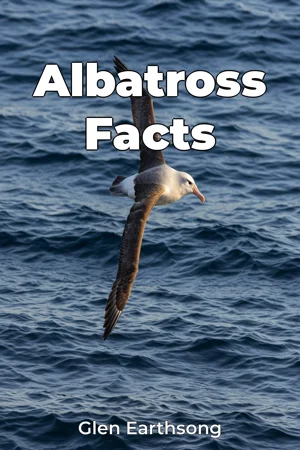
About This Book
Have you ever wondered how a bird can stay aloft for months at a time, crossing vast oceans without ever touching land? This book, "Albatross Facts," delves into the remarkable world of albatrosses, exploring their unique adaptations for sustained flight and their impressive navigational capabilities which allow them to thrive in some of the most remote marine environments on Earth. The albatross is not just a bird; it’s a master of the skies and seas whose very existence challenges our understanding of avian endurance and orientation. This book explores three core themes: the mechanics and energetics of albatross flight, the sophisticated methods they use for ocean navigation, and the conservation challenges these magnificent birds face in an increasingly human-dominated world. Understanding these elements is crucial because albatrosses serve as indicators of ocean health, their populations often reflecting the broader ecological stresses impacting marine ecosystems. We begin by examining the albatross’s anatomy and physiology to explain how they achieve such efficient flight. This will include a discussion of their uniquely adapted wings—long and narrow for dynamic soaring—and their ability to exploit wind gradients near the ocean's surface. We will explore in detail the 'dynamic soaring' technique these birds use, allowing them to gain energy from the wind itself and greatly reduce the need for flapping flight, which saves valuable energy during long journeys. The physical adaptations that allow them to remain aloft for extended periods will be analyzed, including bone structure, feather arrangement, and metabolic processes. Next, we will investigate the mysteries of albatross navigation. How do they find their way across thousands of miles of open ocean to specific breeding colonies or feeding grounds? We will present current research on their use of magnetic fields, celestial cues, and olfactory landscapes to navigate. We'll consider how albatrosses might use mental maps of the ocean, incorporating learned information and environmental signals to guide their movements. This section will draw on recent tracking data from GPS loggers and other technologies that have revolutionized our understanding of albatross movements. The book addresses complex scientific data in an accessible manner, balancing detailed explanations with illustrative diagrams and maps. Extensive research and observation will be presented from various scientific studies and conservation efforts. Analyzing decades of tracking data and ecological studies, "Albatross Facts" offers evidence of the challenges these birds face, connecting their plight to broader global issues such as plastic pollution, overfishing, and climate change. The approach is interdisciplinary, connecting avian biology with oceanography, meteorology, and conservation science to provide a holistic view of albatross life. Moreover, we draw from the fields of engineering and robotics, exploring how albatross flight inspires new designs in aircraft and autonomous vehicles. Conservation strategies for protecting albatross populations are also discussed, aligning with ecological and political frameworks. The central argument of "Albatross Facts" is that understanding albatross adaptations and behaviors is essential not only for appreciating the complexity of life on Earth but also for informing effective conservation strategies in the face of global environmental change. Written in a clear, informative style, "Albatross Facts" aims to engage a broad audience, including nature enthusiasts, students of biology, and anyone interested in the wonders of the natural world. While offering depth suitable for academic readers, the text avoids jargon, making it accessible to those without a scientific background. The material could be applied in conservation efforts, educational programs, and even inspire technological advancements in fields like drone design and renewable energy. While the book focuses primarily on the wandering albatross, it also touches upon other albatross species to illustrate the diversity within this group and to highlight common and species-specific conservation challenges. The scope is deliberately focused on factual information and scientific analysis, with limited personal anecdotes or narrative elements, ensuring the book remains a reliable source of information. The book does not shy away from sensitive topics such as the impact of fisheries bycatch on albatross populations, and addresses controversies surrounding different conservation methods.
Have you ever wondered how a bird can stay aloft for months at a time, crossing vast oceans without ever touching land? This book, "Albatross Facts," delves into the remarkable world of albatrosses, exploring their unique adaptations for sustained flight and their impressive navigational capabilities which allow them to thrive in some of the most remote marine environments on Earth. The albatross is not just a bird; it’s a master of the skies and seas whose very existence challenges our understanding of avian endurance and orientation. This book explores three core themes: the mechanics and energetics of albatross flight, the sophisticated methods they use for ocean navigation, and the conservation challenges these magnificent birds face in an increasingly human-dominated world. Understanding these elements is crucial because albatrosses serve as indicators of ocean health, their populations often reflecting the broader ecological stresses impacting marine ecosystems. We begin by examining the albatross’s anatomy and physiology to explain how they achieve such efficient flight. This will include a discussion of their uniquely adapted wings—long and narrow for dynamic soaring—and their ability to exploit wind gradients near the ocean's surface. We will explore in detail the 'dynamic soaring' technique these birds use, allowing them to gain energy from the wind itself and greatly reduce the need for flapping flight, which saves valuable energy during long journeys. The physical adaptations that allow them to remain aloft for extended periods will be analyzed, including bone structure, feather arrangement, and metabolic processes. Next, we will investigate the mysteries of albatross navigation. How do they find their way across thousands of miles of open ocean to specific breeding colonies or feeding grounds? We will present current research on their use of magnetic fields, celestial cues, and olfactory landscapes to navigate. We'll consider how albatrosses might use mental maps of the ocean, incorporating learned information and environmental signals to guide their movements. This section will draw on recent tracking data from GPS loggers and other technologies that have revolutionized our understanding of albatross movements. The book addresses complex scientific data in an accessible manner, balancing detailed explanations with illustrative diagrams and maps. Extensive research and observation will be presented from various scientific studies and conservation efforts. Analyzing decades of tracking data and ecological studies, "Albatross Facts" offers evidence of the challenges these birds face, connecting their plight to broader global issues such as plastic pollution, overfishing, and climate change. The approach is interdisciplinary, connecting avian biology with oceanography, meteorology, and conservation science to provide a holistic view of albatross life. Moreover, we draw from the fields of engineering and robotics, exploring how albatross flight inspires new designs in aircraft and autonomous vehicles. Conservation strategies for protecting albatross populations are also discussed, aligning with ecological and political frameworks. The central argument of "Albatross Facts" is that understanding albatross adaptations and behaviors is essential not only for appreciating the complexity of life on Earth but also for informing effective conservation strategies in the face of global environmental change. Written in a clear, informative style, "Albatross Facts" aims to engage a broad audience, including nature enthusiasts, students of biology, and anyone interested in the wonders of the natural world. While offering depth suitable for academic readers, the text avoids jargon, making it accessible to those without a scientific background. The material could be applied in conservation efforts, educational programs, and even inspire technological advancements in fields like drone design and renewable energy. While the book focuses primarily on the wandering albatross, it also touches upon other albatross species to illustrate the diversity within this group and to highlight common and species-specific conservation challenges. The scope is deliberately focused on factual information and scientific analysis, with limited personal anecdotes or narrative elements, ensuring the book remains a reliable source of information. The book does not shy away from sensitive topics such as the impact of fisheries bycatch on albatross populations, and addresses controversies surrounding different conservation methods.
Albatrosses, masters of the skies and seas, are the focus of "Albatross Facts," a book that explores the intricate lives of these seabirds. It examines how they achieve sustained flight across vast oceans and their remarkable navigational skills. These avian wonders use a technique called 'dynamic soaring,' exploiting wind gradients to minimize energy expenditure. Furthermore, albatross populations serve as critical indicators of ocean health, reflecting the impact of ecological stresses on marine ecosystems. The book progresses by first detailing the anatomy and physiology that enable efficient flight, followed by an investigation into their navigation methods, including the use of magnetic fields and celestial cues. It also addresses the conservation challenges these birds face due to issues like plastic pollution and overfishing, connecting their survival to broader global environmental concerns. The book presents complex scientific data in an accessible manner, making it a valuable resource for nature enthusiasts and students of biology alike.
Book Details
ISBN
9788233970369
Publisher
Publifye AS
Your Licenses
You don't own any licenses for this book
Purchase a license below to unlock this book and download the EPUB.
Purchase License
Select a tier to unlock this book
Need bulk licensing?
Contact us for enterprise agreements.