
About This Book
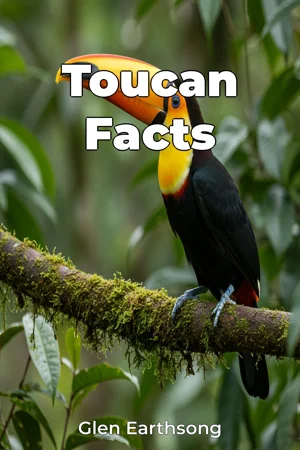
Have you ever wondered how a bird with such an enormous beak manages to thrive in the rainforest? "Toucan Facts" delves into the captivating world of these iconic birds, exploring the secrets behind their success. This book offers a comprehensive examination of toucans, focusing on their remarkable beaks, vibrant plumage, and ingenious survival strategies within the complex ecosystem of the rainforest. This exploration is crucial because toucans serve as key indicators of rainforest health. Understanding their biology and behavior provides valuable insights into the overall well-being of these vital ecosystems, highlighting the impact of environmental changes on their populations. Further, the toucan's unique adaptations offer a compelling case study in evolutionary biology, showcasing the power of natural selection in shaping species to fit their environments. "Toucan Facts" systematically uncovers the intricate details of toucan biology. The central argument is that the toucan's physical and behavioral traits have evolved in concert to optimize its survival and ecological role within the rainforest. The book emphasizes that the seemingly unwieldy beak is not a hindrance but a versatile tool essential for feeding, communication, and thermoregulation. The book is structured to provide a complete picture of the toucan, beginning with an introduction to the different toucan species and their geographical distribution. It then examines the anatomy and physiology of the beak, exploring its complex structure, lightweight composition, and diverse functions. The second major section concentrates on the toucan's plumage, analyzing the pigments responsible for their vivid colors and the role these colors play in camouflage, species recognition, and mate selection. Another section is dedicated to the survival tactics employed by toucans, detailing their feeding strategies, nesting behaviors, predator avoidance techniques, and social interactions. The book culminates with a discussion of the challenges facing toucans in the 21st century, including habitat loss, climate change, and the illegal pet trade, and offers potential conservation strategies to protect these birds and their rainforest homes. "Toucan Facts" draws upon a wide range of scientific literature, including ornithological studies, field observations, and anatomical research. The book features detailed illustrations and photographs, providing visual support for the scientific findings. Data from long-term monitoring programs of toucan populations are presented to illustrate population trends and the effectiveness of conservation efforts. This book bridges between biology, ecology, and conservation science. By examining the toucan's adaptations in the context of its rainforest environment, the book highlights the interconnectedness of species and ecosystems. The discussion of conservation challenges connects to broader issues of environmental policy and sustainable development. Furthermore, the exploration of toucan behavior has connections to ethology, offering insights into why these birds behave the way they do. "Toucan Facts" provides a unique perspective by integrating detailed scientific analysis with engaging storytelling. It steers clear of overly technical jargon, making the information accessible to a broad audience while maintaining scientific accuracy. The book offers an innovative approach to understanding the toucan, combining anatomical studies of the beak with insights into its ecological function, offering a more holistic understanding of this iconic species. Written in a clear and accessible style, "Toucan Facts" targets a broad audience, including nature enthusiasts, bird watchers, students of biology and ecology, and anyone interested in learning more about the natural world. It provides valuable information for those seeking a deeper understanding of toucans and the rainforest ecosystem. As a work of non-fiction within the fields of nature, science, life sciences, and biology, "Toucan Facts" adheres to the genre's conventions of accuracy, objectivity, and evidence-based reporting. While providing a comprehensive overview of toucan biology and behavior, the book intentionally limits its scope to factual information and scientific findings. It avoids speculative theories and anecdotal accounts, focusing instead on established knowledge. The information presented in "Toucan Facts" can be applied in various practical ways. Bird watchers can use the book to identify different toucan species and understand their behavior in the field. Conservationists can use the information to develop effective strategies for protecting toucans and their habitats. Students can draw upon the book's content for research projects and educational presentations. While the fundamental aspects of toucan biology are well-established, ongoing debates exist regarding the precise function of the beak in thermoregulation and the extent to which different toucan species compete for resources. "Toucan Facts" addresses these debates by presenting different perspectives and highlighting areas where further research is needed.
Have you ever wondered how a bird with such an enormous beak manages to thrive in the rainforest? "Toucan Facts" delves into the captivating world of these iconic birds, exploring the secrets behind their success. This book offers a comprehensive examination of toucans, focusing on their remarkable beaks, vibrant plumage, and ingenious survival strategies within the complex ecosystem of the rainforest. This exploration is crucial because toucans serve as key indicators of rainforest health. Understanding their biology and behavior provides valuable insights into the overall well-being of these vital ecosystems, highlighting the impact of environmental changes on their populations. Further, the toucan's unique adaptations offer a compelling case study in evolutionary biology, showcasing the power of natural selection in shaping species to fit their environments. "Toucan Facts" systematically uncovers the intricate details of toucan biology. The central argument is that the toucan's physical and behavioral traits have evolved in concert to optimize its survival and ecological role within the rainforest. The book emphasizes that the seemingly unwieldy beak is not a hindrance but a versatile tool essential for feeding, communication, and thermoregulation. The book is structured to provide a complete picture of the toucan, beginning with an introduction to the different toucan species and their geographical distribution. It then examines the anatomy and physiology of the beak, exploring its complex structure, lightweight composition, and diverse functions. The second major section concentrates on the toucan's plumage, analyzing the pigments responsible for their vivid colors and the role these colors play in camouflage, species recognition, and mate selection. Another section is dedicated to the survival tactics employed by toucans, detailing their feeding strategies, nesting behaviors, predator avoidance techniques, and social interactions. The book culminates with a discussion of the challenges facing toucans in the 21st century, including habitat loss, climate change, and the illegal pet trade, and offers potential conservation strategies to protect these birds and their rainforest homes. "Toucan Facts" draws upon a wide range of scientific literature, including ornithological studies, field observations, and anatomical research. The book features detailed illustrations and photographs, providing visual support for the scientific findings. Data from long-term monitoring programs of toucan populations are presented to illustrate population trends and the effectiveness of conservation efforts. This book bridges between biology, ecology, and conservation science. By examining the toucan's adaptations in the context of its rainforest environment, the book highlights the interconnectedness of species and ecosystems. The discussion of conservation challenges connects to broader issues of environmental policy and sustainable development. Furthermore, the exploration of toucan behavior has connections to ethology, offering insights into why these birds behave the way they do. "Toucan Facts" provides a unique perspective by integrating detailed scientific analysis with engaging storytelling. It steers clear of overly technical jargon, making the information accessible to a broad audience while maintaining scientific accuracy. The book offers an innovative approach to understanding the toucan, combining anatomical studies of the beak with insights into its ecological function, offering a more holistic understanding of this iconic species. Written in a clear and accessible style, "Toucan Facts" targets a broad audience, including nature enthusiasts, bird watchers, students of biology and ecology, and anyone interested in learning more about the natural world. It provides valuable information for those seeking a deeper understanding of toucans and the rainforest ecosystem. As a work of non-fiction within the fields of nature, science, life sciences, and biology, "Toucan Facts" adheres to the genre's conventions of accuracy, objectivity, and evidence-based reporting. While providing a comprehensive overview of toucan biology and behavior, the book intentionally limits its scope to factual information and scientific findings. It avoids speculative theories and anecdotal accounts, focusing instead on established knowledge. The information presented in "Toucan Facts" can be applied in various practical ways. Bird watchers can use the book to identify different toucan species and understand their behavior in the field. Conservationists can use the information to develop effective strategies for protecting toucans and their habitats. Students can draw upon the book's content for research projects and educational presentations. While the fundamental aspects of toucan biology are well-established, ongoing debates exist regarding the precise function of the beak in thermoregulation and the extent to which different toucan species compete for resources. "Toucan Facts" addresses these debates by presenting different perspectives and highlighting areas where further research is needed.
"Toucan Facts" explores the fascinating lives of these iconic rainforest birds, revealing the secrets behind their vibrant plumage and remarkable beaks. Toucans are key indicators of rainforest health, and understanding their biology offers valuable insights into these vital ecosystems. Did you know that their seemingly oversized beak is not a hindrance, but a versatile tool used for feeding, communication, and even thermoregulation? The book examines how these birds have evolved to thrive in their environment, making them a compelling case study in evolutionary biology. The book systematically uncovers the intricate details of toucan biology, starting with an introduction to the various species and their geographical distribution. It progresses to examining the anatomy and physiology of the beak and plumage. It also discusses their survival tactics, challenges they face, and potential conservation strategies. Through detailed illustrations and photographs, "Toucan Facts" bridges the gap between biology, ecology, and conservation science, making it an invaluable resource for nature enthusiasts, bird watchers, and students alike.
Book Details
ISBN
9788233970345
Publisher
Publifye AS
Your Licenses
You don't own any licenses for this book
Purchase a license below to unlock this book and download the EPUB.
Purchase License
Select a tier to unlock this book
Need bulk licensing?
Contact us for enterprise agreements.