
About This Book
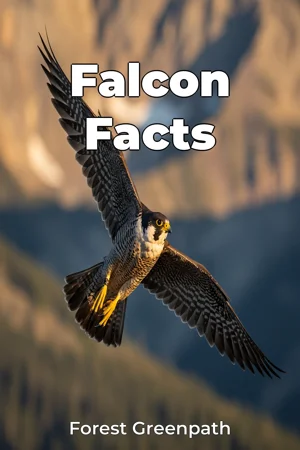
Imagine a creature capable of diving at speeds exceeding 200 miles per hour. This is the world of the falcon, a bird of prey whose speed, hunting prowess, and ecological importance are explored in "Falcon Facts." This book delves into the falcon's biology, behaviors, and the vital role it plays within various ecosystems. "Falcon Facts" focuses on three key topics: the biomechanics of the falcon's exceptional speed, the intricate hunting strategies employed by different falcon species, and the ecological impact of falcons as apex predators. Understanding these aspects is crucial, not only for appreciating these magnificent birds but also for gaining insights into broader ecological principles and the importance of conservation efforts. The information in this book enhances understanding of predator-prey relationships and the delicate balance within natural environments. Historically, falcons have held symbolic significance across various cultures, often representing power, nobility, and freedom. Scientifically, the study of falcons has contributed significantly to our understanding of avian physiology, aerodynamics, and predator-prey dynamics. This book requires no advanced scientific background, assuming only a general interest in nature and wildlife. The central argument of "Falcon Facts" is that the falcon's unique adaptations and behaviors make it a keystone species, vital to the health and stability of its ecosystems. Its presence or absence can indicate the overall well-being of an environment, making its conservation of paramount importance. The book unfolds in a structured manner. It begins by introducing the diverse species of falcons found worldwide, outlining their physical characteristics and habitats. It proceeds to explore the science behind their incredible speed, examining their skeletal structure, musculature, and respiratory systems. Next, the book analyzes various hunting techniques, from the Peregrine Falcon's stoop to the American Kestrel's hovering strategy, detailing the sensory adaptations that enable these methods. Finally, it investigates the falcon's role in controlling prey populations, maintaining biodiversity, and serving as an indicator species for environmental health. The conclusion discusses current conservation efforts and future challenges facing falcon populations globally. "Falcon Facts" will draw on extensive research, including ornithological studies, biomechanical analyses, and ecological surveys. It will present data from field observations, wind tunnel experiments, and population monitoring programs to support its claims. The book will also include detailed illustrations, photographs, and diagrams to enhance the reader's understanding of complex concepts. The study of falcons connects to several other fields, including biomechanics (understanding the physics of flight), ecology (examining predator-prey relationships and ecosystem dynamics), and conservation biology (developing strategies to protect endangered species). These interdisciplinary connections enrich the book's argument by providing a more holistic view of the falcon's role in the natural world. "Falcon Facts" adopts a comprehensive approach, integrating scientific rigor with accessible language to appeal to a broad audience. Its perspective is rooted in scientific observation and analysis, offering a data-driven exploration of the falcon's biology and ecology. This book is targeted towards bird enthusiasts, nature lovers, students of biology and ecology, and anyone interested in learning more about these fascinating creatures. It offers valuable insights into avian biology, ecological principles, and the importance of conservation. As a work of non-fiction, "Falcon Facts" adheres to the genre's conventions by presenting accurate, evidence-based information in a clear and organized manner. It avoids speculation and relies on verifiable data to support its claims. While the book covers a wide range of topics related to falcons, it is intentionally limited in scope, focusing primarily on the biological and ecological aspects of these birds. It does not delve into the cultural or historical significance of falcons in great detail. The information presented in "Falcon Facts" has practical applications for wildlife management, conservation planning, and environmental education. By understanding the falcon's role in ecosystems, readers can contribute to efforts to protect these birds and their habitats. While the core facts about falcon biology and behavior are well-established, there are ongoing debates regarding the best strategies for falcon conservation, particularly in the face of habitat loss, climate change, and human disturbance. The book will explore these ongoing challenges and present different perspectives on how to address them.
Imagine a creature capable of diving at speeds exceeding 200 miles per hour. This is the world of the falcon, a bird of prey whose speed, hunting prowess, and ecological importance are explored in "Falcon Facts." This book delves into the falcon's biology, behaviors, and the vital role it plays within various ecosystems. "Falcon Facts" focuses on three key topics: the biomechanics of the falcon's exceptional speed, the intricate hunting strategies employed by different falcon species, and the ecological impact of falcons as apex predators. Understanding these aspects is crucial, not only for appreciating these magnificent birds but also for gaining insights into broader ecological principles and the importance of conservation efforts. The information in this book enhances understanding of predator-prey relationships and the delicate balance within natural environments. Historically, falcons have held symbolic significance across various cultures, often representing power, nobility, and freedom. Scientifically, the study of falcons has contributed significantly to our understanding of avian physiology, aerodynamics, and predator-prey dynamics. This book requires no advanced scientific background, assuming only a general interest in nature and wildlife. The central argument of "Falcon Facts" is that the falcon's unique adaptations and behaviors make it a keystone species, vital to the health and stability of its ecosystems. Its presence or absence can indicate the overall well-being of an environment, making its conservation of paramount importance. The book unfolds in a structured manner. It begins by introducing the diverse species of falcons found worldwide, outlining their physical characteristics and habitats. It proceeds to explore the science behind their incredible speed, examining their skeletal structure, musculature, and respiratory systems. Next, the book analyzes various hunting techniques, from the Peregrine Falcon's stoop to the American Kestrel's hovering strategy, detailing the sensory adaptations that enable these methods. Finally, it investigates the falcon's role in controlling prey populations, maintaining biodiversity, and serving as an indicator species for environmental health. The conclusion discusses current conservation efforts and future challenges facing falcon populations globally. "Falcon Facts" will draw on extensive research, including ornithological studies, biomechanical analyses, and ecological surveys. It will present data from field observations, wind tunnel experiments, and population monitoring programs to support its claims. The book will also include detailed illustrations, photographs, and diagrams to enhance the reader's understanding of complex concepts. The study of falcons connects to several other fields, including biomechanics (understanding the physics of flight), ecology (examining predator-prey relationships and ecosystem dynamics), and conservation biology (developing strategies to protect endangered species). These interdisciplinary connections enrich the book's argument by providing a more holistic view of the falcon's role in the natural world. "Falcon Facts" adopts a comprehensive approach, integrating scientific rigor with accessible language to appeal to a broad audience. Its perspective is rooted in scientific observation and analysis, offering a data-driven exploration of the falcon's biology and ecology. This book is targeted towards bird enthusiasts, nature lovers, students of biology and ecology, and anyone interested in learning more about these fascinating creatures. It offers valuable insights into avian biology, ecological principles, and the importance of conservation. As a work of non-fiction, "Falcon Facts" adheres to the genre's conventions by presenting accurate, evidence-based information in a clear and organized manner. It avoids speculation and relies on verifiable data to support its claims. While the book covers a wide range of topics related to falcons, it is intentionally limited in scope, focusing primarily on the biological and ecological aspects of these birds. It does not delve into the cultural or historical significance of falcons in great detail. The information presented in "Falcon Facts" has practical applications for wildlife management, conservation planning, and environmental education. By understanding the falcon's role in ecosystems, readers can contribute to efforts to protect these birds and their habitats. While the core facts about falcon biology and behavior are well-established, there are ongoing debates regarding the best strategies for falcon conservation, particularly in the face of habitat loss, climate change, and human disturbance. The book will explore these ongoing challenges and present different perspectives on how to address them.
Falcons, remarkable birds of prey, are the central focus of "Falcon Facts," which explores their avian biology, behaviors, and crucial roles in diverse ecosystems. These birds are known for their incredible speed, with some species diving at over 200 miles per hour, and their sophisticated hunting strategies, like the Peregrine Falcon's stoop. Understanding falcons offers insights into predator-prey relationships and the delicate balance within nature, making them vital to study for ecological principles and conservation. The book examines the biomechanics that enable the falcon's exceptional speed, their hunting techniques, and their ecological impact as apex predators. Beginning with an introduction to different falcon species and their habitats, the book progresses to analyzing the science behind their speed and hunting strategies. It concludes by investigating the role of falcons in maintaining biodiversity and serving as indicators of environmental health, also addressing ongoing conservation efforts and future challenges. "Falcon Facts" emphasizes the falcon's significance as a keystone species, crucial for ecosystem health. The book uses a comprehensive approach, integrating scientific rigor with accessible language, appealing to a broad audience interested in nature, science, and biology.
Book Details
ISBN
9788233970284
Publisher
Publifye AS
Your Licenses
You don't own any licenses for this book
Purchase a license below to unlock this book and download the EPUB.
Purchase License
Select a tier to unlock this book
Need bulk licensing?
Contact us for enterprise agreements.