
About This Book
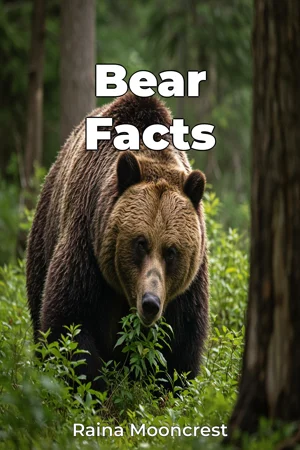
Did you know that the bear family encompasses some of the most adaptable and intelligent creatures on Earth, capable of thriving in environments ranging from arctic ice to tropical rainforests? "Bear Facts" delves into the captivating world of bears, exploring their diverse species, their complex hibernation strategies, and their surprising cognitive capabilities, providing a comprehensive overview of these fascinating animals and their critical role in global ecosystems. These topics are important because understanding bear biology and behavior is crucial for effective conservation efforts, mitigating human-wildlife conflict, and appreciating the intricate web of life on our planet. This book offers a detailed exploration of the Ursidae family, presenting the latest scientific research and observations to challenge common misconceptions and foster a deeper understanding of these often-misunderstood animals. The central argument of "Bear Facts" is that bears, far from being simple, instinct-driven creatures, exhibit a remarkable degree of intelligence, adaptability, and social complexity that warrants both scientific investigation and increased conservation efforts. This argument is vital because it directly impacts how we perceive and interact with bears, influencing policy decisions related to habitat preservation, wildlife management, and public safety. "Bear Facts" is structured to provide a clear and engaging learning experience. The book begins with an introduction to the bear family, outlining the defining characteristics of each of the eight extant species, from the giant panda to the polar bear. We then delve into the specifics of bear hibernation, unraveling the physiological adaptations and metabolic processes that allow these animals to survive extended periods without food or water. The book culminates in an exploration of bear intelligence, examining evidence of problem-solving skills, social learning, and tool use in various bear populations. Case studies and real-world examples will illustrate key concepts, making the information accessible and relevant. The evidence presented in this book draws from a wide range of sources, including peer-reviewed scientific publications, long-term field studies, and expert interviews with leading bear biologists and conservationists. We incorporate data from GPS tracking, camera trapping, and genetic analysis to provide insights into bear behavior, population dynamics, and habitat use. "Bear Facts" makes connections to several other fields, including ecology, zoology, and environmental science, as bear populations serve as indicators of ecosystem health. The book also touches on the intersection of biology and anthropology, examining the cultural significance of bears in different societies and the historical interactions between humans and bears. A unique aspect of this book is its emphasis on the individual variation within bear populations. Rather than treating bears as a monolithic group, we highlight the diverse strategies and behaviors exhibited by different individuals and populations in response to varying environmental conditions. The tone is informative and engaging, aiming to educate and inspire readers to learn more about bears and their conservation. This book targets students, nature enthusiasts, wildlife professionals, and anyone interested in the biology and behavior of bears. "Bear Facts" adheres to the conventions of non-fiction science writing, presenting accurate information in a clear and accessible manner. The scope of "Bear Facts" is comprehensive, covering all eight species of bears and delving into their biology, behavior, and ecology. However, the book does not delve into the intricacies of bear taxonomy or genetics, focusing instead on providing a broad overview of bear biology and conservation. The information presented in "Bear Facts" can be applied to various real-world situations. For example, understanding bear behavior can help reduce human-wildlife conflict in areas where bears and humans coexist. While there is a consensus on the basic biology of bears, there are ongoing debates about the best strategies for managing bear populations and mitigating human-wildlife conflict. "Bear Facts" addresses these debates, presenting different viewpoints and offering science-based recommendations for responsible bear management.
Did you know that the bear family encompasses some of the most adaptable and intelligent creatures on Earth, capable of thriving in environments ranging from arctic ice to tropical rainforests? "Bear Facts" delves into the captivating world of bears, exploring their diverse species, their complex hibernation strategies, and their surprising cognitive capabilities, providing a comprehensive overview of these fascinating animals and their critical role in global ecosystems. These topics are important because understanding bear biology and behavior is crucial for effective conservation efforts, mitigating human-wildlife conflict, and appreciating the intricate web of life on our planet. This book offers a detailed exploration of the Ursidae family, presenting the latest scientific research and observations to challenge common misconceptions and foster a deeper understanding of these often-misunderstood animals. The central argument of "Bear Facts" is that bears, far from being simple, instinct-driven creatures, exhibit a remarkable degree of intelligence, adaptability, and social complexity that warrants both scientific investigation and increased conservation efforts. This argument is vital because it directly impacts how we perceive and interact with bears, influencing policy decisions related to habitat preservation, wildlife management, and public safety. "Bear Facts" is structured to provide a clear and engaging learning experience. The book begins with an introduction to the bear family, outlining the defining characteristics of each of the eight extant species, from the giant panda to the polar bear. We then delve into the specifics of bear hibernation, unraveling the physiological adaptations and metabolic processes that allow these animals to survive extended periods without food or water. The book culminates in an exploration of bear intelligence, examining evidence of problem-solving skills, social learning, and tool use in various bear populations. Case studies and real-world examples will illustrate key concepts, making the information accessible and relevant. The evidence presented in this book draws from a wide range of sources, including peer-reviewed scientific publications, long-term field studies, and expert interviews with leading bear biologists and conservationists. We incorporate data from GPS tracking, camera trapping, and genetic analysis to provide insights into bear behavior, population dynamics, and habitat use. "Bear Facts" makes connections to several other fields, including ecology, zoology, and environmental science, as bear populations serve as indicators of ecosystem health. The book also touches on the intersection of biology and anthropology, examining the cultural significance of bears in different societies and the historical interactions between humans and bears. A unique aspect of this book is its emphasis on the individual variation within bear populations. Rather than treating bears as a monolithic group, we highlight the diverse strategies and behaviors exhibited by different individuals and populations in response to varying environmental conditions. The tone is informative and engaging, aiming to educate and inspire readers to learn more about bears and their conservation. This book targets students, nature enthusiasts, wildlife professionals, and anyone interested in the biology and behavior of bears. "Bear Facts" adheres to the conventions of non-fiction science writing, presenting accurate information in a clear and accessible manner. The scope of "Bear Facts" is comprehensive, covering all eight species of bears and delving into their biology, behavior, and ecology. However, the book does not delve into the intricacies of bear taxonomy or genetics, focusing instead on providing a broad overview of bear biology and conservation. The information presented in "Bear Facts" can be applied to various real-world situations. For example, understanding bear behavior can help reduce human-wildlife conflict in areas where bears and humans coexist. While there is a consensus on the basic biology of bears, there are ongoing debates about the best strategies for managing bear populations and mitigating human-wildlife conflict. "Bear Facts" addresses these debates, presenting different viewpoints and offering science-based recommendations for responsible bear management.
"Bear Facts" offers a captivating exploration into the world of bears, highlighting their adaptability and intelligence across diverse environments from icy arctic regions to tropical rainforests. This book delves into the biology and behavior of the Ursidae family, revealing surprising cognitive capabilities and complex hibernation strategies. For example, bears exhibit problem-solving skills, social learning, and even tool use, demonstrating a level of sophistication often underestimated. Understanding bear biology and behavior is crucial for effective conservation efforts, especially as bears navigate a world increasingly impacted by human activities. The book embarks on a comprehensive journey, starting with an introduction to the eight extant bear species, including the giant panda and the polar bear. It further unravels the mysteries of bear hibernation, detailing the physiological adaptations that enable survival without food or water for extended periods. "Bear Facts" uniquely emphasizes individual variations within bear populations, highlighting how different bears adapt their behaviors to varying environmental conditions, and the book culminates with an examination of bear intelligence, using real-world examples and case studies to illustrate key concepts and make the information accessible to a broad audience.
Book Details
ISBN
9788233970246
Publisher
Publifye AS
Your Licenses
You don't own any licenses for this book
Purchase a license below to unlock this book and download the EPUB.
Purchase License
Select a tier to unlock this book
Need bulk licensing?
Contact us for enterprise agreements.