
About This Book
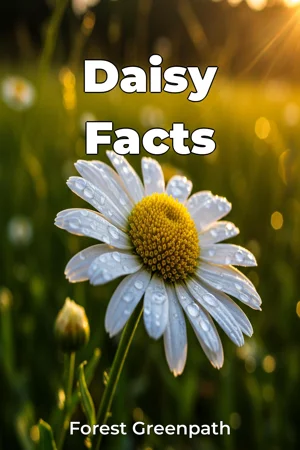
Did you know that the humble daisy, often overlooked in fields of wildflowers, holds a wealth of secrets about resilience, medicinal properties, and ecological strategies? "Daisy Facts" unveils the captivating story of Bellis perennis, exploring its biological intricacies and surprising impact on human history and natural landscapes. This book delves into the core aspects of the daisy, including its morphology and physiology, its documented (and sometimes debated) medicinal applications, and the mechanisms behind its widespread propagation. These topics are crucial for understanding the pervasive influence of this seemingly simple plant, from its role in traditional remedies to its ecological impact on diverse ecosystems. This book provides both historical and scientific context, examining the daisy's traditional uses in folk medicine across various cultures and tracing the evolution of scientific understanding regarding its chemical constituents and potential therapeutic effects. While no specific prior knowledge is strictly required, a basic understanding of plant biology will enhance the reader's appreciation of the more technical aspects discussed. The central argument of "Daisy Facts" is that the daisy exemplifies nature's ability to create complex and remarkably adaptable organisms within seemingly simple forms. Its resilience, medicinal properties, and propagation strategies are worthy of scientific attention and public appreciation. This argument is vital because it challenges the tendency to overlook common species, highlighting the potential for discovery and application even in well-known organisms. The book is structured to offer a comprehensive exploration of the daisy. It begins by introducing the daisy's botanical characteristics, its taxonomic classification, and its global distribution, emphasizing its adaptability to varied environments (a). Subsequently, the book examines the daisy's medicinal uses, delving into the chemical compounds responsible for its purported therapeutic effects. (b) This section includes a review of both traditional uses and contemporary research, analyzing the scientific evidence supporting its applications and exploring potential risks or limitations. (c) The book concludes by investigating the daisy's propagation strategies, focusing on its seed dispersal mechanisms and its ability to colonize diverse habitats. This section explores the ecological impact of the daisy, including its interactions with other plant species and its role in maintaining biodiversity within different ecosystems. (d) The book provides practical insights into cultivating daisies, identifying their varieties, and documenting their significance in different cultures. "Daisy Facts" relies on a diverse range of evidence, including botanical studies, chemical analyses of daisy extracts, and ecological surveys documenting its distribution and impact. It incorporates data from academic journals, field observations, and traditional herbal medicine texts, providing a well-rounded and scientifically grounded perspective. Interdisciplinary connections are integral to the book's approach. Firstly, it connects to ethnobotany by exploring the daisy's historical use in traditional medicine across different cultures. Secondly, it aligns with ecology by examining the daisy's role in various ecosystems and its interactions with other organisms. Thirdly, it relates to pharmacology through the study of its chemical compounds and their potential medicinal applications. These connections enrich the book by demonstrating the daisy's significance across various fields. What sets "Daisy Facts" apart is its holistic approach, integrating botanical, medicinal, and ecological perspectives to provide a nuanced understanding of this common plant. It avoids sensationalism, instead favoring a fact-based and objective analysis grounded in scientific evidence. The tone of the book is informative and accessible, aiming to engage both amateur naturalists and readers with a scientific academic background. It presents complex information clearly and concisely, making it suitable for a wide audience. The target audience includes nature enthusiasts, gardeners, herbalists, students of biology and botany, and anyone interested in learning more about the natural world. This book is valuable to them because it provides a comprehensive and scientifically sound exploration of a familiar yet often overlooked plant. As a work of non-fiction in the nature and science genres, "Daisy Facts" adheres to established conventions of accuracy, objectivity, and clarity. It presents information in a logical and organized manner, citing sources appropriately and avoiding anecdotal evidence or unsubstantiated claims. The book's scope is intentionally limited to Bellis perennis, the common daisy, allowing for an in-depth exploration of its specific characteristics and properties. While it touches on related species and genera, the primary focus remains on providing a detailed "portrait" of this one species. The information within "Daisy Facts" has several real-world applications. It can inform gardening practices, guide the responsible use of daisies in herbal remedies, and contribute to a deeper understanding of plant ecology and biodiversity conservation. While the medicinal properties of daisies have been explored for centuries, debates persist regarding the efficacy and safety of certain applications. “Daisy Facts” addresses these controversies by presenting a balanced assessment of the available evidence, acknowledging both the potential benefits and the possible risks.
Did you know that the humble daisy, often overlooked in fields of wildflowers, holds a wealth of secrets about resilience, medicinal properties, and ecological strategies? "Daisy Facts" unveils the captivating story of Bellis perennis, exploring its biological intricacies and surprising impact on human history and natural landscapes. This book delves into the core aspects of the daisy, including its morphology and physiology, its documented (and sometimes debated) medicinal applications, and the mechanisms behind its widespread propagation. These topics are crucial for understanding the pervasive influence of this seemingly simple plant, from its role in traditional remedies to its ecological impact on diverse ecosystems. This book provides both historical and scientific context, examining the daisy's traditional uses in folk medicine across various cultures and tracing the evolution of scientific understanding regarding its chemical constituents and potential therapeutic effects. While no specific prior knowledge is strictly required, a basic understanding of plant biology will enhance the reader's appreciation of the more technical aspects discussed. The central argument of "Daisy Facts" is that the daisy exemplifies nature's ability to create complex and remarkably adaptable organisms within seemingly simple forms. Its resilience, medicinal properties, and propagation strategies are worthy of scientific attention and public appreciation. This argument is vital because it challenges the tendency to overlook common species, highlighting the potential for discovery and application even in well-known organisms. The book is structured to offer a comprehensive exploration of the daisy. It begins by introducing the daisy's botanical characteristics, its taxonomic classification, and its global distribution, emphasizing its adaptability to varied environments (a). Subsequently, the book examines the daisy's medicinal uses, delving into the chemical compounds responsible for its purported therapeutic effects. (b) This section includes a review of both traditional uses and contemporary research, analyzing the scientific evidence supporting its applications and exploring potential risks or limitations. (c) The book concludes by investigating the daisy's propagation strategies, focusing on its seed dispersal mechanisms and its ability to colonize diverse habitats. This section explores the ecological impact of the daisy, including its interactions with other plant species and its role in maintaining biodiversity within different ecosystems. (d) The book provides practical insights into cultivating daisies, identifying their varieties, and documenting their significance in different cultures. "Daisy Facts" relies on a diverse range of evidence, including botanical studies, chemical analyses of daisy extracts, and ecological surveys documenting its distribution and impact. It incorporates data from academic journals, field observations, and traditional herbal medicine texts, providing a well-rounded and scientifically grounded perspective. Interdisciplinary connections are integral to the book's approach. Firstly, it connects to ethnobotany by exploring the daisy's historical use in traditional medicine across different cultures. Secondly, it aligns with ecology by examining the daisy's role in various ecosystems and its interactions with other organisms. Thirdly, it relates to pharmacology through the study of its chemical compounds and their potential medicinal applications. These connections enrich the book by demonstrating the daisy's significance across various fields. What sets "Daisy Facts" apart is its holistic approach, integrating botanical, medicinal, and ecological perspectives to provide a nuanced understanding of this common plant. It avoids sensationalism, instead favoring a fact-based and objective analysis grounded in scientific evidence. The tone of the book is informative and accessible, aiming to engage both amateur naturalists and readers with a scientific academic background. It presents complex information clearly and concisely, making it suitable for a wide audience. The target audience includes nature enthusiasts, gardeners, herbalists, students of biology and botany, and anyone interested in learning more about the natural world. This book is valuable to them because it provides a comprehensive and scientifically sound exploration of a familiar yet often overlooked plant. As a work of non-fiction in the nature and science genres, "Daisy Facts" adheres to established conventions of accuracy, objectivity, and clarity. It presents information in a logical and organized manner, citing sources appropriately and avoiding anecdotal evidence or unsubstantiated claims. The book's scope is intentionally limited to Bellis perennis, the common daisy, allowing for an in-depth exploration of its specific characteristics and properties. While it touches on related species and genera, the primary focus remains on providing a detailed "portrait" of this one species. The information within "Daisy Facts" has several real-world applications. It can inform gardening practices, guide the responsible use of daisies in herbal remedies, and contribute to a deeper understanding of plant ecology and biodiversity conservation. While the medicinal properties of daisies have been explored for centuries, debates persist regarding the efficacy and safety of certain applications. “Daisy Facts” addresses these controversies by presenting a balanced assessment of the available evidence, acknowledging both the potential benefits and the possible risks.
"Daisy Facts" reveals the hidden world of the common daisy, *Bellis perennis*, exploring its biology, medicinal uses, and ecological role. This book isn't just about a simple flower; it's about understanding the intricate science of a plant that has adapted to thrive in diverse environments. Readers will discover how the daisy exemplifies nature's ability to create complex, adaptable organisms, and how deeply intertwined it is with human history, particularly in traditional medicine and herbal remedies. The book examines the daisy's botanical characteristics, global distribution, and medicinal applications, including a balanced review of traditional uses and contemporary research into its chemical compounds. You'll learn about its seed dispersal mechanisms and ecological impact, and the surprising medicinal properties and ethnobotanical significance this unassuming flower holds. The book progresses from botanical basics to medicinal uses and finally to propagation strategies, offering a comprehensive view of the daisy.
Book Details
ISBN
9788233970178
Publisher
Publifye AS
Your Licenses
You don't own any licenses for this book
Purchase a license below to unlock this book and download the EPUB.
Purchase License
Select a tier to unlock this book
Need bulk licensing?
Contact us for enterprise agreements.