
About This Book
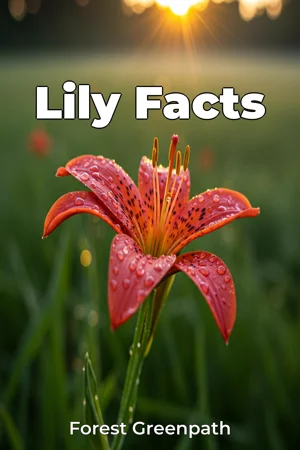
Have you ever paused to consider the hidden world within the elegant petals of a lily? "Lily Facts" delves into the multifaceted nature of this iconic flower, exploring its rich symbolism, its potent fragrance, and its surprising adaptability to diverse environments. This book is important because understanding lilies provides insights into wider ecological patterns and the intricate relationships between plants, culture, and human perception. "Lily Facts" navigates the story of Lilium, drawing upon historical accounts, botanical research, and chemical analyses to illuminate the lily's enduring appeal. We begin with a comprehensive introduction to the lily family (Liliaceae), tracing its evolutionary history and taxonomic classification, providing a foundation for understanding the diversity within the genus Lilium. The book then moves into two major themes. First, we explore the symbolism associated with lilies across various cultures and time periods. From ancient mythology to religious iconography and artistic representation, we will see how lilies have become powerful symbols of purity, love, death, and resurrection. We examine specific cultural contexts, providing examples from ancient Greece, Rome, and various Eastern traditions, revealing nuanced interpretations of the flower's meaning. Second, we investigate the science of lily fragrance. This involves detailing the chemical compounds responsible for their distinctive scents, explaining how these compounds are synthesized within the plant, and analyzing their ecological roles in attracting pollinators. This exploration extends into the field of aromatherapy, examining the potential therapeutic applications of lily fragrances. The book builds to cover the environmental adaptations of lilies. It examines how different lily species have evolved to thrive in diverse habitats, including woodland, alpine, and wetland environments. The discussion encompasses physiological adaptations related to temperature tolerance, water regulation, and nutrient acquisition. This section includes case studies of specific species, such as the Tiger Lily and the Easter Lily, demonstrating their unique adaptations to their respective ecosystems. We will also discuss the conservation status of various lily species, highlighting the threats they face from habitat loss, climate change, and over-collection, and exploring strategies for their protection. Evidence and research are drawn from a range of sources, including botanical surveys, chemical analyses, and historical texts. We will refer to data from field studies, laboratory experiments, and archival records to support our claims. The book also incorporates insights from related fields, such as ethnobotany (the study of how people of a region or culture use plants) and environmental science, to provide a holistic understanding of lilies. "Lily Facts" connects to several interdisciplinary fields. It touches upon art history through its analysis of lilies in paintings and sculptures. It intersects with cultural anthropology through its exploration of the flower's symbolic meanings in different societies. And most obviously, it is deeply intertwined with horticulture and plant conservation through its discussion of cultivation techniques and conservation strategies. "Lily Facts" is intended for a broad audience, including gardeners, botany enthusiasts, students, and anyone interested in the intersection of nature and culture. The narrative maintains an authoritative tone while remaining accessible to readers without specialized scientific knowledge. The scope is broad, covering aspects from history to biology and chemistry, but is limited to the genus Lilium. The reader will gain a deeper appreciation for the ecological and cultural significance of lilies, and practical knowledge of their cultivation and care. "Lily Facts" acknowledges the ongoing debates within plant taxonomy and conservation, highlighting the challenges of classifying diverse species and implementing effective conservation strategies.
Have you ever paused to consider the hidden world within the elegant petals of a lily? "Lily Facts" delves into the multifaceted nature of this iconic flower, exploring its rich symbolism, its potent fragrance, and its surprising adaptability to diverse environments. This book is important because understanding lilies provides insights into wider ecological patterns and the intricate relationships between plants, culture, and human perception. "Lily Facts" navigates the story of Lilium, drawing upon historical accounts, botanical research, and chemical analyses to illuminate the lily's enduring appeal. We begin with a comprehensive introduction to the lily family (Liliaceae), tracing its evolutionary history and taxonomic classification, providing a foundation for understanding the diversity within the genus Lilium. The book then moves into two major themes. First, we explore the symbolism associated with lilies across various cultures and time periods. From ancient mythology to religious iconography and artistic representation, we will see how lilies have become powerful symbols of purity, love, death, and resurrection. We examine specific cultural contexts, providing examples from ancient Greece, Rome, and various Eastern traditions, revealing nuanced interpretations of the flower's meaning. Second, we investigate the science of lily fragrance. This involves detailing the chemical compounds responsible for their distinctive scents, explaining how these compounds are synthesized within the plant, and analyzing their ecological roles in attracting pollinators. This exploration extends into the field of aromatherapy, examining the potential therapeutic applications of lily fragrances. The book builds to cover the environmental adaptations of lilies. It examines how different lily species have evolved to thrive in diverse habitats, including woodland, alpine, and wetland environments. The discussion encompasses physiological adaptations related to temperature tolerance, water regulation, and nutrient acquisition. This section includes case studies of specific species, such as the Tiger Lily and the Easter Lily, demonstrating their unique adaptations to their respective ecosystems. We will also discuss the conservation status of various lily species, highlighting the threats they face from habitat loss, climate change, and over-collection, and exploring strategies for their protection. Evidence and research are drawn from a range of sources, including botanical surveys, chemical analyses, and historical texts. We will refer to data from field studies, laboratory experiments, and archival records to support our claims. The book also incorporates insights from related fields, such as ethnobotany (the study of how people of a region or culture use plants) and environmental science, to provide a holistic understanding of lilies. "Lily Facts" connects to several interdisciplinary fields. It touches upon art history through its analysis of lilies in paintings and sculptures. It intersects with cultural anthropology through its exploration of the flower's symbolic meanings in different societies. And most obviously, it is deeply intertwined with horticulture and plant conservation through its discussion of cultivation techniques and conservation strategies. "Lily Facts" is intended for a broad audience, including gardeners, botany enthusiasts, students, and anyone interested in the intersection of nature and culture. The narrative maintains an authoritative tone while remaining accessible to readers without specialized scientific knowledge. The scope is broad, covering aspects from history to biology and chemistry, but is limited to the genus Lilium. The reader will gain a deeper appreciation for the ecological and cultural significance of lilies, and practical knowledge of their cultivation and care. "Lily Facts" acknowledges the ongoing debates within plant taxonomy and conservation, highlighting the challenges of classifying diverse species and implementing effective conservation strategies.
"Lily Facts" explores the captivating world of lilies, blending science, culture, and history to reveal the intricate nature of this iconic flower. From their diverse adaptations to varied environments, such as alpine and wetland, to their potent fragrance used in aromatherapy, lilies possess a surprising depth. The lily family (Liliaceae) exhibits a wide variety of species, each uniquely adapted; for example, the Tiger Lily showcases remarkable adaptations to its ecosystem. The book examines the rich symbolism of lilies across cultures, illustrating how they've become powerful emblems of purity, love, and even death in ancient Greece, Rome, and Eastern traditions. Furthermore, it delves into the science behind their scents, detailing the chemical compounds responsible and their roles in attracting pollinators. Progressing through the chapters, the text covers evolutionary history, cultural significance, environmental adaptations, and conservation efforts, providing a holistic understanding of these remarkable plants.
Book Details
ISBN
9788233970161
Publisher
Publifye AS
Your Licenses
You don't own any licenses for this book
Purchase a license below to unlock this book and download the EPUB.
Purchase License
Select a tier to unlock this book
Need bulk licensing?
Contact us for enterprise agreements.