
About This Book
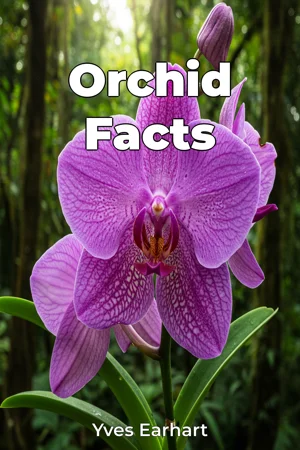
"Orchid Facts" unveils the captivating world of orchids, a plant family renowned for its beauty and complexity. Have you ever wondered about the secrets behind the orchid's allure, or the intricate mechanisms that allow it to thrive? This book delves into these questions, offering a comprehensive exploration of orchid biology, diversity, and ecological significance. We will embark on a journey through the orchid family, the Orchidaceae, a group of flowering plants representing one of the largest and most diverse families in the plant kingdom. We will explore the key characteristics that define orchids, examine their diverse morphologies from the epiphytic orchids clinging to rainforest trees to the terrestrial orchids rooted in the soil, and reveal the scientific rationale for their classification. Understanding these fundamental aspects is crucial for appreciating the orchid's evolutionary success and ecological role. The narrative unfolds through a structured exploration of the orchid's life, commencing with an introduction to orchid anatomy and physiology. We’ll examine the unique adaptations that allow orchids to thrive in diverse environments. The book highlights pollination strategies and the fascinating co-evolutionary relationships between orchids and their pollinators. Furthermore, it considers the ecological challenges orchids face in the modern era, including habitat loss and climate change. The central argument of "Orchid Facts" is that the orchid family serves as a model system for understanding plant evolution, adaptation, and ecological interaction. By examining orchids, we can gain insights into the processes that drive biodiversity and the importance of conservation efforts in a changing world. This argument is substantiated through the presentation of current research, botanical studies, statistical analyses, and relevant case studies. The core of the book is structured around three major themes. First, it explores the diversity of orchid species, highlighting unique adaptations and geographical distributions. Second, it investigates the intricate pollination strategies employed by orchids, from deceptive mimicry to mutualistic relationships with insects, birds, and other animals. Third, it examines the conservation challenges facing orchid populations worldwide and discusses strategies for protecting these species in the face of environmental change. The content is supported by botanical surveys, molecular phylogenetic studies, and ecological field observations. We will examine data collected from various herbaria, botanical gardens, and natural habitats across the globe. The methodologies include comparative morphological analyses, DNA sequencing, and ecological modeling techniques to provide a robust and evidence-based account of orchid biology. "Orchid Facts" connects to various interdisciplinary fields, including evolutionary biology, ecology, and conservation science, linking orchid biology to broader themes in biodiversity and environmental sustainability. Furthermore, the book touches upon the horticultural aspects of orchid cultivation, linking scientific knowledge to practical applications. We also consider the intersection of orchids with ethnobotany, exploring the historical uses of orchids in traditional medicine and cultural practices. One unique aspect of this book is its combination of scientific rigor with accessible language and clear explanations. While grounded in scientific data and research, the book avoids overly technical jargon and presents complex concepts in a comprehensible manner for a wide audience, using images and clear explanations to enhance the reader's understanding. The use of case studies demonstrates the applications of research findings. Written in a formal and technically accurate style, "Orchid Facts" is primarily aimed at nature enthusiasts, botany students, horticulturalists, and anyone interested in the natural world. The book is valuable to those who want to deepen their understanding of plant biology, ecology, and conservation. It aligns with the expectations of the Nature, Science, Life Sciences, and Biology genres, providing accurate information, in-depth analysis, and an engaging narrative. While "Orchid Facts" provides a broad overview of orchid biology, it is not intended to be an exhaustive encyclopedia of all orchid species. The scope is limited to providing a comprehensive overview of the key aspects of orchid biology, diversity, and ecology, with a focus on general principles and illustrative examples. The information presented in "Orchid Facts" can be applied practically in various ways. It provides insights into orchid cultivation techniques, conservation efforts, and ecological restoration projects. By understanding the ecological requirements of different orchid species, readers can contribute to their conservation and sustainable management. Finally, the book addresses controversies and debates surrounding orchid conservation, such as the ethical implications of orchid collecting and the challenges of regulating the international trade in orchids. By presenting different perspectives on these issues, "Orchid Facts" encourages critical thinking and informed decision-making.
"Orchid Facts" unveils the captivating world of orchids, a plant family renowned for its beauty and complexity. Have you ever wondered about the secrets behind the orchid's allure, or the intricate mechanisms that allow it to thrive? This book delves into these questions, offering a comprehensive exploration of orchid biology, diversity, and ecological significance. We will embark on a journey through the orchid family, the Orchidaceae, a group of flowering plants representing one of the largest and most diverse families in the plant kingdom. We will explore the key characteristics that define orchids, examine their diverse morphologies from the epiphytic orchids clinging to rainforest trees to the terrestrial orchids rooted in the soil, and reveal the scientific rationale for their classification. Understanding these fundamental aspects is crucial for appreciating the orchid's evolutionary success and ecological role. The narrative unfolds through a structured exploration of the orchid's life, commencing with an introduction to orchid anatomy and physiology. We’ll examine the unique adaptations that allow orchids to thrive in diverse environments. The book highlights pollination strategies and the fascinating co-evolutionary relationships between orchids and their pollinators. Furthermore, it considers the ecological challenges orchids face in the modern era, including habitat loss and climate change. The central argument of "Orchid Facts" is that the orchid family serves as a model system for understanding plant evolution, adaptation, and ecological interaction. By examining orchids, we can gain insights into the processes that drive biodiversity and the importance of conservation efforts in a changing world. This argument is substantiated through the presentation of current research, botanical studies, statistical analyses, and relevant case studies. The core of the book is structured around three major themes. First, it explores the diversity of orchid species, highlighting unique adaptations and geographical distributions. Second, it investigates the intricate pollination strategies employed by orchids, from deceptive mimicry to mutualistic relationships with insects, birds, and other animals. Third, it examines the conservation challenges facing orchid populations worldwide and discusses strategies for protecting these species in the face of environmental change. The content is supported by botanical surveys, molecular phylogenetic studies, and ecological field observations. We will examine data collected from various herbaria, botanical gardens, and natural habitats across the globe. The methodologies include comparative morphological analyses, DNA sequencing, and ecological modeling techniques to provide a robust and evidence-based account of orchid biology. "Orchid Facts" connects to various interdisciplinary fields, including evolutionary biology, ecology, and conservation science, linking orchid biology to broader themes in biodiversity and environmental sustainability. Furthermore, the book touches upon the horticultural aspects of orchid cultivation, linking scientific knowledge to practical applications. We also consider the intersection of orchids with ethnobotany, exploring the historical uses of orchids in traditional medicine and cultural practices. One unique aspect of this book is its combination of scientific rigor with accessible language and clear explanations. While grounded in scientific data and research, the book avoids overly technical jargon and presents complex concepts in a comprehensible manner for a wide audience, using images and clear explanations to enhance the reader's understanding. The use of case studies demonstrates the applications of research findings. Written in a formal and technically accurate style, "Orchid Facts" is primarily aimed at nature enthusiasts, botany students, horticulturalists, and anyone interested in the natural world. The book is valuable to those who want to deepen their understanding of plant biology, ecology, and conservation. It aligns with the expectations of the Nature, Science, Life Sciences, and Biology genres, providing accurate information, in-depth analysis, and an engaging narrative. While "Orchid Facts" provides a broad overview of orchid biology, it is not intended to be an exhaustive encyclopedia of all orchid species. The scope is limited to providing a comprehensive overview of the key aspects of orchid biology, diversity, and ecology, with a focus on general principles and illustrative examples. The information presented in "Orchid Facts" can be applied practically in various ways. It provides insights into orchid cultivation techniques, conservation efforts, and ecological restoration projects. By understanding the ecological requirements of different orchid species, readers can contribute to their conservation and sustainable management. Finally, the book addresses controversies and debates surrounding orchid conservation, such as the ethical implications of orchid collecting and the challenges of regulating the international trade in orchids. By presenting different perspectives on these issues, "Orchid Facts" encourages critical thinking and informed decision-making.
"Orchid Facts" offers a fascinating exploration into the world of orchids, a diverse plant family celebrated for its intricate beauty and complex biology. Delving into orchid biology, the book reveals how these plants have evolved unique adaptations to thrive in diverse environments, from rainforest canopies to terrestrial habitats. One intriguing aspect highlighted is the co-evolutionary relationships between orchids and their pollinators, which are essential for plant reproduction. The book examines the key characteristics and classifications of orchids, highlighting their ecological significance and the challenges they face due to habitat loss and climate change. By presenting current research, botanical studies, and case studies, "Orchid Facts" emphasizes the importance of conservation efforts to protect orchid populations worldwide. The book progresses through an exploration of orchid anatomy and physiology, pollination strategies, and conservation challenges. Through accessible language and clear explanations, "Orchid Facts" explores the intricate pollination strategies employed by orchids, from deceptive mimicry to mutualistic relationships with insects, birds, and other animals. The book also touches upon horticultural aspects of orchid cultivation, linking scientific knowledge to practical applications. This blend of scientific rigor and accessibility makes it valuable to nature enthusiasts, botany students, and anyone interested in deepening their understanding of plant biology and ecology.
Book Details
ISBN
9788233970154
Publisher
Publifye AS
Your Licenses
You don't own any licenses for this book
Purchase a license below to unlock this book and download the EPUB.
Purchase License
Select a tier to unlock this book
Need bulk licensing?
Contact us for enterprise agreements.