
About This Book
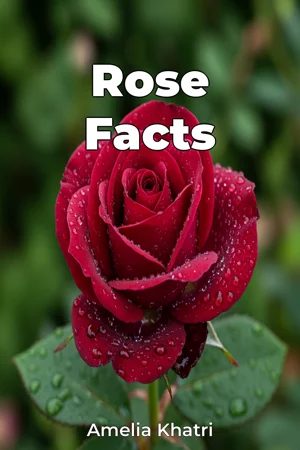
Have you ever considered the journey of a rose, from its ancient origins to its revered status in gardens and cultures worldwide? "Rose Facts" delves into this captivating story, offering a comprehensive exploration of rose history, symbolism, and the pursuit of rare varieties. This book is important because roses are more than just pretty flowers; their history intertwines with human civilization, reflecting our evolving values, artistic expressions, and scientific endeavors. We begin by tracing the rose's historical roots, from its wild ancestors to its cultivation in ancient civilizations like China, Greece, and Rome. This historical context is crucial for understanding the rose's subsequent journey across continents and its adaptation to diverse cultural landscapes. No prior horticultural or historical knowledge is required; "Rose Facts" presents information in an accessible manner. The central argument of this book is that the rose's enduring appeal lies in its multifaceted nature: it is a symbol of love and loss, a subject of scientific innovation, and a testament to human fascination with the natural world. To support this argument, the book unfolds in a logical sequence. First, we introduce the origins and early cultivation of roses, detailing their significance in ancient societies. Second, we examine the rose's symbolism across different cultures, exploring its representations in art, literature, and mythology. This section draws upon historical texts, artistic analyses, and anthropological studies. Third, we turn to the scientific realm, investigating the development of new rose varieties, the genetics of rose breeding, and the characteristics of rare and unusual roses. This section includes visual aids, such as illustrations and photos. Finally, we discuss the real-world applications of rose cultivation, including their use in perfumes, medicines, and ornamental gardening. "Rose Facts" connects to other fields, such as art history (examining roses in paintings and sculptures), botany (exploring the plant's biological characteristics), and cultural studies (analyzing the rose's symbolism in different societies). This book takes a unique approach by combining historical narrative with scientific analysis and cultural interpretation. While many books focus solely on rose gardening or floral arranging, “Rose Facts” adopts a comprehensive perspective. The tone is informative yet engaging, aiming to appeal to both casual readers and dedicated rose enthusiasts. The book targets gardeners of all levels, history buffs, and anyone curious about the cultural significance of flowers. As a work of non-fiction, "Rose Facts" adheres to standards of accuracy and thoroughness. The scope is intentionally broad, covering major aspects of rose history, symbolism, and varieties without delving into overly specialized topics like detailed chemical compositions or highly technical genetic analyses. The information in this book can be applied practically in various ways. Gardeners can use insights from historical cultivation practices to improve their rose gardens. Readers interested in cultural symbolism might find new perspectives on the meaning of flowers in rituals and celebrations. While predominantly a celebration of the rose, “Rose Facts” also acknowledges the debates surrounding the ethics of genetic modification and the environmental impact of large-scale rose cultivation. It aims to present a well-rounded and nuanced perspective on the subject.
Have you ever considered the journey of a rose, from its ancient origins to its revered status in gardens and cultures worldwide? "Rose Facts" delves into this captivating story, offering a comprehensive exploration of rose history, symbolism, and the pursuit of rare varieties. This book is important because roses are more than just pretty flowers; their history intertwines with human civilization, reflecting our evolving values, artistic expressions, and scientific endeavors. We begin by tracing the rose's historical roots, from its wild ancestors to its cultivation in ancient civilizations like China, Greece, and Rome. This historical context is crucial for understanding the rose's subsequent journey across continents and its adaptation to diverse cultural landscapes. No prior horticultural or historical knowledge is required; "Rose Facts" presents information in an accessible manner. The central argument of this book is that the rose's enduring appeal lies in its multifaceted nature: it is a symbol of love and loss, a subject of scientific innovation, and a testament to human fascination with the natural world. To support this argument, the book unfolds in a logical sequence. First, we introduce the origins and early cultivation of roses, detailing their significance in ancient societies. Second, we examine the rose's symbolism across different cultures, exploring its representations in art, literature, and mythology. This section draws upon historical texts, artistic analyses, and anthropological studies. Third, we turn to the scientific realm, investigating the development of new rose varieties, the genetics of rose breeding, and the characteristics of rare and unusual roses. This section includes visual aids, such as illustrations and photos. Finally, we discuss the real-world applications of rose cultivation, including their use in perfumes, medicines, and ornamental gardening. "Rose Facts" connects to other fields, such as art history (examining roses in paintings and sculptures), botany (exploring the plant's biological characteristics), and cultural studies (analyzing the rose's symbolism in different societies). This book takes a unique approach by combining historical narrative with scientific analysis and cultural interpretation. While many books focus solely on rose gardening or floral arranging, “Rose Facts” adopts a comprehensive perspective. The tone is informative yet engaging, aiming to appeal to both casual readers and dedicated rose enthusiasts. The book targets gardeners of all levels, history buffs, and anyone curious about the cultural significance of flowers. As a work of non-fiction, "Rose Facts" adheres to standards of accuracy and thoroughness. The scope is intentionally broad, covering major aspects of rose history, symbolism, and varieties without delving into overly specialized topics like detailed chemical compositions or highly technical genetic analyses. The information in this book can be applied practically in various ways. Gardeners can use insights from historical cultivation practices to improve their rose gardens. Readers interested in cultural symbolism might find new perspectives on the meaning of flowers in rituals and celebrations. While predominantly a celebration of the rose, “Rose Facts” also acknowledges the debates surrounding the ethics of genetic modification and the environmental impact of large-scale rose cultivation. It aims to present a well-rounded and nuanced perspective on the subject.
"Rose Facts" explores the rich history and cultural significance of roses, revealing how these flowers have captivated civilizations for centuries. From their ancient origins to their modern-day cultivation, roses embody a blend of beauty, symbolism, and scientific innovation. Did you know that roses were cultivated in ancient China, Greece, and Rome, holding a prominent place in their societies? The book traces this journey, examining the rose's evolution and enduring appeal. The book progresses through chapters that logically unfold the rose's story. It begins with the rose's historical roots and early cultivation, then moves to its symbolism in art, literature, and mythology. It then investigates rose breeding and genetics, and concludes with the real-world applications of rose cultivation, such as in perfumes and medicines. What sets "Rose Facts" apart is its comprehensive approach, combining historical narrative with scientific analysis and cultural interpretation, providing insights into rose symbolism and rare rose varieties.
Book Details
ISBN
9788233970123
Publisher
Publifye AS
Your Licenses
You don't own any licenses for this book
Purchase a license below to unlock this book and download the EPUB.
Purchase License
Select a tier to unlock this book
Need bulk licensing?
Contact us for enterprise agreements.