
About This Book
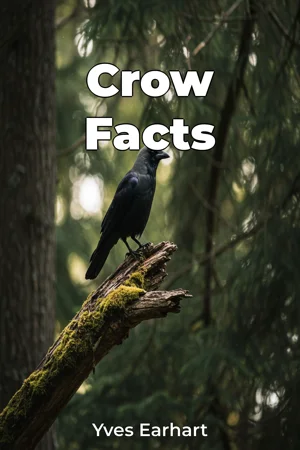
Are crows merely feathered scavengers, or do they possess cognitive abilities that rival some mammals? "Crow Facts" delves into the captivating world of corvids, specifically crows, to reveal their remarkable intelligence and complex behaviors. This book explores the intricate ways crows use tools, their nuanced ability to recognize human faces, and their adept problem-solving skills. Understanding these capabilities provides valuable insights into the evolution of intelligence and the adaptability of life on Earth. The book's central thesis is that crows demonstrate a level of cognitive sophistication that challenges traditional hierarchies of intelligence in the animal kingdom, underscoring the importance of studying diverse species to fully appreciate the spectrum of cognitive abilities. This argument moves beyond anthropocentric views of intelligence and highlights the adaptive advantages of complex cognition in avian species. "Crow Facts" begins by introducing the crow family, Corvidae, and its global distribution, examining their physical characteristics and social structures. We will look at the evolutionary pressures that may have driven their cognitive development, setting the stage for understanding their unique abilities. The book is structured around three core areas. First, "Tool Use and Innovation" explores how crows craft and utilize tools for foraging and other tasks, often displaying inventive solutions to novel problems. Examples from New Caledonia, where crows fashion tools from twigs and leaves, will be examined. Second, "Facial Recognition and Social Intelligence" investigates the fascinating ability of crows to distinguish individual human faces and build complex social relationships. Research showing how crows learn to associate specific faces with threats or safety will be presented. Third, "Problem-Solving and Cognitive Flexibility" analyzes crows' capacity to solve complex puzzles and adapt their behavior to changing circumstances. Experiments demonstrating their understanding of cause and effect will be analyzed. The evidence presented will draw from a variety of sources, including field observations, controlled laboratory experiments, and comparative studies with other bird species. The book will include data from long-term research projects that have tracked crow behavior over multiple generations, providing insights into cultural transmission and learning. "Crow Facts" connects to several other fields, including cognitive science, ethology, and evolutionary biology. By examining crow intelligence, the book informs broader debates about the nature of consciousness and the evolution of complex behaviors. It also has connections with environmental science, given that crows adapt to and interact with various ecosystems. This book offers a unique perspective by focusing specifically on crows and their cognitive abilities, rather than providing a general overview of avian intelligence. The analysis considers the ecological context shaping their cognitive skills, emphasizing the adaptive advantages of their intelligence in specific environments. The tone is informative and engaging, designed to be accessible to a broad audience while maintaining scientific rigor. The writing style is clear and direct, aiming to convey complex information in an understandable manner. The intended audience includes nature enthusiasts, bird watchers, students of biology and animal behavior, and anyone curious about the intelligence of non-human animals. The book provides value by offering a comprehensive and up-to-date overview of crow cognition, challenging common misconceptions and promoting a greater appreciation for these intelligent creatures. As a work of non-fiction, "Crow Facts" adheres to standards of accuracy, objectivity, and evidence-based reporting. All claims and assertions are supported by scientific research and data. The scope of the book is limited to the cognitive abilities and behavior of crows, focusing primarily on tool use, facial recognition, and problem-solving. It does not delve into the broader topics of avian evolution or animal cognition in general, allowing for an in-depth exploration of the crow. Understanding crow intelligence has real-world applications in areas such as conservation, where understanding crow behavior can inform strategies for managing human-wildlife interactions. In addition, insights from crow cognition can inspire new approaches of problem-solving in artificial intelligence. Finally, the book touches upon debates surrounding the definition of intelligence and the challenges of comparing cognitive abilities across species. The book addresses the ethical implications of recognizing intelligence in non-human animals. "Crow Facts" is a deep dive into the world of crows, revealing not just what they do, but how their minds work, challenging us to reconsider what we know about intelligence itself.
Are crows merely feathered scavengers, or do they possess cognitive abilities that rival some mammals? "Crow Facts" delves into the captivating world of corvids, specifically crows, to reveal their remarkable intelligence and complex behaviors. This book explores the intricate ways crows use tools, their nuanced ability to recognize human faces, and their adept problem-solving skills. Understanding these capabilities provides valuable insights into the evolution of intelligence and the adaptability of life on Earth. The book's central thesis is that crows demonstrate a level of cognitive sophistication that challenges traditional hierarchies of intelligence in the animal kingdom, underscoring the importance of studying diverse species to fully appreciate the spectrum of cognitive abilities. This argument moves beyond anthropocentric views of intelligence and highlights the adaptive advantages of complex cognition in avian species. "Crow Facts" begins by introducing the crow family, Corvidae, and its global distribution, examining their physical characteristics and social structures. We will look at the evolutionary pressures that may have driven their cognitive development, setting the stage for understanding their unique abilities. The book is structured around three core areas. First, "Tool Use and Innovation" explores how crows craft and utilize tools for foraging and other tasks, often displaying inventive solutions to novel problems. Examples from New Caledonia, where crows fashion tools from twigs and leaves, will be examined. Second, "Facial Recognition and Social Intelligence" investigates the fascinating ability of crows to distinguish individual human faces and build complex social relationships. Research showing how crows learn to associate specific faces with threats or safety will be presented. Third, "Problem-Solving and Cognitive Flexibility" analyzes crows' capacity to solve complex puzzles and adapt their behavior to changing circumstances. Experiments demonstrating their understanding of cause and effect will be analyzed. The evidence presented will draw from a variety of sources, including field observations, controlled laboratory experiments, and comparative studies with other bird species. The book will include data from long-term research projects that have tracked crow behavior over multiple generations, providing insights into cultural transmission and learning. "Crow Facts" connects to several other fields, including cognitive science, ethology, and evolutionary biology. By examining crow intelligence, the book informs broader debates about the nature of consciousness and the evolution of complex behaviors. It also has connections with environmental science, given that crows adapt to and interact with various ecosystems. This book offers a unique perspective by focusing specifically on crows and their cognitive abilities, rather than providing a general overview of avian intelligence. The analysis considers the ecological context shaping their cognitive skills, emphasizing the adaptive advantages of their intelligence in specific environments. The tone is informative and engaging, designed to be accessible to a broad audience while maintaining scientific rigor. The writing style is clear and direct, aiming to convey complex information in an understandable manner. The intended audience includes nature enthusiasts, bird watchers, students of biology and animal behavior, and anyone curious about the intelligence of non-human animals. The book provides value by offering a comprehensive and up-to-date overview of crow cognition, challenging common misconceptions and promoting a greater appreciation for these intelligent creatures. As a work of non-fiction, "Crow Facts" adheres to standards of accuracy, objectivity, and evidence-based reporting. All claims and assertions are supported by scientific research and data. The scope of the book is limited to the cognitive abilities and behavior of crows, focusing primarily on tool use, facial recognition, and problem-solving. It does not delve into the broader topics of avian evolution or animal cognition in general, allowing for an in-depth exploration of the crow. Understanding crow intelligence has real-world applications in areas such as conservation, where understanding crow behavior can inform strategies for managing human-wildlife interactions. In addition, insights from crow cognition can inspire new approaches of problem-solving in artificial intelligence. Finally, the book touches upon debates surrounding the definition of intelligence and the challenges of comparing cognitive abilities across species. The book addresses the ethical implications of recognizing intelligence in non-human animals. "Crow Facts" is a deep dive into the world of crows, revealing not just what they do, but how their minds work, challenging us to reconsider what we know about intelligence itself.
"Crow Facts" explores the remarkable intelligence of crows, challenging our understanding of animal cognition. These avian creatures demonstrate sophisticated tool use, as seen in New Caledonia where they craft tools from twigs, and possess a surprising ability to recognize human faces, even learning to associate specific individuals with danger or safety. The book delves into the evolutionary pressures that may have driven their cognitive development. The book examines three core areas of crow intelligence: tool use and innovation, facial recognition and social intelligence, and problem-solving and cognitive flexibility. By analyzing crows' capacity to solve complex puzzles and adapt their behavior, the book highlights their cognitive flexibility. It draws from field observations, controlled lab experiments, and long-term research, offering a unique perspective on crow cognition and its adaptive advantages within their environment. Structured to progress logically, "Crow Facts" begins with an introduction to the crow family and their global distribution, then moves into an exploration of their cognitive abilities across multiple chapters. This approach provides a comprehensive and engaging overview suitable for nature enthusiasts, biology students, and anyone curious about animal behavior and the evolution of intelligence.
Book Details
ISBN
9788233970116
Publisher
Publifye AS
Your Licenses
You don't own any licenses for this book
Purchase a license below to unlock this book and download the EPUB.
Purchase License
Select a tier to unlock this book
Need bulk licensing?
Contact us for enterprise agreements.